
Migunga Tented Camp is a small tented camp set in a fever tree forest glade near the shore of Lake Manyara in northern Tanzania, only a few minutes from the national park gate. Run by the Moivaro group, it is booked as part of a wider northern circuit safari or as a two night base for Lake Manyara game drives. The name comes from the Swahili word for the tall acacia and fever trees that shade the whole property.
A Fever Tree Forest Base for Your Lake Manyara Safari
The forest is the first thing you notice. Migunga sits inside a private patch of woodland, roughly 35 acres of pale barked fever trees and acacia, and the tents are spread out among them rather than lined up in a row. This gives the camp a quiet, screened feeling. You hear birds in the morning and the small night noises of the forest after dark, and you rarely see another guest’s tent from your own veranda.
What makes the location useful for a safari is how close it sits to the park. The gate into Lake Manyara National Park is only about five to ten minutes away by road, so you can be through the entrance and looking for wildlife within minutes of finishing breakfast. That short transfer matters on a game drive day, because it means more time in the park and less time on the approach road. The town of Mto wa Mbu is a few kilometres further on, which puts markets, craft stalls and village walks within easy reach.
Because the drive to the park gate is so short, ask your guide about an early start. Being one of the first vehicles through the gate often means calmer roads and better light for photographs before the mid morning heat sets in.
Tents and Forest Setting at Migunga Tented Camp
Migunga is a permanent tented camp, not a mobile one, so the tents stay in place year round on raised wooden platforms. There are around twenty of them, described by the camp as semi luxury, each with a private veranda that looks straight into the trees. Inside you get proper beds with wooden frames, an ensuite bathroom with a flush toilet and a hot shower, a washbasin, mosquito nets and electric lighting. Charging points for cameras and batteries are provided, which is a practical touch after a long day of filming wildlife.
The camp was expanded after the Moivaro group took it over, and the newer tents added at that time are the more spacious and private ones, pitched a comfortable walk from the central buildings. They let in more daylight and have the better bathrooms. If you prefer to be closer to the dining area, mention that when you book, and if you want the roomier, more secluded tents, say so as well, since the two styles feel quite different.
The tents are grouped loosely around a central glade, so each one keeps its shade and privacy while staying only a short stroll from the restaurant and bar. At night the paths are lit with hurricane lamps, and an askari, a camp guard, will walk you back to your tent after dinner. This is standard practice at forest camps in this part of Tanzania and it is worth accepting, since animals can move through the grounds after dark.
You wake to sunlight filtering down through tall fever trees, and you fall asleep to the sound of the forest rather than a road.
Forest Walks and Game Drives from Migunga Tented Camp
The main reason to stay here is the game viewing in Lake Manyara National Park, and the camp is set up to make that simple. Game drives run from the gate a few minutes away, taking you along the lake edge and through the groundwater forest that the park is known for. Lake Manyara is famous for tree climbing lions, though these are seen only occasionally and are never guaranteed. More reliable in the dry months are large numbers of flamingos on the lake, elephants in the forest, buffalo, giraffes, zebras, and troops of baboons and blue monkeys along the road.
Back at Migunga, the forest itself is part of the experience. Guided forest walks leave from the camp with an armed askari, letting you slow down and notice the smaller things you miss from a vehicle, the birds, the tracks, the insects and the trees. Early morning bird walks along the short trail near the tents are a gentle way to start a day. There are also guided walks toward Lake Manyara and cultural walks to the villages nearby. Walking is a different rhythm from a game drive, and having both on offer from one camp is a real advantage.
Lake Manyara game drives
Short transfer to the park gate, then a full or half day drive along the lakeshore and through the groundwater forest looking for elephant, buffalo, giraffe and flamingo.
Guided forest walks
On foot from camp with an askari, at a slower pace that suits birding, tracking and simply taking in the fever tree woodland.
Mountain biking
Bikes for hire with trails starting at the camp and running along the lakeshore, where zebras, giraffes and wildebeest are sometimes seen.
Village and market tours
Guided visits to Mto wa Mbu, one of the more mixed and busy market towns on the northern circuit, for crafts, food and everyday life.
Mountain Biking and Village Tours near Lake Manyara
Migunga has long been a good pick for people who want to get active between game drives. The camp keeps mountain bikes for hire, and the trails start right at the property and run out along the northern lakeshore and through farmland. On a quiet ride you may come across zebras, giraffes and wildebeest grazing in the open ground, which is a very different feeling from watching them through a windscreen. The riding is gentle rather than technical, so you do not need to be a serious cyclist to enjoy it.
The cultural side is easy to reach too. Mto wa Mbu is one of the most diverse towns in this corner of Tanzania, with people from many different groups living side by side, and a guided walk through its market and craft workshops gives a grounded sense of daily life beyond the parks. Some guests also arrange a scenic microlight flight over the Rift Valley from the area, which gives an aerial view of the lake and the escarpment. Availability of any flight option varies, so confirm it when you plan your stay.
Birding and Wildlife Watching around Migunga Camp
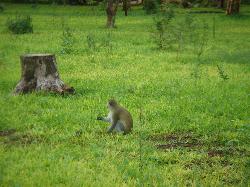
Birders do well at Migunga. The fever tree forest is alive with calls through the day, and the mix of woodland, lakeshore and nearby wetland means you can build a long list without going far. Around the tents you will see vervet monkeys moving through the branches, and the same forest that shades the camp draws hornbills, weavers, starlings and many smaller species. The early morning bird walk is the easiest way to catch the most activity, since the forest is busiest just after dawn.
On the lake itself, the shallow soda water attracts flamingos and pelicans in numbers during the wetter parts of the year, along with storks, herons and other waterbirds. As with all wildlife watching, sightings shift with the season and the rains, so treat any single species as a possibility rather than a promise. What stays constant is the sheer amount of birdlife in and around the camp, which is one reason repeat guests come back.
Dining, the Bar and Evenings at Migunga Tented Camp
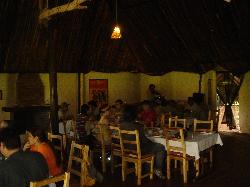
The heart of the camp is a large thatched main building that holds the restaurant, a reading and lounge area and the bar. The front of it is open, facing a tall stand of fever trees, and this is where most guests gather in the evening to compare notes on the day’s sightings over a drink. Meals are served as a set menu that changes daily, with lunch boxes available if you are heading out on a full day drive, and both full board and half board arrangements can be booked.
After dark the mood is simple and calm. A campfire is lit in the evenings, the hurricane lamps glow along the paths, and the forest provides the soundtrack. There is a well stocked bar, room service, and charging facilities for your devices. The camp is clean, functional and unpretentious rather than lavish, which is part of its appeal, and it keeps its garden green through the year thanks to the groundwater that feeds the forest.
What Migunga does well
A genuine forest setting, minutes from the Lake Manyara gate, with walking and cycling on the doorstep and a relaxed, good value feel that suits active travellers and birders.
What to keep in mind
This is a comfortable tented camp rather than a high end lodge. Tents vary in size and privacy, so it is worth asking for one of the newer ones when you book.
Who Migunga Tented Camp Suits for a Manyara Safari
Migunga fits travellers who want to be close to Lake Manyara, who like the idea of sleeping in a tent among trees, and who value doing more than sitting in a vehicle. Its walking, cycling and cultural options make it a strong choice for younger, active guests and for families with older children who want a bit of variety. Birders and photographers appreciate the forest right outside the tent. It also works well as a first or last night on a longer northern circuit trip, since it is easy to reach and sits at a friendly price point.
It is less suited to anyone looking for a polished, resort style lodge with pools and elaborate service. The camp is honest about being simple and functional. If forest sounds, an early game drive and a mountain bike trail sound better than a spa, this is your kind of place. One practical note, from around February into May the forest can hold a lot of mosquitoes, so bring repellent and use the nets and coils provided.
Getting to Migunga Tented Camp for Your Safari
Most guests arrive by road as part of a guided northern circuit tour. The camp lies roughly 130 kilometres west of Arusha, which is generally a two to three hour drive depending on the road and stops along the way. From Kilimanjaro International Airport, the usual arrival point for the region, allow around four hours by vehicle. The turn off near Mto wa Mbu leads the short distance to the forest and the camp gate.
Flying in is possible too. The small Lake Manyara airstrip sits only a few kilometres away and takes light aircraft on scheduled and charter routes across the northern parks, with a transfer from there to the camp. Migunga can arrange airport and airstrip transfers, so the simplest approach is to let your operator build the transport into your itinerary rather than piecing it together yourself.
Best Time to Visit Lake Manyara from Migunga
Lake Manyara can be visited all year, but the dry season from roughly June to October offers the easiest game viewing, since the vegetation thins out and animals gather near reliable water. Roads are firmer then too, which makes both game drives and cycling more comfortable. The forest around Migunga stays green in every season because of the groundwater beneath it, so the camp itself never looks parched.
The wetter months, broadly November to May, bring lower light, greener scenery and strong birding, as migrant species arrive and the lake fills. This is also when mosquitoes are at their heaviest around the forest, particularly from February into May, so plan your protection accordingly. Water levels shape the flamingo numbers on the lake, so if flamingos are a priority, ask your operator about recent conditions before you lock in dates.
Dry season, about June to October
Best all round game viewing, firmer roads for drives and biking, and clearer paths for forest walks. The busiest and most popular window on the northern circuit.
14-Day Ultimate Tanzania Safari, North to West
7-Day Serengeti, Ngorongoro, Tarangire & Manyara Safari
13-Day Grand Tanzania North and South Safari
Green season, about November to May
Greener forest, strong birding and fuller lake views, with quieter roads. Expect more rain and, from February into May, more mosquitoes around the camp.
Migunga Tented Camp Safari FAQ
How much does a stay at Migunga Tented Camp cost?
Migunga sits at the mid range, good value end of the Lake Manyara options rather than the luxury tier. Nightly rates currently range roughly from the lower to middle hundreds of US dollars per person, and vary by season, board basis and how the stay is packaged within a wider safari. For an exact quote, ask your operator, since prices are usually built into a full itinerary rather than sold night by night.
How far is Migunga Tented Camp from the Lake Manyara park gate?
Very close. The entrance to Lake Manyara National Park is only about five to ten minutes away by road, which is one of the camp’s main advantages for game drives. You can be inside the park looking for wildlife within minutes of leaving camp.
What kind of accommodation does Migunga offer?
The camp has around twenty permanent tents on raised wooden platforms, set among fever trees. Each has a private veranda, an ensuite bathroom with a flush toilet and hot shower, a proper bed, mosquito nets and electric lighting. The newer tents added under the Moivaro group are the larger and more private ones.
Can you do walking safaris and cycling from the camp?
Yes. Guided forest walks leave from camp with an askari, and there are early morning bird walks and cultural walks to nearby villages. Mountain bikes are available for hire, with trails that start at the camp and run along the northern lakeshore, where zebras and giraffes are sometimes seen.
Is Migunga a good base for a family or an active trip?
It suits active travellers and families with older children well, thanks to the mix of game drives, walking, cycling and village tours in one place. It is a comfortable, functional tented camp rather than a luxury lodge, so set expectations toward a genuine forest camp experience rather than a resort.
When is the best time to stay at Migunga for wildlife?
The dry season, roughly June to October, gives the strongest game viewing and the firmest roads. The green season, roughly November to May, is excellent for birds and lake views but wetter, with more mosquitoes around the forest from February into May.


