A trip to Tanzania can combine several holidays in one: game drives on the plains, days on a white sand beach, and a climb up the tallest mountain in Africa. Most visitors plan seven to fourteen days, pairing a northern safari circuit with time on Zanzibar, and shape the route around budget and season. This guide takes you through the whole process, from the first big decisions to the last, so you end with one workable plan.
The goal here is a single trip planned start to finish. We will settle what kind of holiday you want, when to go, how long to stay, how to build a route, how the booking works, and what paperwork and health steps you need before you fly. If you want a wider look at the different holiday shapes across the country first, the overview of trips to Tanzania covers those in more detail. This page stays focused on the one trip you are about to plan.
Deciding What Kind of Trip to Tanzania You Want
The first fork in the road is the biggest one, and it shapes everything after it. Most people planning a trip to Tanzania land on one of three shapes. The first is a pure wildlife holiday, where every day is spent in the parks looking for animals. The second is a mix of wildlife and beach, where you spend part of the time on game drives and then fly to the coast to rest. The third is a mountain holiday built around climbing Kilimanjaro, sometimes with a few days of wildlife added on either side.
There is no wrong answer, only the one that fits how you like to travel. If you have never done a game drive before and the animals are the whole reason you picked this country, a wildlife focused trip gives you the most time in the parks. If you are travelling with a partner or family who want some downtime, the wildlife and beach mix works well because it ends on something slow and easy. If you are fit and you want a physical challenge with a real sense of achievement, the mountain climb is its own kind of holiday and needs its own kind of preparation.
A quick way to choose: ask yourself what you want the last three days to feel like. If the answer is more animals, plan a wildlife trip. If the answer is warm water and no alarm clock, plan a wildlife and beach trip. If the answer is standing on a summit at sunrise, plan the mountain.
Safari, Safari and Beach, or Kilimanjaro Climb
Let us look at each of the three shapes a little closer, because the differences matter for budget and time. A pure wildlife Tanzania safari keeps you in the northern parks for the whole trip, moving between Tarangire, the Serengeti, and the Ngorongoro Crater. You see the widest range of animals and you get very good at spotting them by the end. This is the classic first holiday and the one most first time visitors pick.
The wildlife and beach shape takes that same wildlife core and adds a short flight to Zanzibar at the end. The island gives you spice farms, old stone streets, and long stretches of beach. Most travellers spend about seven days on Tanzania safari followed by three to five days on the coast. The short hop from the northern airports to Zanzibar takes around ninety minutes and runs several times a day, so stitching the two halves together is easy.
The Kilimanjaro climb sits apart from the other two. It takes five to nine days on the mountain depending on the route, and it asks for good fitness and a slow pace to handle the altitude. Many people climb first and then reward themselves with either a short wildlife extension or a few beach days, since they are already in the north when they finish. If the mountain is your main aim, build the trip around the climb dates and treat everything else as a bonus.
Choosing When to Go on Your Tanzania Safari
Timing changes what you see and how much you pay. The long dry season, roughly June through October, is the most reliable window for general wildlife viewing on a Tanzania safari. The grass is short, the animals gather around water, and the tracks are dry and easy to drive. This is also the busiest and priciest window, so book early if these are your dates.
The calving season in the southern Serengeti falls around January and February, when huge numbers of young animals are born and predators follow close behind. This is a strong time for drama on the plains and it sits in a quieter, often cheaper part of the calendar. The two rainy spells, the long rains around March to May and the short rains around November, bring green scenery and fewer vehicles, though some camps close and a few tracks turn to mud.
If you are adding Zanzibar, the same dry months that suit the parks also suit the beach, which is one reason the classic June through October window is so popular. Pick your dates around the wildlife you most want to see, then check that your beach days are not landing in the wettest part of the coast calendar.
How Many Days Your Trip to Tanzania Needs
Length is where a lot of first plans go wrong, usually by trying to fit too much into too few days. For a wildlife only trip, seven days on the ground is the sweet spot. It gives real time in the Serengeti, a full descent into the Ngorongoro Crater, and a stop in Tarangire without every day feeling like a race between gates. A good seven day safari protects two or more nights in the Serengeti so you are not spending your best days driving.
If your calendar is tight, a five or six day trip still works and covers the headline parks, though the pace picks up and transfers eat into your viewing time. The detailed shape of a week long route is worth studying, and the breakdown of 7 days in Tanzania shows how the nights fall across the parks. For a wildlife and beach combination, plan on about twelve to fourteen days total, splitting roughly eight or nine days of wildlife and four or five days on the island.
The single most common regret is not too little luxury but too little time. Add a day before you add a lodge upgrade.
Remember to count your travel days honestly. The flights to and from Tanzania are long, and the day you land is rarely a full day of anything. Build in a soft first night near the airport so you start the wildlife portion rested rather than jet lagged.
Building a Route for Your Tanzania Tour
With the shape, season, and length settled, you can lay out the actual route. A standard northern Tanzania tour begins near Arusha, the gateway town for the northern parks. From there most routes run to Tarangire first, known for its elephants and old baobab trees, then push on to the Serengeti for the main wildlife days, and finish with the Ngorongoro Crater on the way back. Some routes add Lake Manyara for its tree climbing lions and flocks of flamingos.
The order matters because it keeps your driving sensible. Going out to the Serengeti and working back toward Arusha means your longest transfers happen when you are fresh, and your final morning is a short drive to the airport rather than a marathon. If your budget allows, a short internal flight from the Serengeti back to Arusha or Kilimanjaro can replace a long drive and hand you an extra half day of viewing.
For a wildlife and beach trip, the route simply extends. You finish the northern parks, fly from Arusha or Kilimanjaro to Zanzibar, and spend your last stretch on the coast before flying home from the island or connecting back through the mainland. Because that connection is quick and frequent, you rarely lose a full day to it.
Flying In: Kilimanjaro or Dar es Salaam
Which airport you fly into depends on which trip you chose. For a northern safari trip, Kilimanjaro International Airport is the natural gateway. It sits between Moshi and Arusha and puts you within reach of the Serengeti, the Ngorongoro Crater, Lake Manyara, and Tarangire. It takes direct flights from several major hubs, which keeps your connections simple.
Dar es Salaam serves the country better if your trip leans toward the southern parks such as Ruaha or the Nyerere reserve, or if you are heading straight for the coast and islands. It is the busiest airport in the country and carries more airlines and more flight choices, so it can sometimes be the cheaper way in. For most first trips built around the northern circuit, though, Kilimanjaro is the cleaner choice and saves you a long internal hop.
Fly into Kilimanjaro if your trip is a northern wildlife holiday, a wildlife and beach mix using Zanzibar, or a Kilimanjaro climb. Fly into Dar es Salaam if your trip centres on the southern parks, Mafia Island, or a coast first holiday with a short wildlife add on.
The Booking Flow for Your Safari Trip
Once you know the shape and the dates, booking follows a fairly steady order. Start with the ground portion, meaning the wildlife days themselves, since a good operator and the right lodges get snapped up first in the busy months. A safari tour package usually bundles your accommodation, meals, park fees, vehicle, and guide into one price, which makes the on the ground cost easy to see in a single figure.
International flights are booked separately from the ground package, so lock those in once your safari dates are held. For the popular dry season and the holiday weeks, book the long haul flights six to twelve months ahead to hold a fair fare and a sensible schedule. Any internal flights, such as a Serengeti airstrip to Arusha hop or the connection to Zanzibar, are best booked two to four months out, and earlier still in peak weeks when seats fill fast.
The last layer is the small stuff that is easy to forget: travel insurance, any pre trip vaccinations, and your visa. Slot these in once the flights are confirmed so you are not scrambling in the final fortnight. A simple order of operations, ground first, long haul flights second, internal flights third, and paperwork last, keeps the whole plan from tangling.
Visas and Health Basics Before You Travel
Most visitors need a tourist visa, and for many nationalities this can be arranged before you fly or obtained on arrival at the main entry points. You will want a passport with at least six months of validity and a blank page, proof of a return ticket, and evidence that you can support yourself for the stay. Check your own country rules early, because some nationalities must apply online in advance rather than at the airport.
On health, a yellow fever certificate is generally not required if you are travelling directly from countries such as the United States, the United Kingdom, Canada, or the European Union. It becomes required if you are arriving from, or transiting through, a country where yellow fever is present, so your recent travel history is what matters. Speak to a travel clinic well ahead of your dates to confirm your own situation.
Malaria is present in many of the wildlife areas and along the coast, so most travellers discuss antimalarial tablets with a doctor and pack good insect repellent. Routine vaccinations such as typhoid, hepatitis A, and tetanus are commonly recommended. None of this is complicated, but it does need a few weeks of lead time, which is why the health step belongs early in the plan rather than the week before you leave.
What a First Trip to Tanzania Really Looks Like
It helps to picture the real rhythm of a first trip to Tanzania so nothing surprises you. Most first time visitors land in the middle tier of comfort, which gives you a private vehicle and your own guide rather than a shared bus on a fixed schedule. That private setup means your day bends around what you want to see, and a good guide reads the bush in a way that turns an empty stretch of grass into a lion sighting.
5-Day Arusha, Lake Manyara, Tarangire & Ngorongoro Safari
3 Days Lake Manyara & Tarangire
7-Day Lake Manyara, Tarangire, Serengeti & Ngorongoro Safari
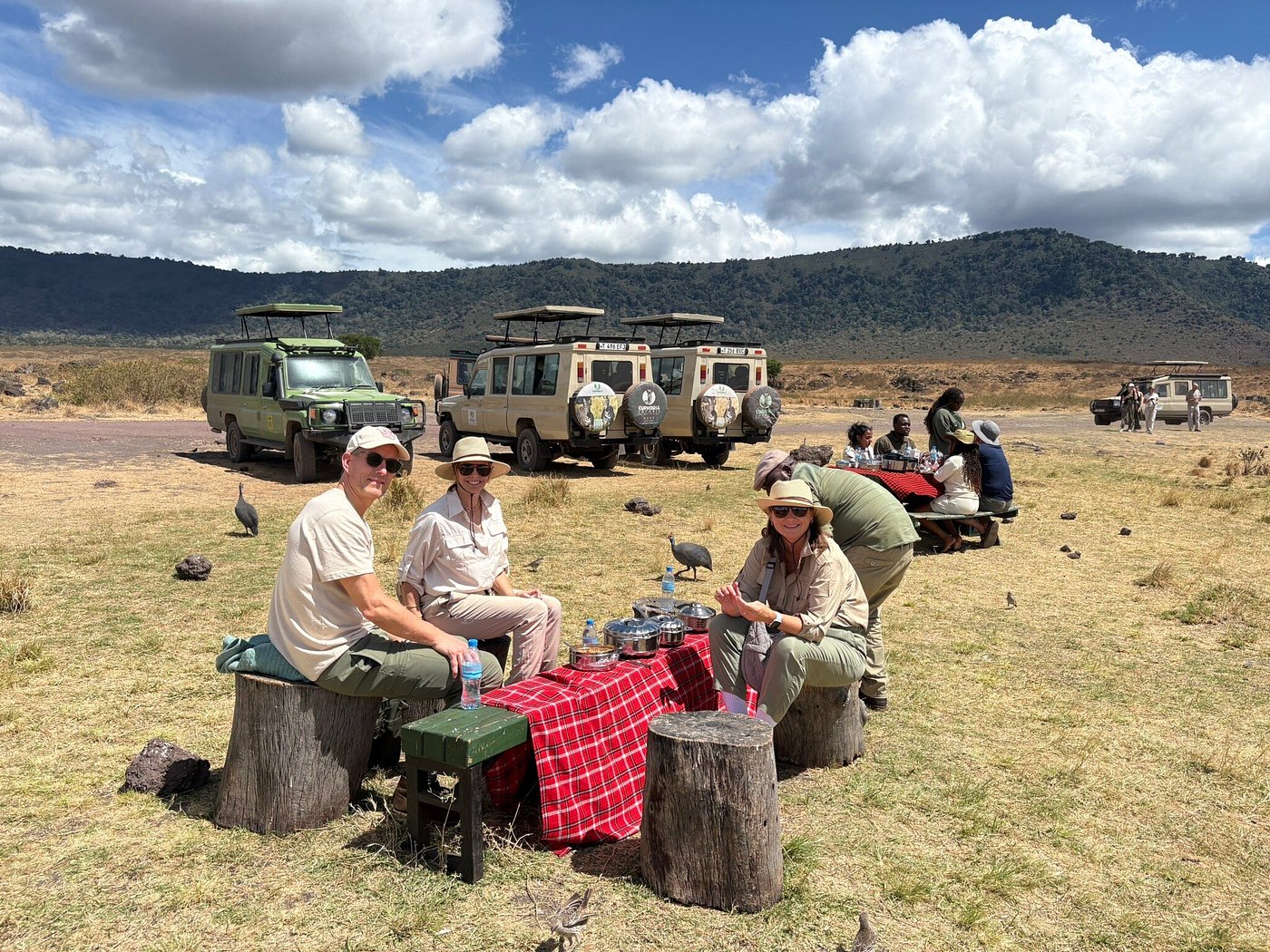
Days on the wildlife portion start early, often before sunrise, because the animals are most active in the cool hours. You drive, you stop, you watch, and you come back to the lodge in the heat of the middle day for lunch and a rest before heading out again. It is slower and calmer than people expect, and the best moments are usually the quiet ones you did not plan. By the third or fourth day you will be spotting animals yourself and reading the tracks along the road.
If you added the coast, the shift in pace at the end is part of the magic. You go from dawn game drives to slow mornings on the beach, and the contrast makes both halves feel bigger. Whatever shape you chose, the trick to a good first trip is not cramming in more, it is giving each part enough room to breathe. Plan a little less than you think you can fit, and you will come home wanting to return rather than wishing you had rested.
Frequently Asked Questions About Planning a Trip to Tanzania
How much does a first trip to Tanzania cost per person?
A wildlife holiday runs roughly 250 to 1,500 US dollars per person per day depending on style. Budget camping sits around 250 to 400, a comfortable middle tier lodge trip around 450 to 800, and luxury fly in trips start near 850 and climb higher. A full week of middle tier wildlife often lands somewhere around 1,750 to 4,200 US dollars per person for the ground portion, with long haul flights of roughly 700 to 1,800 US dollars booked on top.
How many days do I need for a good Tanzania safari?
Seven days on the ground is the comfortable sweet spot for a wildlife trip, giving you real time in the Serengeti, the Ngorongoro Crater, and Tarangire without rushing. Five or six days works if your calendar is tight but the pace is faster. For a wildlife and beach combination, plan twelve to fourteen days in total.
Should I fly into Kilimanjaro or Dar es Salaam?
For a northern wildlife trip or a wildlife and Zanzibar combination, Kilimanjaro International Airport is the natural gateway. Choose Dar es Salaam if your trip centres on the southern parks or a coast first holiday. Most first trips built around the northern parks use Kilimanjaro.
When is the best time to go?
The dry months of roughly June through October give the most reliable general wildlife viewing and suit the beach too, though they are the busiest and priciest. The calving season around January and February is strong for drama on the plains and often quieter and cheaper. The rainy spells bring green scenery and fewer vehicles but some camps close.
What visa and health steps do I need before I travel?
Most visitors need a tourist visa, arranged online in advance or obtained on arrival depending on nationality, plus a passport valid for at least six months. A yellow fever certificate is generally only required if you are arriving from a country where the disease is present. Malaria tablets and routine vaccinations are commonly advised, so visit a travel clinic several weeks ahead.
How far in advance should I book everything?
Book the ground portion first, since good operators and lodges fill early in busy months. Lock in long haul flights six to twelve months ahead for peak season, and book any internal flights two to four months out. Leave visa, insurance, and vaccinations for once the flights are confirmed, but do not push them to the final week.