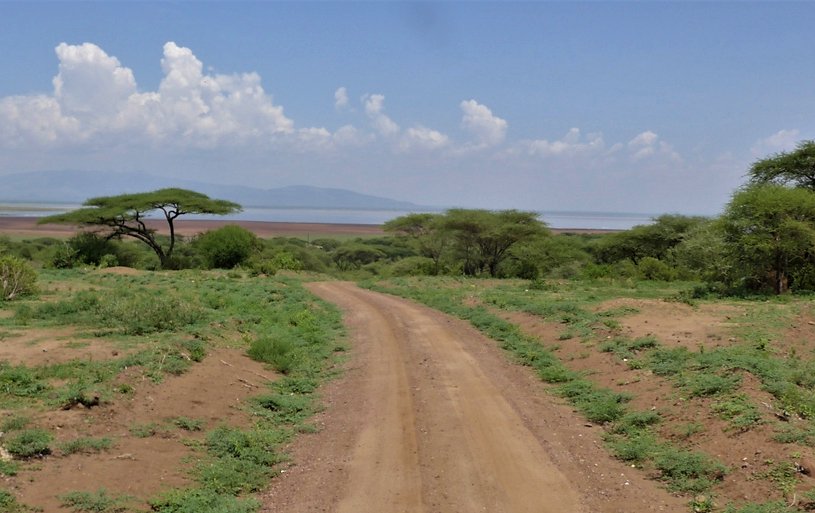
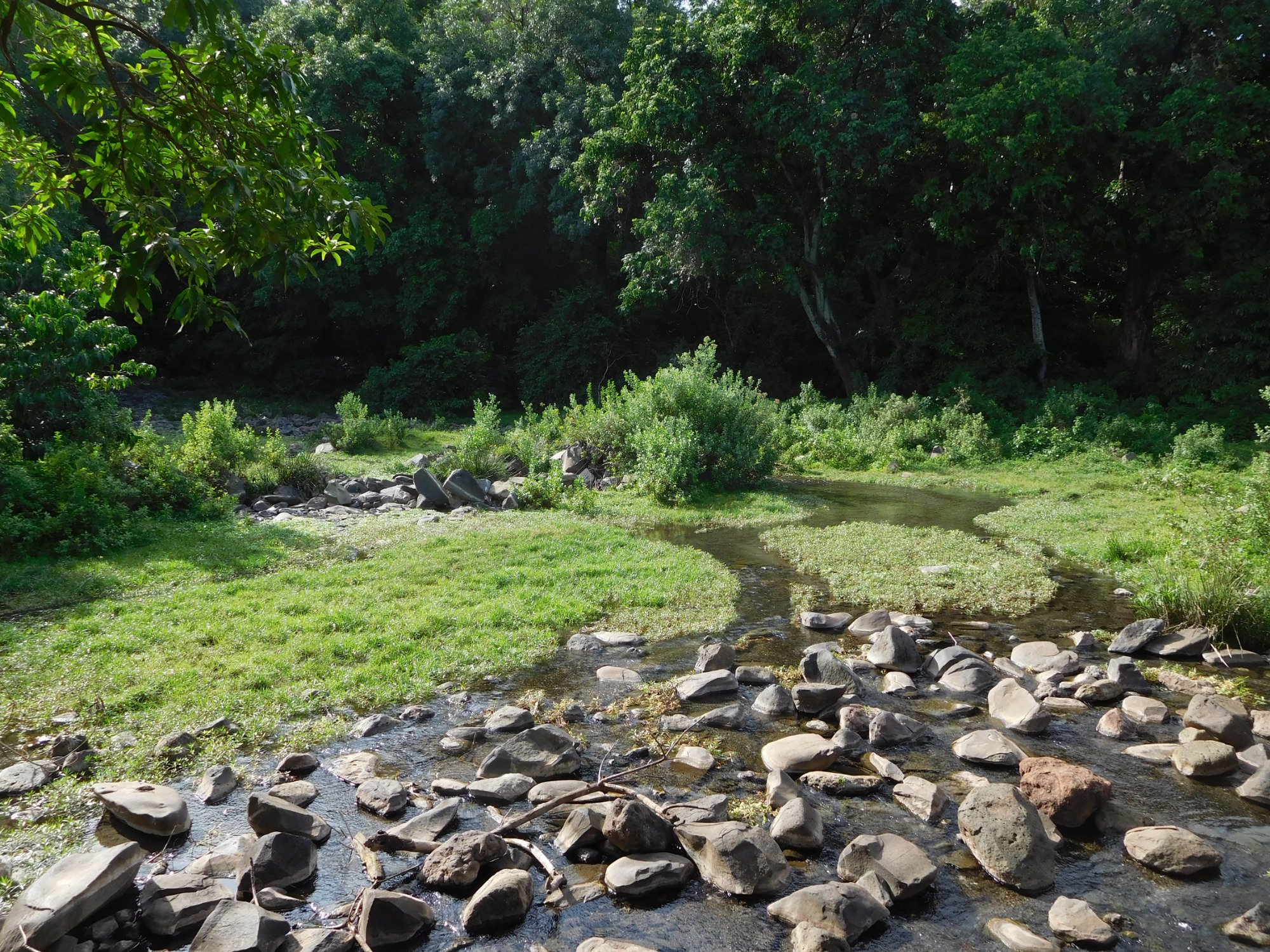
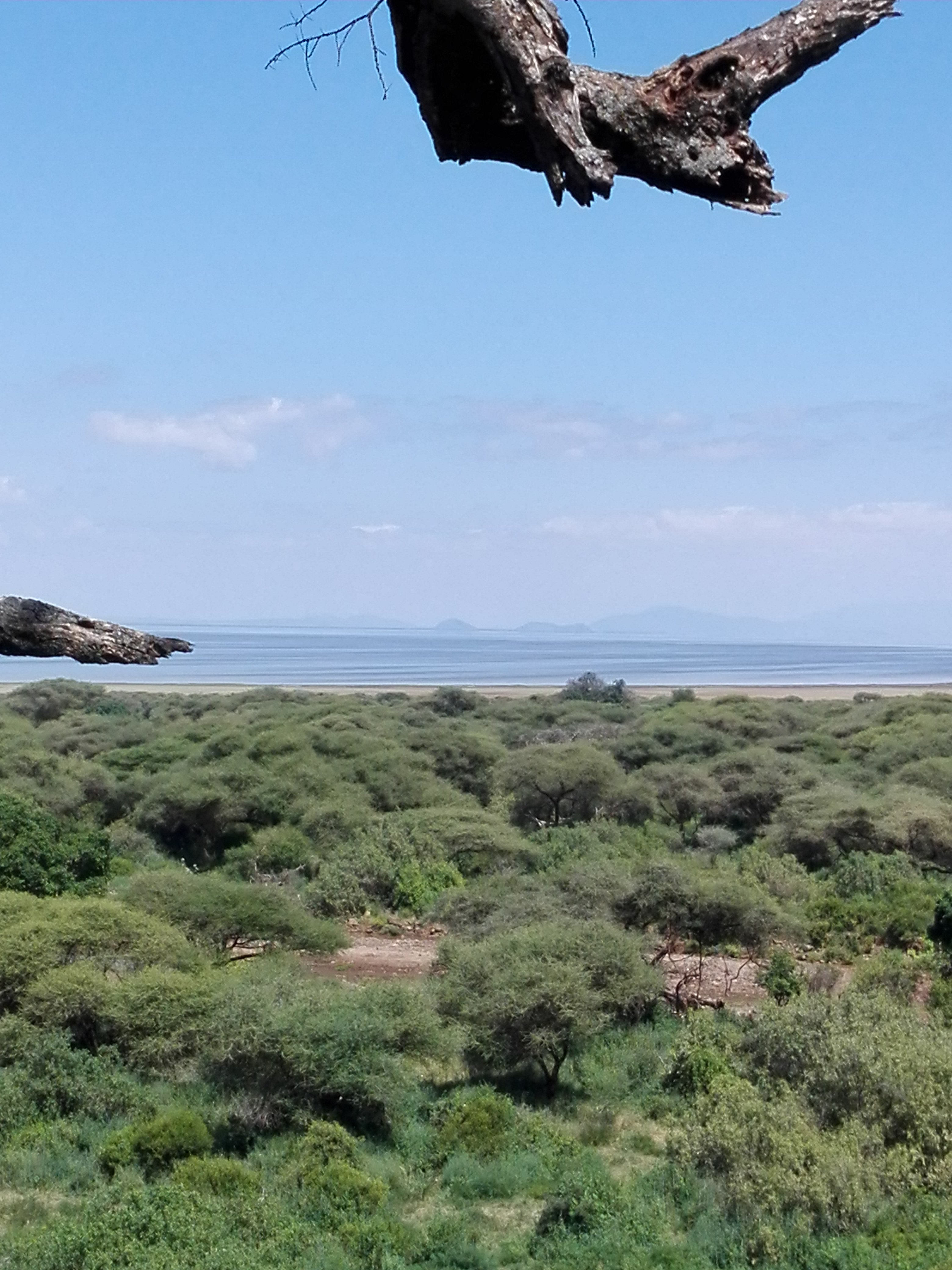
The Hippo Pool is a permanent freshwater pool near the northern shore of Lake Manyara, roughly a ten minute drive south of the main gate, where dozens of hippos rest through the day. It is one of the few marked spots in the park where you can leave the vehicle and watch from a raised platform. Fed by the Simba River delta, the pool also draws pelicans, storks and other water birds.
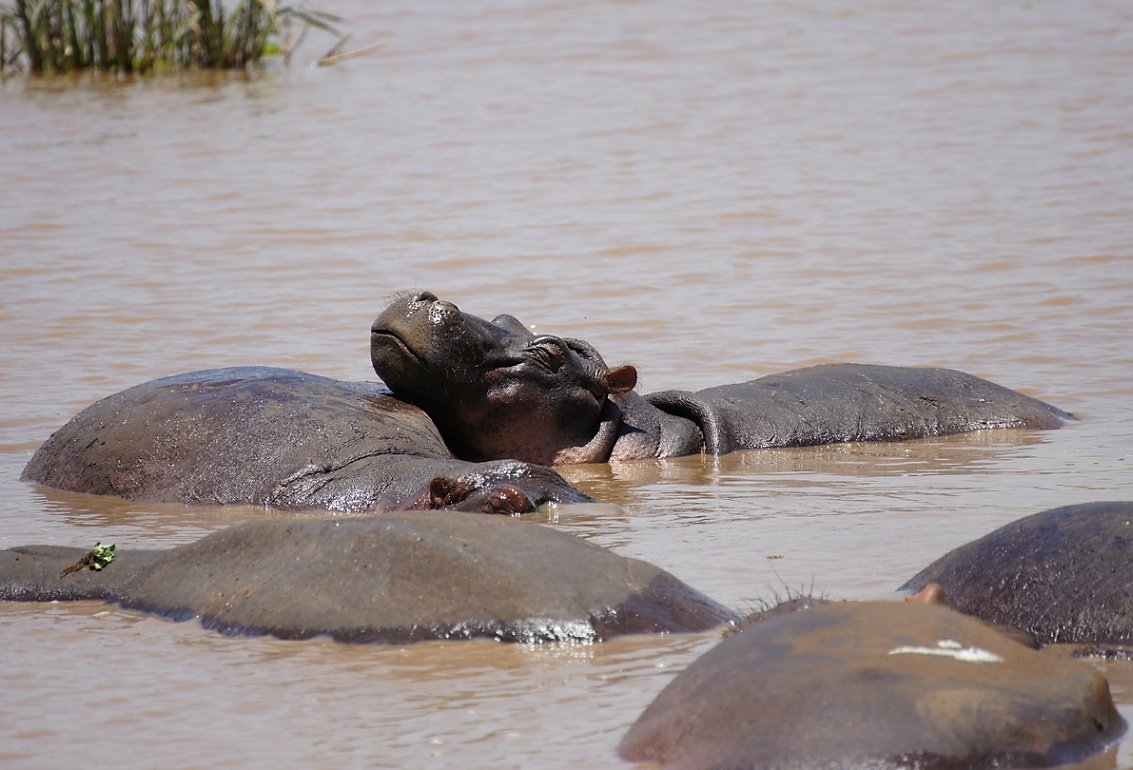
What you actually see there changes with the season, the water level and the time of day. Some mornings the pool is packed with dozens of hippos pressed together in the shallows, with pelicans and storks working the edges. Other days, when the lake has spread out or pulled back, the animals are scattered and harder to pick out. This guide walks through what the Hippo Pool is, how it fits into a game drive route, the birds and other animals in Lake Manyara that gather around it, and how to read the place honestly rather than expecting a guaranteed spectacle.
Quick orientation: The Hippo Pool viewpoint is about a ten minute drive south of the main gate on the northern shore. It is a raised platform where you can leave the vehicle. Mornings before 9am tend to be calmer and cooler, with better light for photos.
What The Hippo Pool Is And Where To Find It
The Hippo Pool is a permanent pool of water near the northern shoreline of Lake Manyara, fed by the Simba River delta where fresh water flows down into the alkaline lake basin. Because the water here stays relatively fresh and reliable, hippos gather in it through much of the year rather than moving on when the main lake turns salty or shrinks back. A wide stretch of the delta on the northern shores holds a large number of hippos, and the pool itself becomes their daytime resting spot.
Getting there is simple. The viewpoint lies roughly a ten minute drive south, and slightly east, of the park’s main entrance gate. Most drivers reach it early because it sits at the start of the classic northern circuit. You do not need a long transfer or a special route to see it, which is part of why it works so well for short visits and families with restless children who want to be out of the car.
The viewing structure is a raised wooden platform, standing around six feet above the ground. That height matters. It lets you look down over the swamp and the pool, so hippos that would otherwise be hidden by reeds and marsh grass become visible. From the same spot you can also look out toward the wall of the Great Rift Valley rising behind the park, and scan the surrounding marshland for buffalo, zebra and whatever waterbirds happen to be feeding that day.
Getting Out Of The Vehicle At The Marked Viewpoint
Inside most of Lake Manyara National Park you are required to stay inside your vehicle. The Hippo Pool viewpoint is one of the small handful of exceptions, alongside designated campsites and picnic areas. This is a marked, official spot with a built platform, not a case of your driver deciding it looks safe to stop. That distinction is worth keeping in mind, because it is the reason getting out here is permitted at all.
When you arrive, your guide will pull up and let you climb the platform. From up there you have a raised, protected vantage point, which is exactly why it exists. You are not walking down to the water’s edge, and you should not try to. The platform keeps a sensible buffer between you and the animals while still giving you a clear line of sight. Take your time, because this is one of the few moments on a Lake Manyara drive where you can stand still, listen to the grunts carrying across the swamp and take photos without the vehicle rocking.
The platform gives you a rare thing on this drive: solid ground under your feet and a clear view down over the water.
Hippo Behaviour And Why It Is Worth Watching
Hippos spend their days in water for a practical reason. Their skin dries and burns easily in the sun, so the pool is less a playground than a place to stay cool and shaded from the heat. Through the daylight hours they wallow, jostle for position, submerge and surface, and occasionally open those enormous mouths in a wide yawn that is really a territorial display rather than a sign of tiredness. Bulls guard stretches of water and will spar with rivals, so you may see two animals shoving and splashing while the rest of the group dozes.
At night the pattern flips. Hippos leave the water after dark and graze on land, sometimes covering several kilometres to crop grass with their broad lips. If you take a night game drive in the park, there is a good chance of seeing them out of the water on the roadside, which is a very different sight from the daytime pile in the pool. During the day, though, the pool is where they concentrate, and the raised platform is built precisely to let you watch that daytime behaviour in reasonable comfort.
Part of what makes the watching good is the sheer mass of the animals. A big bull can weigh several tonnes, and seeing a group of them packed into one pool gives a real sense of scale that photographs rarely capture. Listen as much as you look. The deep, rolling grunts and the sudden blowing snorts when a hippo surfaces are half the experience.
Hippo Safety You Should Take Seriously
Hippos are among the most dangerous large animals in Africa, and that reputation is earned. They are territorial, fast over short distances and genuinely unpredictable, especially near water. The reason the Hippo Pool viewpoint is safe is that it is designed to be: a raised platform at a fixed distance, with the park’s own rules about where you can and cannot go. Respect those rules and you have nothing to worry about.
The simple guidance is to stay on the platform, keep back from any edge your guide points out as off limits, and never try to get closer for a better shot. Do not attempt to walk down toward the water or position yourself between a hippo and the pool, because cutting off an animal’s route back to water is exactly what provokes a charge. Waving, shouting or clapping will not deter a hippo that has decided to move, so the whole strategy is distance rather than reaction. In a vehicle hippos rarely pose any threat, and on the platform you are equally fine as long as you behave sensibly and follow your guide’s instructions.
On the platform: stay put, keep children within arm’s reach, and let your guide decide how long to stay and where it is fine to stand. The animals look sleepy and slow. They are neither.
Birds Around The Hippo Pool
The pool and the marshland around it are as much a bird site as a hippo site. The still, shallow water and the fresh inflow from the delta pull in waders and fish eaters, and Lake Manyara as a whole is known for well over 400 recorded bird species. Around the Hippo Pool specifically, some of the most reliable sightings are large water birds working the shallows for fish, frogs and insects.
Pelicans are among the standouts. White pelicans hunt cooperatively, herding fish in the shallows in loose formations, and the park is a breeding area for large numbers of pink backed pelicans. Storks are almost always present too. Yellow billed storks wade through the shallows on their long legs, and you may also pick out marabou storks standing hunched at the margins and grey herons hunting more quietly. Cormorants, ibis, Egyptian geese and smaller diving birds fill in around them. If birds are your main interest, the wider list of birds of Lake Manyara gives a fuller picture of what the park holds beyond this one pool.
Flamingos are the bird most people ask about, and here honesty matters. The famous pink flamingo flocks gather on the open alkaline lake rather than at the freshwater Hippo Pool, and their numbers swing wildly with water levels. In good conditions they mass in huge numbers further out on the lake. In wet years, when flooding pushes the water high, the flamingos and much of the easy lakeshore birding can thin out or move away entirely. So do not arrive at the Hippo Pool expecting flamingos there. They are a lake spectacle, weather permitting, not a pool one.
Other Animals You Might See Nearby
The marshland fringing the pool is productive ground for more than hippos and birds. Buffalo often graze the wet grassland close to the water, and zebra move through the open stretches. From the height of the platform you get a wider sweep of this habitat than you do from inside a vehicle, so it pays to scan the middle distance and the tree line as well as the pool itself.
This part of the park is a transition zone, where the groundwater forest near the gate gives way to more open swamp and floodplain. That mix is why Lake Manyara feels so varied over a short drive. Elephants pass through the surrounding woodland, and the park’s well known tree climbing lions and other predators range across the wider landscape, though these are drive sightings across the park rather than anything tied to the pool. Treat the Hippo Pool as an anchor point on a route that keeps changing character as you go.
Best Time Of Day To Visit The Hippo Pool
Early morning is the clear winner. The forest road that leads down toward the pool is at its best before around 9am, when the air is cool, the light is soft and low for photography, and wildlife across the park is most active. Hippos will be settling into the water for the day, the birds are feeding, and you avoid the harsh midday glare that flattens photos and pushes some animals into cover.
Season shapes the visit as much as the hour. Lake Manyara’s water level shifts dramatically through the year. In the dry season, roughly June to October, the main lake shrinks and can effectively split, leaving the northern end swampy with fresh water where the Simba River feeds in. Hippos concentrate and soak in the muddy shallows, which often makes for reliable pool watching. In the wetter months the lake fills and can flood, which raises the water, disperses animals and can limit the easy shoreline access that makes the pool so approachable. The dry season is generally the more dependable window for this particular stop.
How The Hippo Pool Fits Into A Game Drive Route
The Hippo Pool sits naturally near the start of a northern game drive, which is why it appears on almost every Lake Manyara itinerary. A common short loop runs from the main gate through the groundwater forest, down to the Hippo Pool, and back. That route suits half day visits, first time safari goers and families, because it packs the forest, the swamp and the hippos into a manageable few hours without a long commitment.
If you have more time, the pool becomes a first waypoint rather than a turnaround. From there you can carry on south along the lake toward the Endala plains and the Simba and Silale swamps, and continue to the Maji Moto hot springs at the far end, where hot water bubbles up along the shoreline. That fuller route strings together most of the park’s habitats in one drive. Either way, hitting the Hippo Pool early, before the day heats up and other vehicles arrive, gives you the best of both the animals and the light.
A practical rhythm for the day: enter at the gate soon after opening, move slowly through the forest, spend unhurried time on the Hippo Pool platform, then decide whether to loop back or push south deeper into the park depending on your hours and energy.
Setting Honest Expectations
13-Day Grand Tanzania North and South Safari
7-Day Serengeti, Ngorongoro, Tarangire & Manyara Safari
12-Day Kilimanjaro Climb & Serengeti Safari
It is worth saying plainly that the Hippo Pool is not a guaranteed wall of hundreds of hippos every single day. On the best days it genuinely delivers a crowded pool with birds working all around it. On other days, depending on water levels and how the animals have moved, you might see a modest scatter of hippos and fewer birds. The number present varies, and flooding in wetter years has at times thinned out the classic highlights that older guidebooks promise.
None of that makes the stop a disappointment. The value is in the combination: a chance to leave the vehicle, a raised view over swamp and rift wall, hippos going about their day, and a rotating cast of large water birds. Arrive early, keep your expectations flexible, listen to your guide on both safety and timing, and the Hippo Pool earns its place as one of the more memorable stops on a Lake Manyara drive.
Frequently Asked Questions
Can you really get out of the vehicle at the Lake Manyara Hippo Pool?
Yes. The Hippo Pool viewpoint is one of the few marked spots in the park, along with campsites and picnic areas, where you are allowed to leave your vehicle. You climb a raised wooden platform that keeps a safe distance from the animals while giving a clear view. Stay on the platform and follow your guide’s instructions.
How far is the Hippo Pool from the main gate?
It is close, roughly a ten minute drive south and slightly east of the park’s main entrance gate, on the northern shore. Because it sits near the start of the northern circuit, most drivers reach it within the first half hour of a game drive.
What is the best time of day to see hippos at the pool?
Early morning, ideally before about 9am, is best. The light is soft, the air is cool, and hippos are settling into the water for the day while birds feed around the edges. During the day hippos stay in the water to keep their skin cool. At night they leave to graze on land, which you may see on a night game drive instead.
Are the hippos dangerous to visitors?
Hippos are among the most dangerous large animals in Africa, being territorial and fast. The viewpoint is safe because it is a raised platform at a fixed distance with clear park rules. The risk comes only if visitors ignore those rules, try to get closer, or move toward the water. Stay on the platform, keep back from any edge your guide indicates, and you are fine.
Will I see flamingos at the Hippo Pool?
Not usually. Flamingos gather on the open alkaline lake, not at the freshwater Hippo Pool, and their numbers vary hugely with water levels and season. You are far more likely to see pelicans, storks, herons and other water birds at the pool itself. Treat flamingos as a separate lake sighting that depends on conditions.
Is there an extra cost to visit the Hippo Pool?
There is no separate fee for the Hippo Pool itself. It is included within the normal park entry, so once you have paid the standard park entrance fee for Lake Manyara National Park, visiting the viewpoint as part of your game drive costs nothing extra. Fees are typically charged per adult per day, with lower rates for children.