This 13-day safari links Tanzania’s northern parks with the wild south. You explore Arusha National Park, Lake Manyara, Tarangire, the Serengeti plains and the Ngorongoro Crater, then fly to Ruaha for elephants and predators along the Great Ruaha River. Expect big cats, large herds and shifting landscapes across two very different safari regions.
You land at Kilimanjaro International Airport and your guide meets you for the short transfer to Arusha. The town sits below Mount Meru and works as the starting point for every northern safari. After checking in you rest, and if your flight arrives early there is time for a walk or a visit to a local craft market. In the evening your guide runs through the full route, checks your kit and answers questions about the days ahead. You spend the night at a comfortable lodge on the leafy edge of town. Meals depend on your arrival time, with dinner included. Overnight near Arusha.
After breakfast you drive a short way to Arusha National Park, a compact reserve on the slopes of Mount Meru. The park packs in three habitats: the Momella Lakes, the Ngurdoto Crater and thick montane forest. You look for black-and-white colobus monkeys in the canopy, giraffe and buffalo on the open glades, and flamingo on the alkaline lakes. Because there are few big cats here, walking is allowed, and a ranger-led walk near the lakes is a fine leg-stretch. You spend around six hours in the park with a picnic lunch, then return toward Arusha in the late afternoon. Breakfast, lunch and dinner included. Overnight near Arusha.
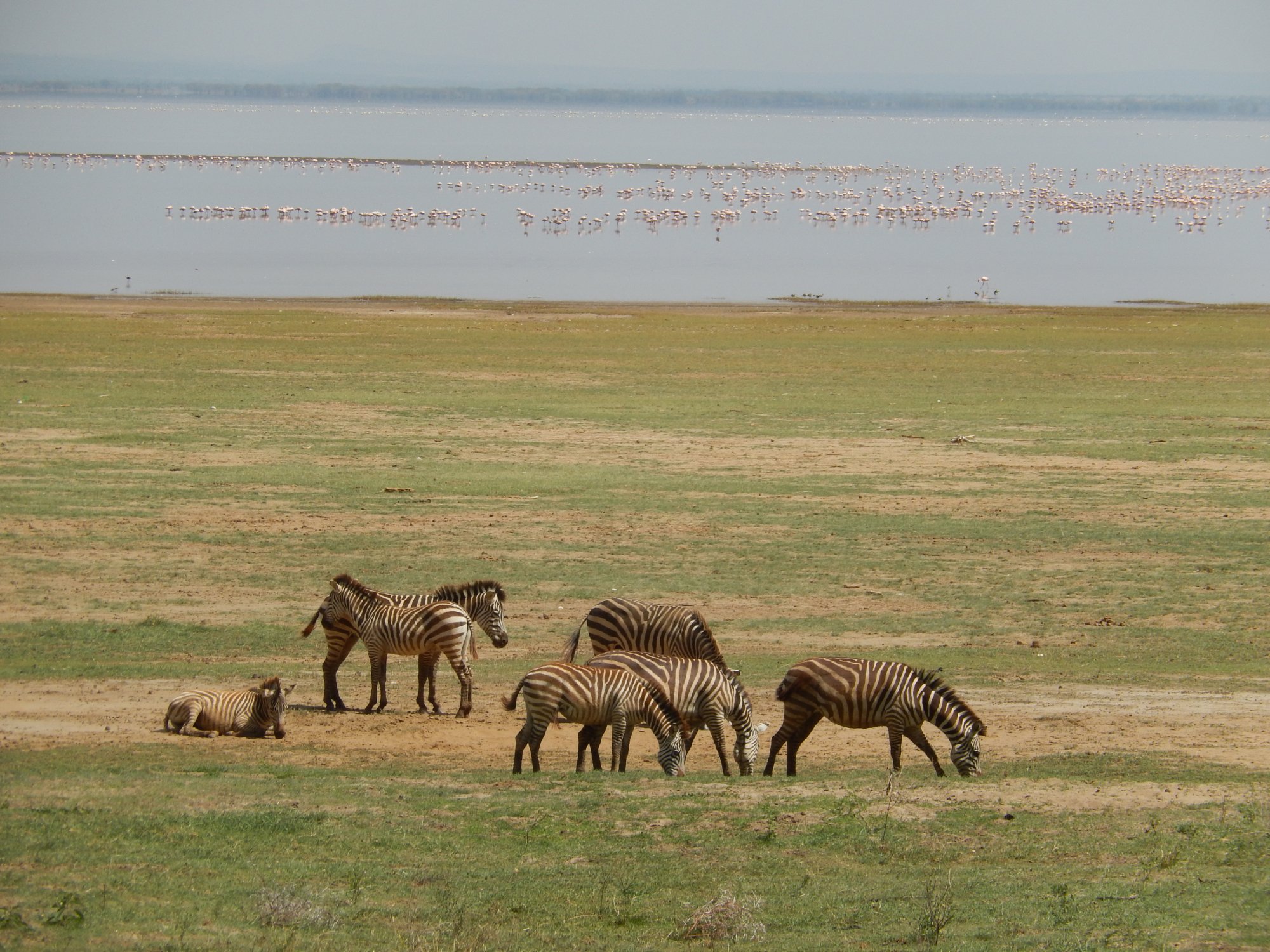
You leave Arusha after breakfast and drive roughly two hours to Lake Manyara National Park, at the base of the Great Rift Valley wall. A narrow strip of groundwater forest opens the park, alive with blue monkeys and baboons, before the track reaches the floodplain and the soda lake. Manyara is known for tree-climbing lions that drape over acacia branches, and for large elephant herds that move through the woodland. The lake edge holds flamingo, pelican and storks in the shallows. You game drive through the afternoon, about five hours in total, then climb the rift escarpment to your lodge. Breakfast, lunch and dinner included. Overnight near Lake Manyara.
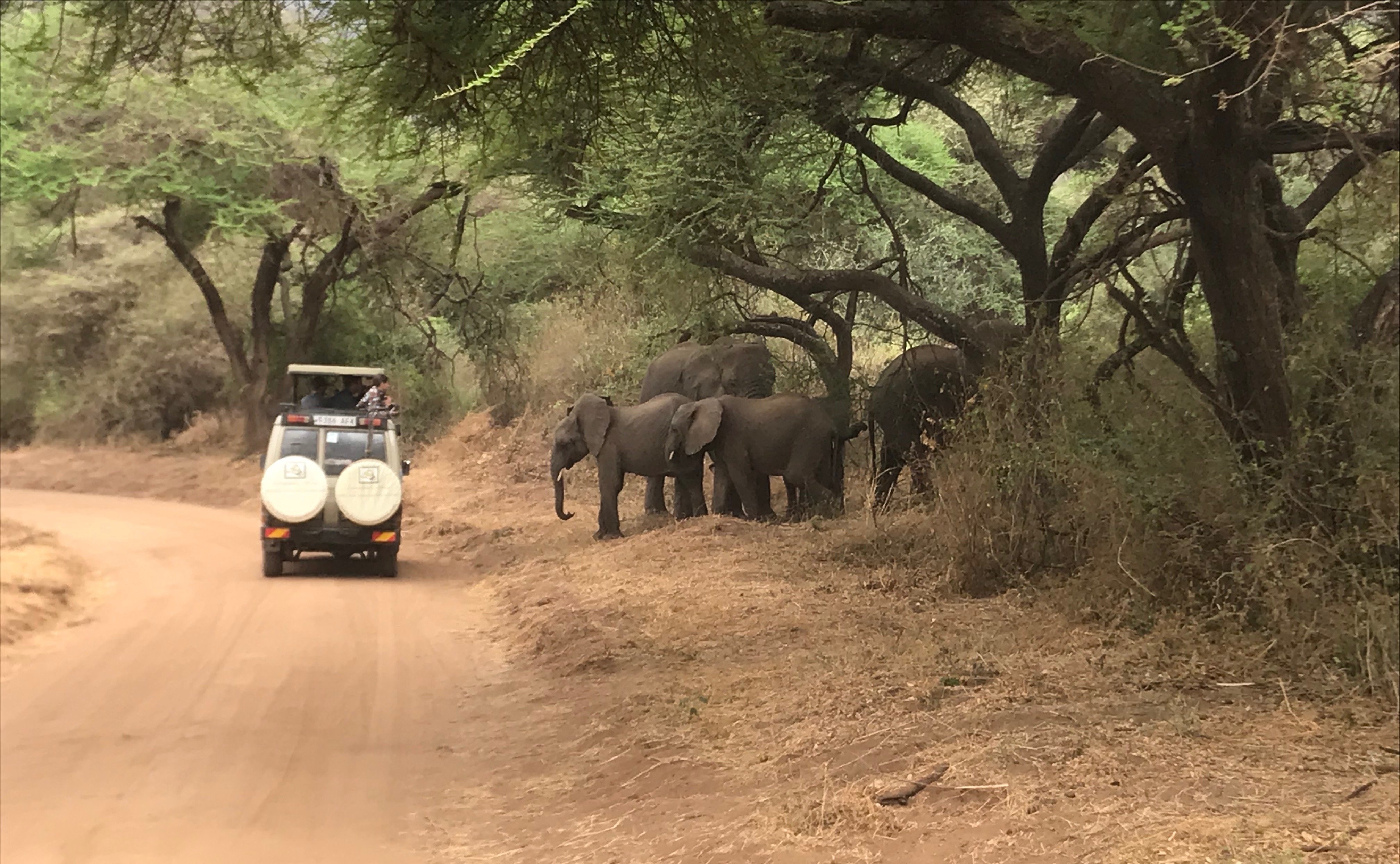
A morning drive of around two hours brings you to Tarangire National Park, known for its giant baobab trees and dense elephant population. In the dry months the Tarangire River is the only reliable water for miles, so wildlife funnels toward it in big numbers. You look for breeding herds of elephant, zebra, wildebeest and eland, with lion and leopard following the plains game. The birdlife is strong too, with hornbills, bee-eaters and the odd ground hornbill. You spend the afternoon on a game drive of roughly five hours, working the river circuits as the light softens. Breakfast, lunch and dinner included. Overnight near Tarangire.
You have a full day to explore Tarangire more deeply, with a dawn start when the air is cool and animals are active. Morning drives follow the river valleys and swamp fringes in the south, where elephant gather and predators rest in the shade. You break for a picnic lunch under a baobab, then continue through the afternoon, watching for leopard in the branches and the pythons the park is quietly known for. Tarangire sees fewer vehicles than the busier parks, so sightings feel calm and unhurried. After around seven hours in the field you return to camp for the evening. Breakfast, lunch and dinner included. Overnight near Tarangire.
Today is a longer travel day as you head northwest into the Serengeti. You climb past the Ngorongoro highlands, pausing at the crater viewpoint, then drop onto the short-grass plains that give the Serengeti its name. As you descend, the horizon opens to grassland that runs to the skyline. You game drive as you go, reaching the central Seronera area by mid to late afternoon. Seronera's river valley holds resident lion, leopard and cheetah year-round thanks to permanent water. Total travel and game viewing runs around eight hours with a picnic lunch on the way. Breakfast, lunch and dinner included. Overnight in the central Serengeti.
A full day in the Serengeti lets you cover ground and follow the action. You head out early with a packed breakfast so you are in the field for the golden hour, when cats are still hunting. Depending on the season, you may track the great migration herds, thousands of wildebeest and zebra moving between the plains and the western corridor. Even outside the migration, Seronera's resident predators, hippo pools and kopjes reward patient watching. Your guide reads fresh tracks and radio calls to place you near the best sightings. You are out around eight hours, with a picnic in the shade. Breakfast, lunch and dinner included. Overnight in the central Serengeti.
You spend a second full day in the Serengeti, this time ranging further to suit the season. Between roughly December and May the herds spread across the southern plains near Ndutu, where the calving happens and predators concentrate. From around June the animals push north and west toward the river crossings. Your guide plans the day around where the wildlife is, so you might explore the western corridor, the Grumeti woodlands or the kopje country. Along the way you look for cheetah on the open grass, lion prides on the rocks and the many plains species that fill the ecosystem. Around eight hours in the field with a picnic lunch. Breakfast, lunch and dinner included. Overnight in the central Serengeti.
After a final Serengeti morning drive you turn back east toward the highlands. The track crosses the plains where you may still catch the tail of the migration and passes through the Ngorongoro Conservation Area, home to Maasai communities who graze cattle alongside wildlife. You climb steadily to the forested crater rim by late afternoon. From the rim you look down almost six hundred metres into the caldera, a natural amphitheatre that shelters one of the densest concentrations of large mammals in Africa. Travel and game viewing runs around seven hours with a picnic lunch. The rim is cool at night, so pack a warm layer. Breakfast, lunch and dinner included. Overnight on the crater rim.
You descend into the Ngorongoro Crater after an early breakfast, dropping down the steep access road onto the floor. The caldera holds open grassland, a soda lake, swamp and patches of forest inside its walls. This is one of the best places in Tanzania to see black rhino, completing the big five in a single morning alongside lion, elephant, buffalo and the ever-present hyena. Flamingo wade in the shallows and hippo laze in the pools. You spend around six hours on the floor with a picnic lunch, then climb back to the rim. Later you transfer toward Arusha for the next leg south. Breakfast, lunch and dinner included. Overnight near Arusha.
This morning you transfer to the airstrip for a light-aircraft flight to Ruaha National Park in Tanzania's south. The flight takes a few hours, sometimes with a short stop, and gives you an aerial view of the changing country below. Ruaha is the largest national park in the country and sees a fraction of the northern crowds, so it feels wild and remote. On landing your guide meets you and you game drive to camp, watching for the greater kudu the park is known for, plus elephant and giraffe among the baobabs. The Great Ruaha River draws animals through the dry season. Around three to four hours of activity after the flight. Breakfast, lunch and dinner included. Overnight in Ruaha.
A full day in Ruaha shows why the south rewards the extra flight. The park sits where southern and eastern species overlap, so you can see both greater and lesser kudu, sable and roan antelope alongside the usual plains game. Ruaha holds large lion prides and one of the biggest populations of wild dog in East Africa, and the river attracts crocodile, hippo and elephant. You game drive the river circuits in the morning and again in the late afternoon, with a rest through the midday heat. Some camps offer a guided walk for a closer look at tracks and smaller life. Roughly seven hours of activity across the day. Breakfast, lunch and dinner included. Overnight in Ruaha.
After a last breakfast, and a short morning drive if time allows, you transfer to the Ruaha airstrip for the light-aircraft flight back to Arusha or on to Dar es Salaam, depending on your onward plans. Your guide helps with the connection and any final arrangements. If your international flight leaves late, there is time to freshen up at a day room and pick up last souvenirs. You are transferred to the airport in good time for check-in. This wraps up a route that pairs the classic northern parks with the space and solitude of the south. Breakfast included. Departure.
You can run this trip all year, and each season has its own character. The long dry months from June to October are the most popular, with thinner grass, easier sightings and animals gathered around rivers, which suits Ruaha in the south especially well. In the Serengeti the migration position shifts through the year: the southern plains fill with calving herds from about December to March, while the western and northern movement builds from June. The green months of November to May bring newborn animals, strong birding and fewer vehicles, though a few afternoon showers are likely. If Ruaha is a priority, the dry season concentrates its wildlife along the Great Ruaha River and makes the extra flight well worth it.
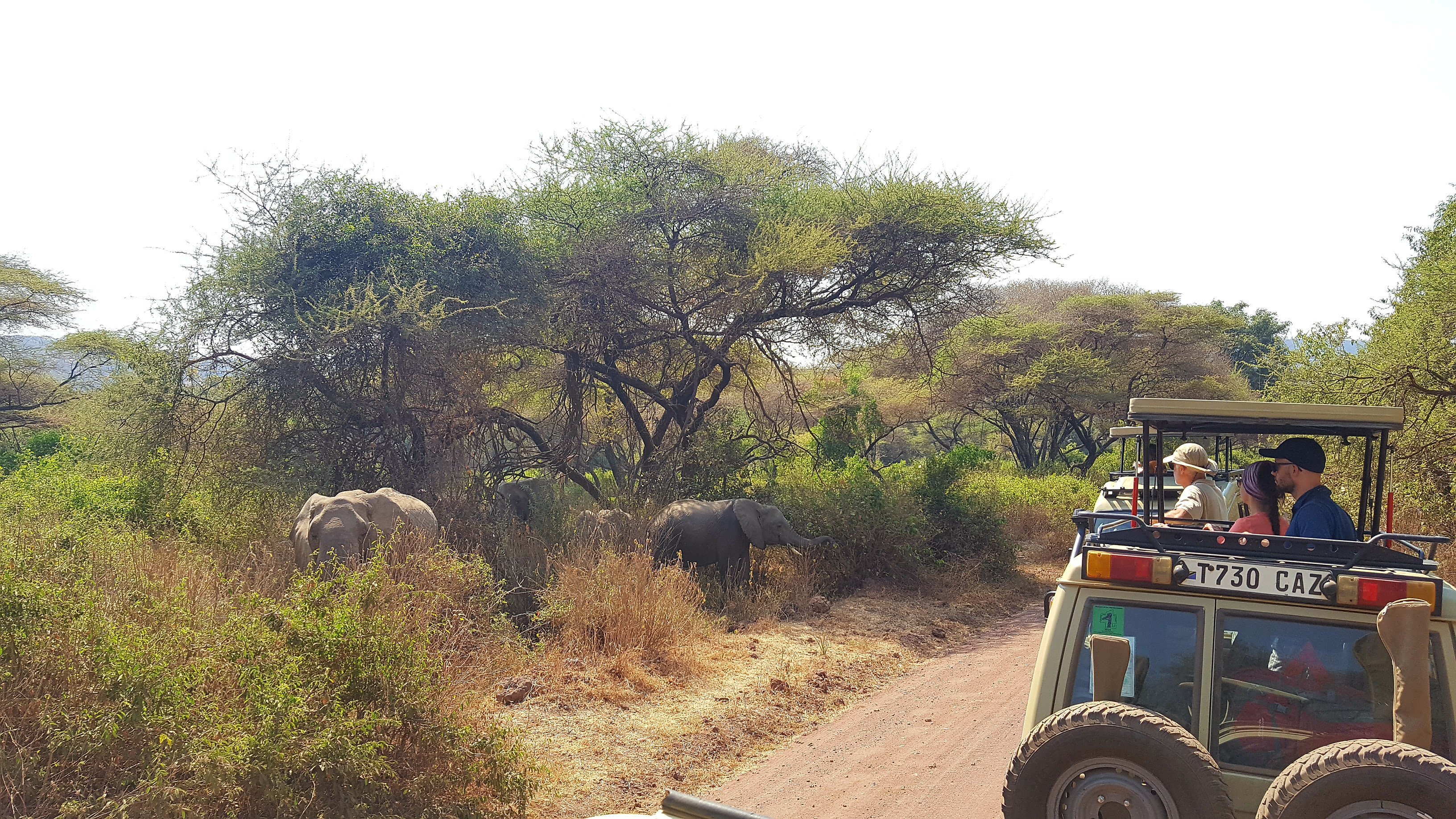
The northern leg is done by road in a 4x4, with the longest single stretch being the day you drive into the Serengeti, roughly eight hours including stops and game viewing. Other transfers between parks are two to four hours. Roads inside the parks are rough and dusty, so expect some bumping, which is part of the safari. The southern leg to Ruaha is by light aircraft to save a very long overland trip, usually a few hours in the air, sometimes with a brief stop at another strip. The small planes have strict luggage limits, normally around fifteen kilos in a soft bag, so pack light for the flight and leave hard cases behind in Arusha if needed.
The north gives you the classic big-game line-up: lion, leopard, cheetah, elephant, buffalo and, in the Ngorongoro Crater, a strong chance of black rhino, so all of the big five are possible. Lake Manyara adds tree-climbing lions and flocks of flamingo, while Tarangire is elephant country among the baobabs. The Serengeti is the place for big cats and, in season, the migration herds. Ruaha in the south shifts the mix. It sits on a species boundary, so you can see both greater and lesser kudu, sable and roan antelope, large lion prides and one of Africa's best populations of wild dog. The river also brings crocodile, hippo and heavy elephant traffic. Together the two regions give a broader cross-section of Tanzanian wildlife than the north alone.
Tanzania is a malaria area, so most travellers take antimalarial tablets. Speak to a travel clinic or your doctor well before you leave, since some courses start before arrival. Bring repellent with DEET, cover up at dawn and dusk when mosquitoes are most active, and use the nets provided in camps. A yellow fever certificate is generally only required if you are arriving from or transiting a country where yellow fever is present, but rules change, so check the current entry requirements before you fly. Routine jabs such as tetanus, hepatitis A and typhoid are commonly recommended. None of this is medical advice, so treat a clinic visit as part of your planning.
Both work, and the choice comes down to budget and style. A private safari gives you your own vehicle and guide, so you set the pace, linger at sightings and adjust the day as you like, which many people prefer over thirteen days. A small group shares the cost and can be sociable, though you compromise on timing. Because this route already includes internal flights and full-board lodges, a private version is a natural fit for the Classic tier and the longer length. Families and small groups of friends often find a private vehicle no more expensive per head once you add up the numbers. Whichever you pick, you keep a window seat, since the vehicles are set up so nobody sits in the middle.
Think light, neutral and layered. Days are warm and evenings on the crater rim and in Ruaha can be cool, so pack a fleece or warm jacket alongside shirts and trousers in tan, khaki and green. Avoid bright white and dark blue or black, which can attract insects. Bring a wide-brim hat, sunglasses, high-factor sunscreen and a refillable water bottle. A good pair of binoculars transforms game viewing, and a camera with a zoom lens earns its place. Because the flight to Ruaha limits luggage to a soft bag of around fifteen kilos, pack in a duffel rather than a hard case. Laundry is available at most camps, so you can travel with fewer clothes. Add any personal medicines, a small first-aid kit and a torch.
For a trip of this length that mixes road and air travel, booking six to twelve months ahead is wise, especially for travel between June and October or over the December to March window, when lodges and flights fill early. The price moves with the season because park fees, camp rates and flight demand all rise in peak months, and the best camps in the Serengeti and Ruaha sell out first. Shoulder and green-season departures cost less and can be excellent value, with lower rates and quieter parks. Your tier also affects the price, since it sets the standard of lodges, the size of the vehicle party and the level of service. Booking early locks in your preferred camps and usually the better rate.