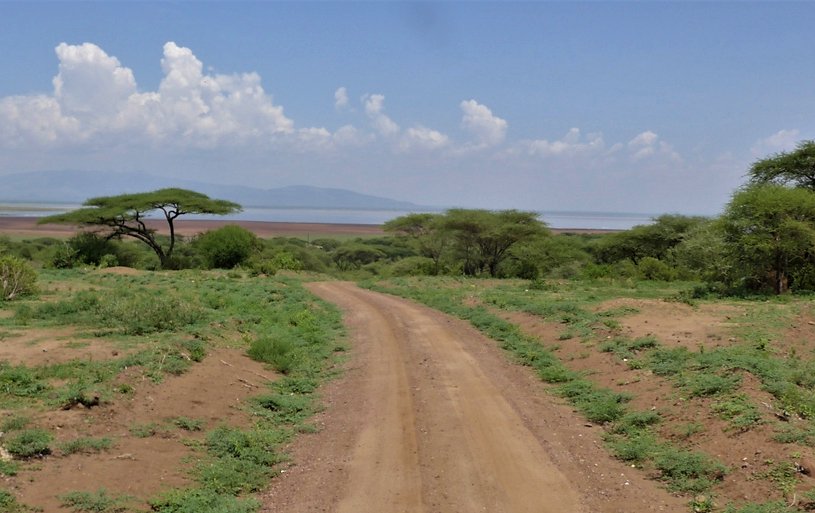
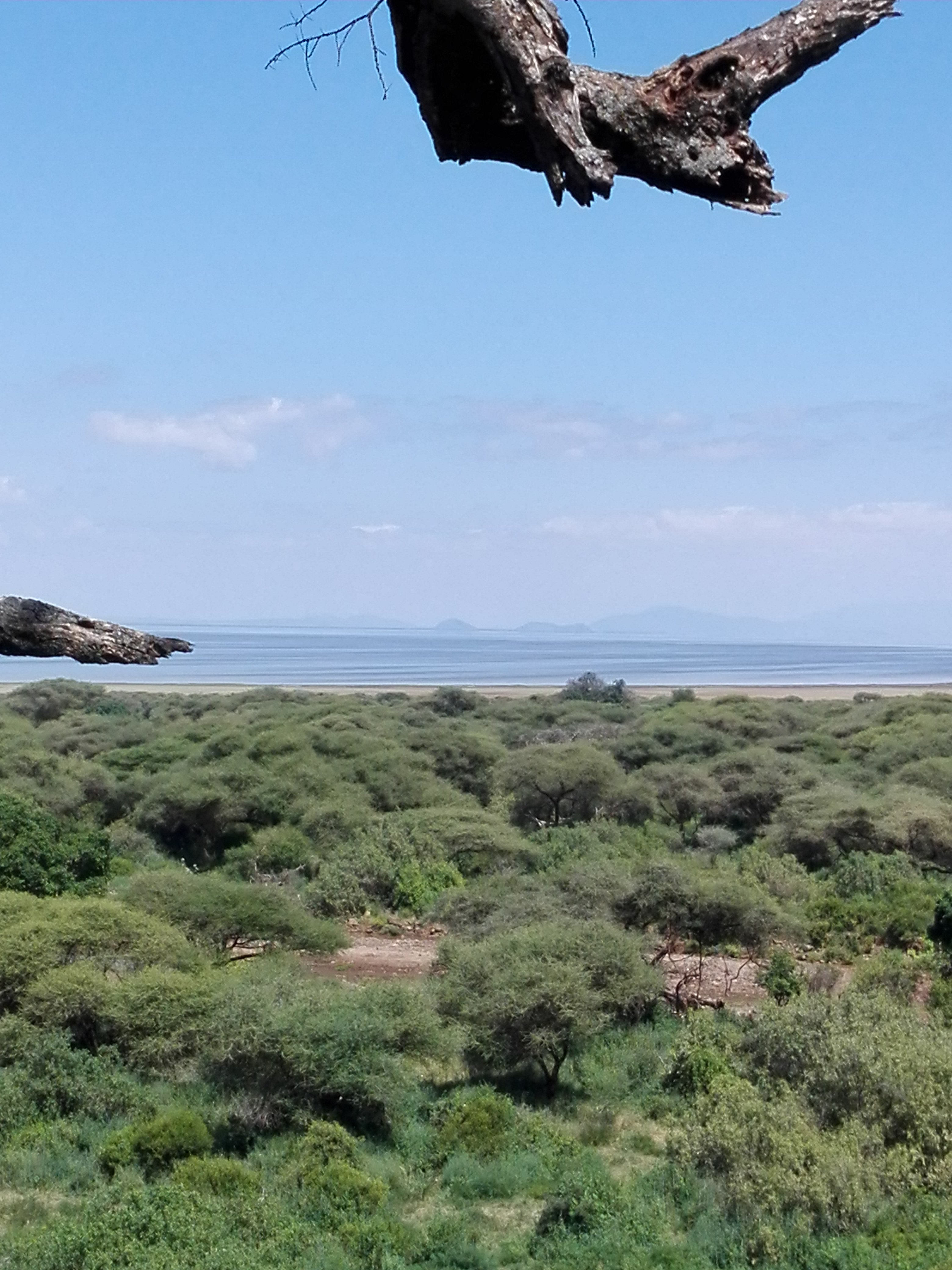
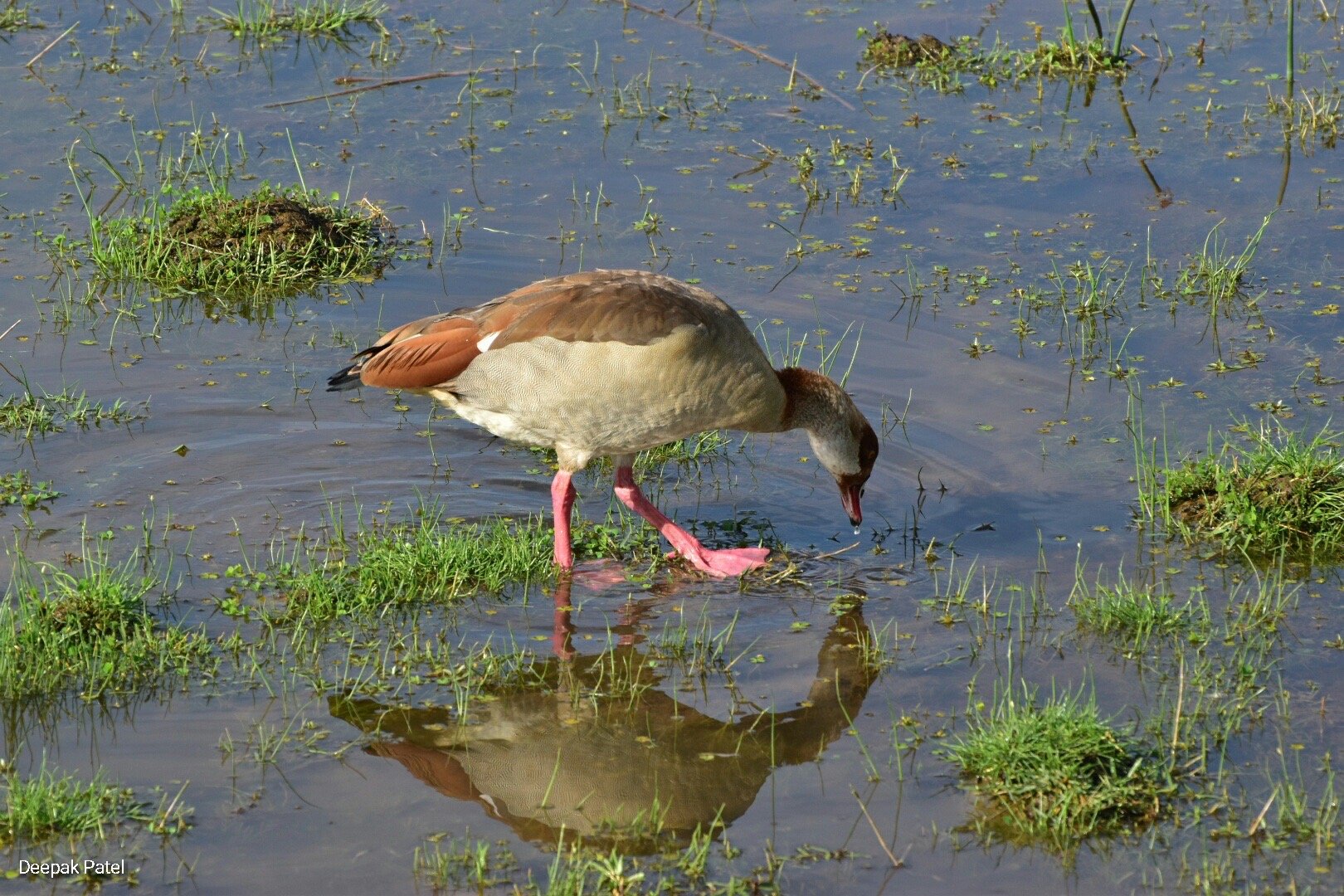
Lake Manyara is a soda lake, a shallow, highly alkaline and salty body of water that forms only where certain geology and climate meet. Its pale surface is ringed with white mineral crusts and dusted pink where thousands of flamingos feed. The lake fills the floor of the Rift Valley basin, and its caustic water can burn skin while feeding the algae that draw the birds. This guide explains how the soda lake forms and why the shoreline stays famous.
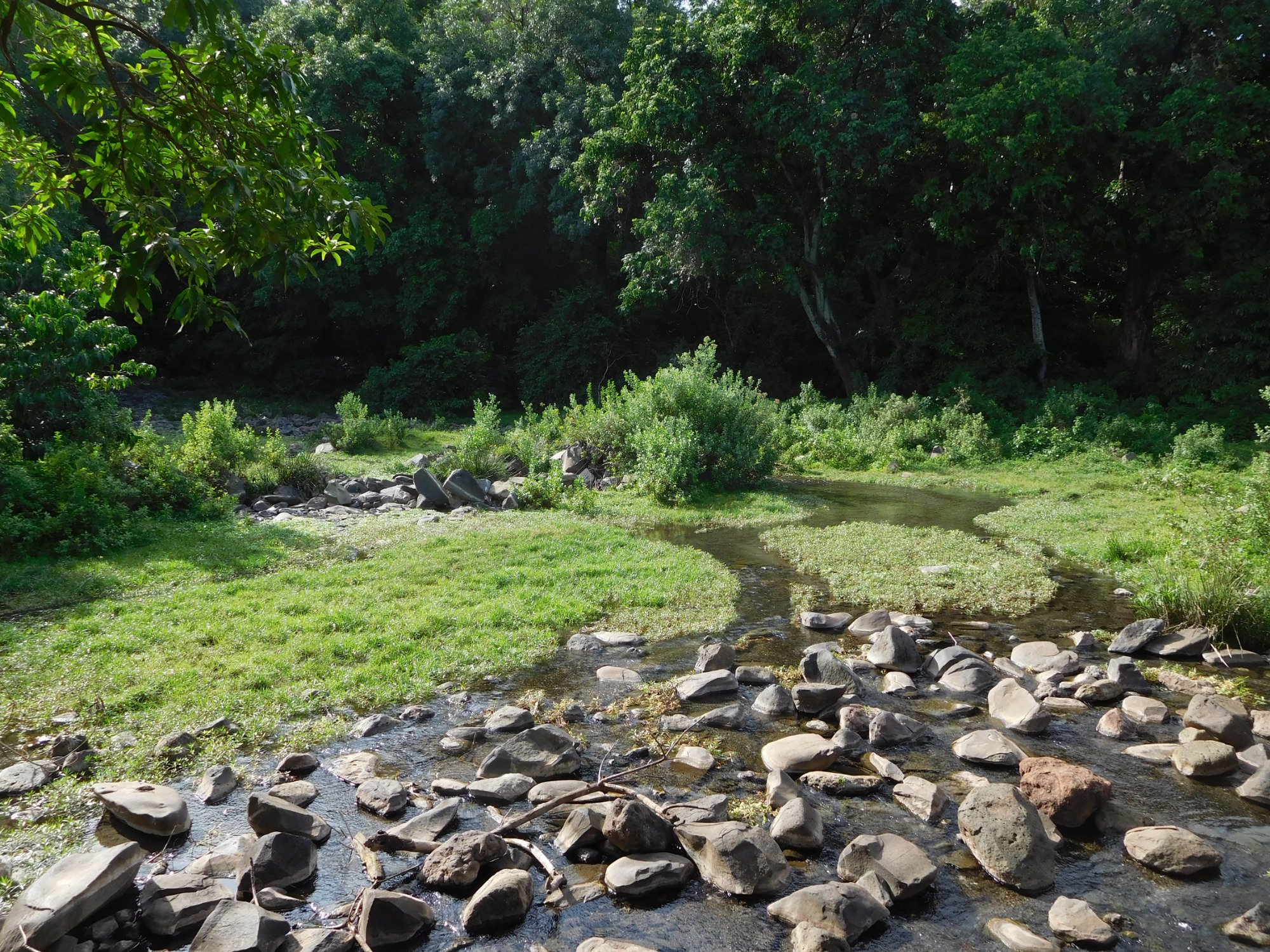
None of this is exotic trivia. The soda chemistry is the reason the shallows glow with colour, the reason lesser flamingos gather here in such numbers, and the reason the lake looks so different from one month to the next. Once you can read the water, a game drive along the shore starts to make far more sense.
The short version: A soda lake is water rich in dissolved sodium carbonate salts, which pushes the pH high into the alkaline range. Manyara sits in a closed Rift Valley basin with no river draining out of it. Water arrives, then leaves only by evaporating, and the salts it carried in stay behind and build up over time.
What A Soda Lake Actually Is
A soda lake, also called an alkaline lake, is a lake whose water sits well on the basic side of neutral. Plain drinking water measures around pH 7. A soda lake typically runs somewhere between pH 9 and pH 12. That climb happens because the water carries a heavy load of carbonate and bicarbonate salts, most of them sodium based, chiefly sodium carbonate and sodium bicarbonate. Chemists sometimes call the natural mineral form of these salts natron or trona, and the word soda in the name comes straight from that soda ash chemistry.
Measured chemistry backs this up for Manyara. Studies of the lake put its pH in the range of about 9.0 to 10.2, with sodium making up the great majority of the positive ions in the water and carbonate plus bicarbonate making up more than half of the negative ions. That mix is the textbook signature of a soda type lake rather than an ordinary salt lake.
Many soda lakes are also simply salty in the way seawater is salty, because they hold sodium chloride and other dissolved solids alongside the carbonate. That is why you often see soda lakes described as saline as well as alkaline. The two properties travel together, but it is the carbonate chemistry, not the plain salt, that defines the soda character and drives the high pH. If you want the fuller picture of the ion balance and the acidity, our companion piece on why the lake is alkaline takes the numbers further.
How A Closed Rift Valley Basin Builds One
Soda lakes are not random. They need three things to line up: a closed basin, a dry climate, and the right rocks. Lake Manyara has all three, which is no accident given where it sits.
The lake lies along the Natron to Manyara to Balangida branch of the East African Rift, the great crack in the continent where the land is slowly pulling apart. Rifting drops long, steep sided valleys, and the towering wall of the Rift escarpment rises right along Manyara’s western edge. A basin like this can trap water. Rivers, streams, and underground springs run down off the Ngorongoro highlands and the surrounding slopes and pool on the valley floor.
The decisive feature is what happens next, or rather what does not happen. Lake Manyara has no outlet. No river carries water back out of the basin toward the sea. Hydrologists call a basin like this endorheic, meaning water can only leave by evaporating into the air. Everything that flows in stays in, minus the pure water vapour that rises off the surface.
Water flows into the basin carrying dissolved minerals, but only clean water vapour can leave. The salts have nowhere to go, so they stay and concentrate.
That one way door is the engine of the whole system. Rivers always carry a small load of dissolved minerals picked up from the rocks they cross. In a normal lake that drains to the ocean, those minerals wash straight through. In a closed basin they accumulate. Year after year, water arrives salty in a mild way, then evaporates and leaves its salt behind. Over long stretches of time the standing water grows steadily more concentrated.
Why Evaporation Concentrates The Salts
Evaporation is the quiet force doing most of the work at Manyara. The lake sits in a warm, semi arid stretch of northern Tanzania where sunshine is strong and the air is thirsty for moisture. Water leaving the surface as vapour is pure. It takes no salt with it. So every litre that evaporates leaves its entire mineral content in the shrinking pool that remains.
Think of it like a pan of lightly salted water left on a low heat. As the water boils off, the remaining liquid tastes saltier and saltier, and eventually salt crystals appear around the rim. Manyara does the same thing on a landscape scale, only across seasons and centuries rather than minutes. The white crusts you see fringing the shore in the dry months are exactly this: evaporite salts left standing on the mud as the water pulls back.
There is a second reason the carbonate chemistry wins out here rather than some other salt mix. The volcanic rocks and ash shed from the highlands around the Rift are rich in sodium but relatively poor in calcium and magnesium. That balance matters. When calcium and magnesium are plentiful, they grab carbonate ions and lock them into hard, insoluble minerals, which keeps the water closer to neutral. Where those two elements are scarce, as they are in this volcanic setting, the carbonate stays dissolved and paired with sodium, and the water is free to climb into the strongly alkaline range. The ash washing down from the surrounding slopes keeps topping up the sodium supply.
The Cyanobacteria And Algae That Colour The Water
Water this alkaline sounds like it should be dead. It is the opposite. East African soda lakes rank among the most biologically productive waters anywhere on Earth, and the reason is a group of tiny organisms that tolerate the chemistry and thrive in it.
The star is a filamentous cyanobacterium once widely called Spirulina and now placed by scientists in the genus Arthrospira, the species here being Arthrospira fusiformis. Cyanobacteria are sometimes loosely called blue green algae, though they are really photosynthesising bacteria. In a warm, sunlit, carbonate rich lake they multiply into vast floating populations called blooms. These blooms carry pigments that tint the water shades of green, and in the most concentrated conditions across the wider Rift region they can drive the surface toward orange and deep red. That living pigment is a large part of why a soda lake so rarely looks like ordinary blue water.
Alongside the cyanobacteria, dense mats of benthic diatoms coat the shallow lake bed, and a scatter of other salt loving microbes fill out the community. Together they form the base of the food web. Because there are almost no fish to graze them down in the harshest soda waters, the microscopic producers can build up to enormous densities, which is precisely what draws the birds. If you want to see how these producers connect to everything else living around the shore, the wider ecosystem guide maps out the full chain from microbe to elephant.
How Soda Chemistry Feeds The Lesser Flamingos
The pink birds along Manyara’s shallows are mostly lesser flamingos, and their whole way of life is built around soda lake chemistry. A lesser flamingo feeds by holding its specially shaped bill upside down in the water and pumping the shallow soup through fine comb like plates that strain out food. What it is straining is the Arthrospira and the other microscopic life the alkaline water grows in such abundance.
This is a tight, almost closed loop. The closed basin and steady evaporation build the carbonate chemistry. That chemistry, warmed by strong sun, grows dense blooms of cyanobacteria. The blooms feed rafts of flamingos, which gather in their thousands and sometimes their millions across the region’s soda lakes. The pink and coral tones of the birds themselves come from pigments in that same algae based diet, so even the colour of the flock traces back to the soda water.
On a game drive along the Manyara shore, the soda story shows up in things you can actually watch. The white salt crusts on the exposed mud mark old high water lines. The greenish or milky tint on the open water is the living bloom. The bands of feeding flamingos trace where the food is thickest that week. Read together, they tell you how full and how concentrated the lake is on the day you visit.
The catch is that this food supply is not steady. Cyanobacterial blooms in soda lakes are famously unstable. A bloom can build to spectacular density and then collapse without much warning, and when it does the flamingos simply move on to another lake where feeding is better. This is why flamingo numbers at any single soda lake swing so wildly from month to month and year to year. The birds follow the algae, and the algae follow the chemistry.
How The Lake Shrinks And Swells With The Seasons
Lake Manyara is remarkably shallow. Its deepest point reaches only a few metres, and across much of its area the average depth sits below one metre. A wide, shallow pan like this reacts fast to the weather, and the lake’s size and chemistry shift noticeably through the year.
During the rains, streams and springs pour fresh water into the basin, the lake spreads out across its flats, and the water level rises. That inflow dilutes the salts, so salinity and pH ease off and the water turns more hospitable. The flooded shallows and softer chemistry make good feeding and breeding conditions, and this is often when the shoreline fills with the most birds.
In the dry season the balance flips. Inflow drops away, strong sun and dry air drive hard evaporation, and the water pulls back toward the centre of the basin. As it shrinks, the same load of salt is packed into a smaller volume, so salinity climbs and the pH rises. The exposed margins bake, salt crusts spread across the mud, and parts of the lake bed can dry out entirely in the harshest years. Because the lake is so shallow, these swings can be sharp, and the water you see is never quite the same lake twice.
This seasonal breathing, wet season swell and dry season shrink, is a normal part of how a closed basin soda lake behaves. It is worth keeping in mind that longer term pressures on the rivers feeding Manyara can push the dry season lows further than they used to go, which is why the lake’s water balance is watched closely.
Why The Water Can Be Caustic
Caustic is the right word for badly concentrated soda water, and it is worth understanding why. Sodium carbonate dissolved at high concentration makes a strongly basic solution. At the upper end of the soda lake range, around pH 10 and above, the water becomes chemically aggressive in the same broad way a household cleaning solution is. Manyara at its saltiest sits toward the milder part of that range, but the neighbouring Rift soda lakes show where the chemistry can go: some push past pH 12 in the dry season, roughly as caustic as strong ammonia, concentrated enough to sting skin and irritate eyes.
The caustic strength is not fixed. It tracks the seasons directly. After good rains, diluted by fresh inflow, the water is far gentler. Deep into a dry spell, concentrated by evaporation, the same lake grows far more corrosive. So how harsh Manyara feels depends a great deal on when you stand beside it.
The creatures that live here are built for it. Lesser flamingos have tough, scaled skin on their legs that shrugs off water that would blister softer tissue, and the salt tolerant tilapia that survive in the milder soda lakes carry their own physiological tricks for handling the chemistry. For a human visitor the sensible rule is simple: enjoy the lake from the shore and from the vehicle, treat the crusted margins as slippery and unpleasant rather than inviting, and keep the caustic water off your skin and well away from your eyes.
Reading the shoreline: Bright white crusts and a strong mineral smell point to a concentrated, more caustic phase, usually deep in the dry season. A broad, brimming lake with softer colour points to a diluted, gentler phase after the rains. The birds, the salt, and the water colour are all telling you the same story about how concentrated the soda is right now.
Manyara In The Family Of Rift Valley Soda Lakes
Manyara is one link in a chain of soda and saline lakes strung along the floor of the East African Rift, from the soda lakes of Kenya down through northern Tanzania. They share the same recipe: closed volcanic basins, dry climate, sodium rich ash, and no drainage to the sea. What differs between them is mainly the degree of concentration and the depth of water, which is why some hold fish and gentle chemistry while others turn into shallow, blistering soda pans.
Seen as a group, these lakes are one of the natural wonders of the region and a cornerstone of its birdlife, because flamingos and many other water birds move between them following the blooms. Understanding Manyara as a soda lake is really understanding a whole landscape. The chemistry that seems forbidding at first is the very thing that makes the shallows so alive, and it is a large part of what gives a Tanzania safari its colour along this stretch of the Rift.
Frequently Asked Questions
Is Lake Manyara safe to swim in?
No. It is a shallow alkaline soda lake, not a swimming lake. The bed is soft mud, wildlife such as hippos and crocodiles use the water and margins, and in concentrated dry season conditions the water is caustic enough to irritate skin and eyes. Enjoy it from the shore or from a safari vehicle rather than getting in.
Why is the water pink or greenish rather than blue?
The colour comes from living organisms, not the water itself. Blooms of cyanobacteria, chiefly Arthrospira, carry pigments that tint the water green, and in the most concentrated soda waters of the wider region those pigments can drive the surface toward orange and red. The pink of the flamingo flocks feeding on that algae adds to the effect.
What does it cost to visit Lake Manyara National Park?
Park entry for an international adult visitor generally runs to a fee in the region of about fifty to sixty US dollars per person per day, with lower rates for East African residents and for children, plus separate charges for the vehicle and for any guide. Prices are set by the park authority and change periodically, so confirm the current tariff and any conservation fees with your operator or the park before you travel.
Why does Lake Manyara have no fish in the saltiest parts?
The strongly alkaline, salty soda water is too harsh for most fish. Where the chemistry is milder, especially near freshwater inflows and springs, salt tolerant tilapia can survive, but across the open soda water the base of the food web is microscopic cyanobacteria and diatoms rather than fish, which is exactly what supports the flamingos.
When are there the most flamingos on the lake?
There is no fixed calendar for it because the birds follow the algae. Numbers are often strong when water levels are up and feeding conditions are good, but blooms build and collapse unpredictably, so flamingos may crowd the shore one month and thin out the next as they move to other Rift soda lakes. It is best treated as a wonderful chance rather than a guarantee.
Does the lake really dry up?
It shrinks dramatically. Because the lake is so shallow, dry season evaporation pulls the water back toward the centre and can expose wide salt flats, and in the harshest years parts of the bed dry out completely before the rains refill and dilute it again. This wet season swell and dry season shrink is a normal rhythm for a closed basin soda lake.