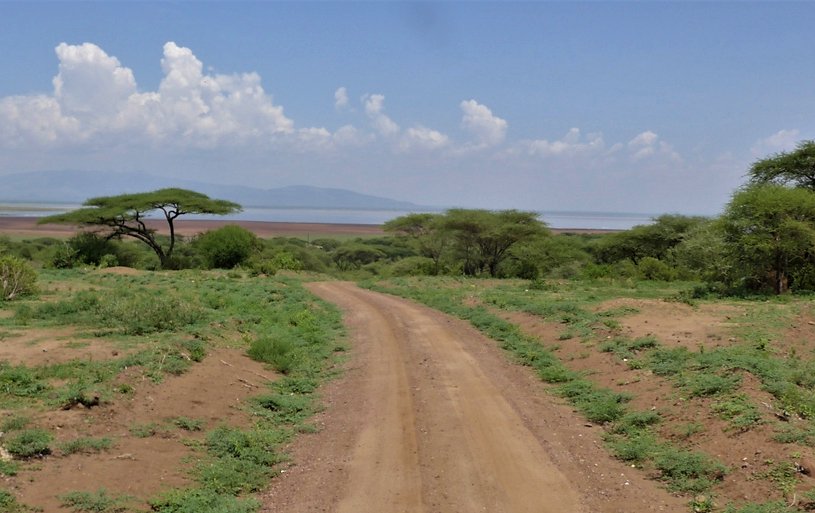
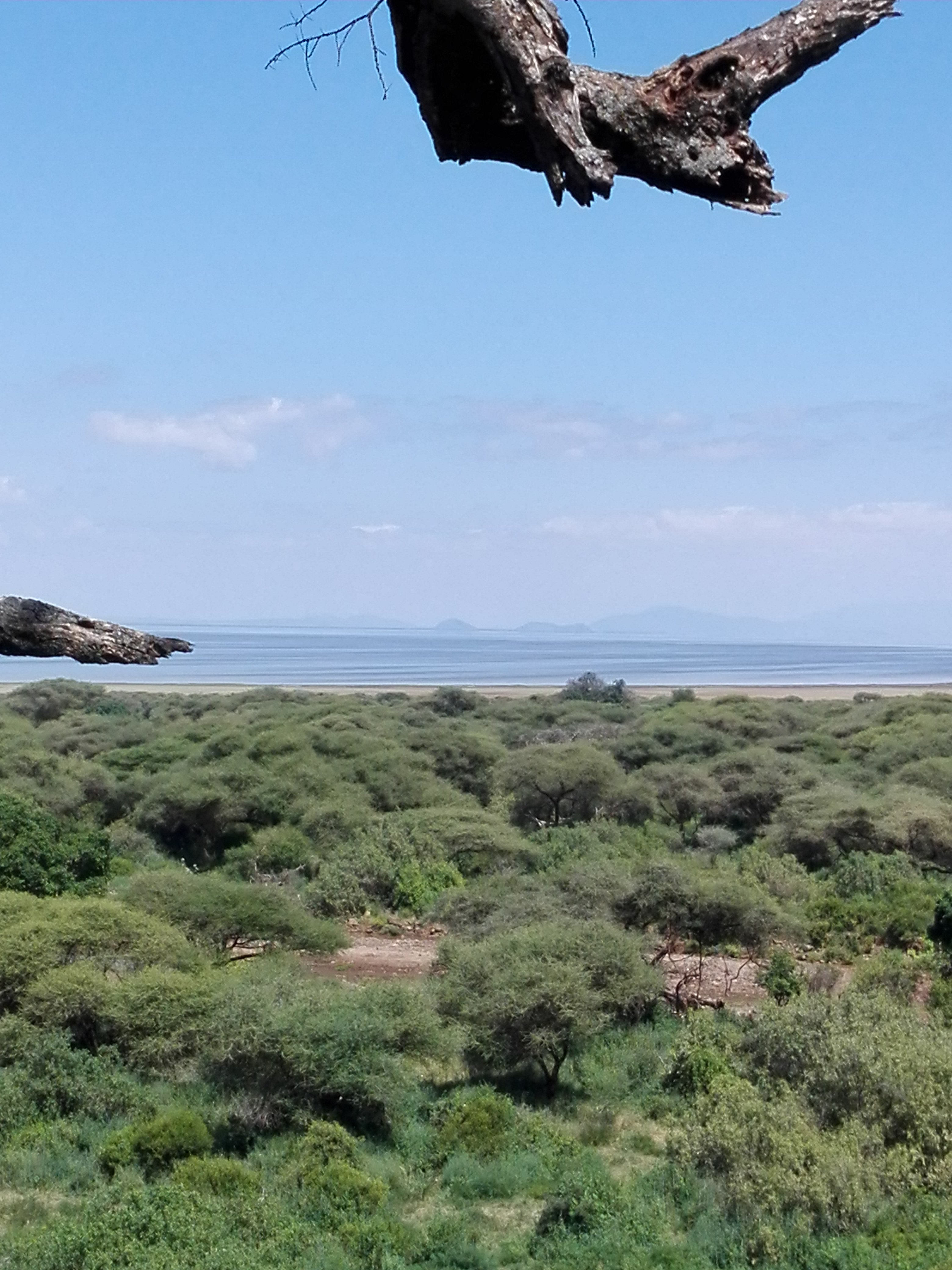
Leopards live in Lake Manyara National Park in real numbers, yet most visitors leave without seeing one, so a sighting here comes down to luck as much as timing. The cats keep to the fig and mahogany of the groundwater forest and the base of the Rift Valley wall, moving mostly when the light is low. Early and late game drives, and a night drive where offered, give the best odds in this narrow northern Tanzania park.
This guide walks through where Manyara’s leopards live, why they are so hard to see, when your chances improve, and how they fit into the wider predator picture of the park. It also clears up a question that confuses many first time visitors: the leopard is not the famous cat that made Manyara well known. That title belongs to the lions. We will sort out the two so you know exactly what you are looking at when you spot a big cat resting on a branch.
The Resident Leopards of the Groundwater Forest
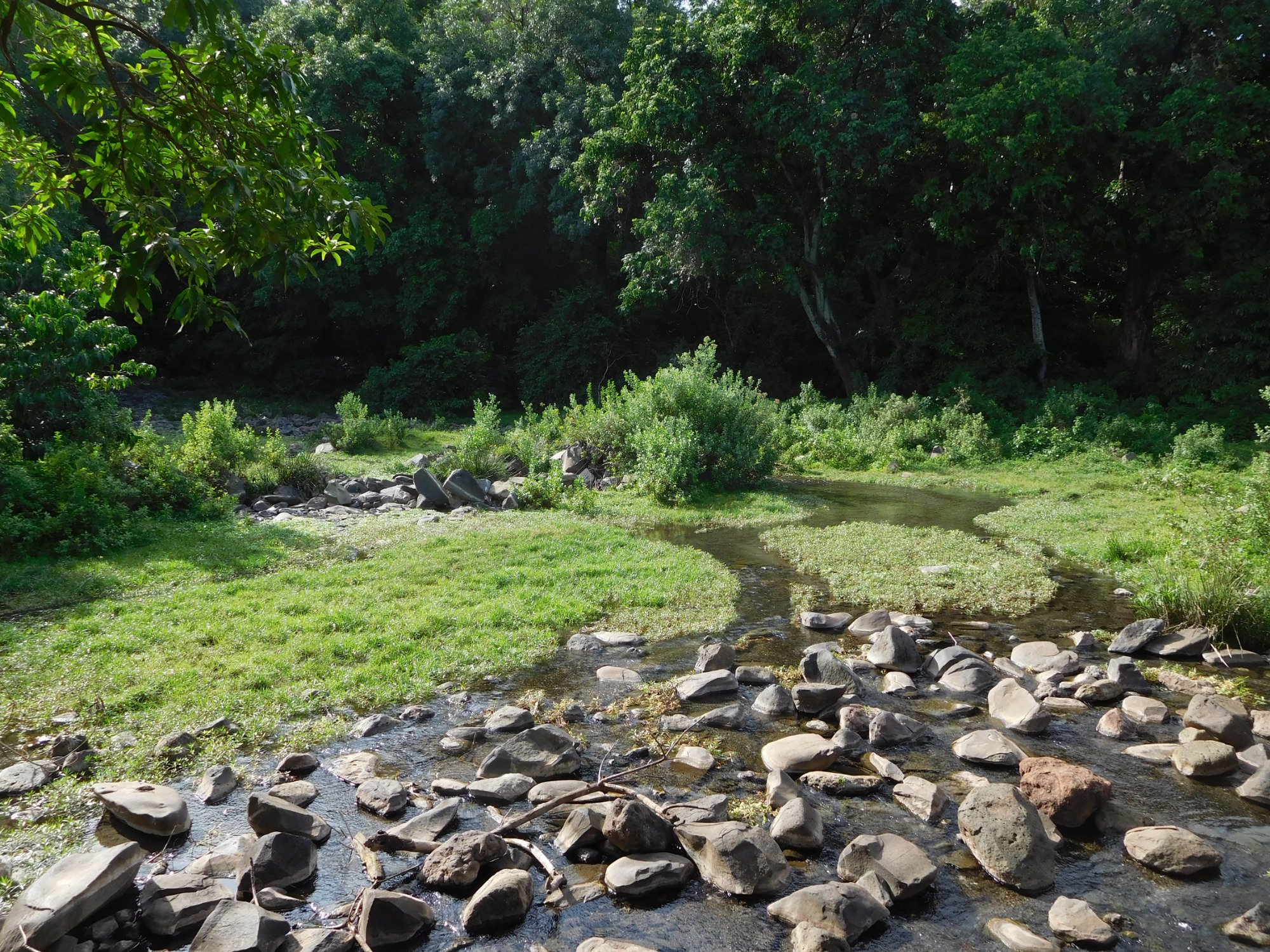
Near the park gate the land is covered by a tall, evergreen groundwater forest, fed by rivers running off the escarpment and by springs that push up below the Rift wall. Fig and mahogany trees rise overhead, and the shade stays deep even at midday. This is prime leopard ground. The thick canopy, the tangle of understory, and the constant dappled light give the cats everything they need to move unseen and to rest through the hot hours.
Leopards also work the rocky slopes of the escarpment that towers over the park and the wooded edges where forest gives way to open savannah. These places offer cover, high vantage points, and steady prey. The escarpment in particular holds a dense leopard presence, though the same steep, bushy ground that suits the cats also blocks them from view. A leopard can watch your vehicle pass from twenty metres away and you will never know it was there.
Prey is plentiful across these habitats. Leopards here take antelope such as bushbuck and impala, along with smaller mammals, birds, and primates. The park holds one of the largest baboon troops in Africa, and leopards are known to lift monkeys and other primates from their sleeping trees after dark. As ambush hunters, they rely on patience and cover rather than the open chase, which is one more reason they favour the dense forest that makes them hard for us to find.
Slow down in the groundwater forest near the gate. Many drivers push through this section to reach the open lakeshore, but the forest is exactly where a resting leopard is most likely to be draped along a horizontal limb. Ask your guide to scan the mid level branches of the big figs.
Why Leopards Are So Hard to Spot on a Game Drive
Three things work against you. The first is the leopard’s coat. Those rosettes are not decoration. In woodland light and riverine forest the broken pattern dissolves into the background of leaves, bark, and shifting shade. A leopard lying still is close to invisible until it moves. Guides often find them only when a tail flicks or an ear turns.
The second is behaviour. Leopards are solitary and secretive by nature. They avoid open ground during daylight, they keep to cover, and they do not announce themselves the way a pride of lions might. A single cat with no reason to be seen is a hard target in any park, and Manyara’s dense vegetation stacks the odds further in the leopard’s favour.
The third is the park itself. Manyara is thick. The forest, the bush, and the tall grass that suit leopards so well also cut your sightlines to a few metres in many places. This is different from open plains parks where a cat on a distant kopje can be picked out with binoculars. Here you are often looking into a green wall. There is a healthy leopard population in the park, yet the cover means only the occasional lucky visitor gets a clear look.
None of this means you should give up on the idea. It means you should hold realistic hopes and treat a sighting as a bonus rather than a promise. Plenty of the park’s other wildlife is far more reliable, and a leopard, when it comes, is all the sweeter for being rare.
Best Chances and Time of Day for a Leopard Sighting
Leopards are most active in the cool hours around dawn and dusk. Early morning and late afternoon game drives give you the best window, because this is when the cats hunt, move between resting spots, and are most likely to be caught crossing a track or descending from a tree. In the heat of the day they tuck into shade and stay put, often high in a fork where you would need to be looking straight up to notice them.
The dry season, roughly the middle of the year through to the short rains, thins the vegetation and pulls animals toward reliable water. Sightlines open a little and prey concentrates, which can help. That said, leopards remain a low odds sighting in every season. Manyara is compact, so many visitors pass through in half a day, which further limits leopard chances simply because there is less time on the ground during the productive early and late hours.
One feature sets this park apart. Manyara is among the few Tanzanian parks that permit night drives. After dark the forest comes alive with animals you will never see by day, and a leopard on the move is one of the prizes. A spotlight sweeping the branches and track edges gives you a genuine second chance at the cat, alongside the park’s nocturnal animals such as genets, civets, and bushbabies. If a leopard is high on your wish list, a night drive is one of the strongest cards you can play.
Treat a leopard as the surprise that makes a good day great, not the goal that defines the trip.
The Big Five Question at Lake Manyara
Visitors often ask whether they can see the Big Five here. The short answer is no, but for a specific reason. The park holds four of the five: elephant, buffalo, lion, and leopard. The missing member is the rhino, which does not live in Manyara at all. So the ceiling here is four out of five, and even that assumes the leopard cooperates.
In practice elephant and buffalo are common and lion sightings are reasonably good, so a half day to full day visit often delivers three of the four with ease. The leopard is the wildcard. Being present in the park and being seen are two very different things, and the leopard is present far more often than it is seen. If completing four of the Big Five matters to you, build in extra time, prioritise the early and late drives, and add a night drive if you can.
For a fuller picture of the cats, hyenas, and other hunters that share this ground, the park’s predator guide lays out who is here and how often each is seen. It is worth reading before you go so your expectations match the reality of a thickly wooded park.
Leopards Versus the Tree Climbing Lions of Manyara
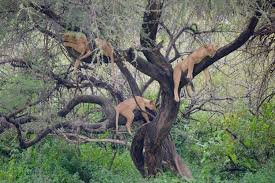
Here is the point that trips up many first timers. Manyara is famous for lions that climb trees, not for leopards. When people picture a big cat in a Manyara tree, they are usually picturing a lion, because the park shares this unusual habit with only a small handful of places. The tree-climbing lions drape themselves over the sturdy branches of acacia and sycamore fig trees, and seeing them up there is one of the park’s signature moments.
Leopards climb too, of course, and far better than lions do. So how do you tell them apart when you find a cat in a tree? Start with the coat. A leopard wears rosettes, dark broken rings across a golden body. A lion is plain tawny, with no spotting once grown, and a male carries a mane. Size and shape help as well. Lions are bulky and heavy, with thick forequarters, while a leopard is leaner and more compact.
Watch how the animal handles the tree. Leopards are natural climbers, moving with ease and often lounging with their big paws and tail hanging loose off a branch. Lions look awkward by comparison. Their weight and stiff frame make climbing an effort, and they tend to settle heavily onto a broad, low limb rather than pick their way through the canopy. If the cat looks clumsy and out of place in the tree, it is almost certainly a lion. If it looks like it belongs there, you may have found a leopard.
Numbers also tilt the guess. Lions here move in prides and are the more reliable sighting of the two, so a group of cats in or under a tree points to lions. A single, spotted cat resting alone points to a leopard. Both are worth every second of the wait.
How Leopards Fit Into Manyara’s Predator Community
The leopard is one strand in a wider web of hunters that keep the park in balance. Lions are the headline predator, spotted hyenas patrol the edges, and smaller carnivores work the forest and lakeshore. Each fills a different role, and the leopard’s niche is the ambush from cover: patient, solitary, and mostly nocturnal, taking prey that the open ground hunters often miss.
This variety of habitat is what makes the predator mix so rich. In a small area Manyara packs a groundwater forest, acacia woodland, open grassy floodplain, and the alkaline lake itself. Leopards exploit the forest and the escarpment, lions favour the woodland and floodplain, and the whole system supports far more predators per square kilometre than the park’s size would suggest. To see how the leopard sits among the animals in Lake Manyara, from the huge baboon troops to the elephants and hippos, it helps to think of the cat as the quiet specialist rather than the dominant force.
On a typical game drive you might pair the search for leopards with the park’s easier draws: the elephants of the forest, the flamingo lined lakeshore, the tree resting lions, and the baboon troops along the track. Building the day around these reliable sights means you are never disappointed, and any leopard becomes the highlight rather than the make or break.
Honest Advice on Leopard Sightings in Lake Manyara
Let me be plain. Leopard sightings here are lucky and never guaranteed. You can do everything right, drive at dawn, book a night drive, slow down through the forest, keep quiet, and still not see one. That is normal, and it is not a failure on your part or your guide’s. The combination of a secretive cat, a perfect coat for hiding, and a park cloaked in dense green means many careful visitors go home without a leopard.
11-Day Northern Circuit & Ruaha Wilderness Safari
10-Day In-Depth Serengeti & Northern Circuit Safari
3 Days Lake Manyara National Park
What you can do is stack the odds. Give the park more than a rushed half day if the leopard matters to you. Drive in the cool hours. Add the night drive that Manyara uniquely allows. Ask your guide to work the forest and the escarpment base rather than only the open lakeshore. And keep your eyes on the trees, since a resting leopard is far more often found lying along a branch than walking in the open.
Most of all, go in with the right frame of mind. Manyara rewards visitors with elephants at close range, lions in the branches, clouds of flamingos, and one of the greatest baboon gatherings anywhere. A leopard on top of all that is a gift. Hope for it, plan for it, and let the rest of the park carry the day.
Frequently Asked Questions About Leopards in Lake Manyara
Are there really leopards in Lake Manyara National Park?
Yes. The park has a healthy resident leopard population living mainly in the groundwater forest near the gate and along the rocky escarpment. The cats are genuinely present in good numbers, but the dense vegetation and their secretive habits mean they are seen far less often than they are actually there.
What is the best time of day to see a leopard here?
Early morning and late afternoon give you the best chance, because leopards are most active in the cooler hours around dawn and dusk. Night drives, which Manyara is one of the few parks to allow, offer a strong second window when the cats are hunting and on the move.
How do I tell a leopard from the tree climbing lions?
Look at the coat and the climbing style. A leopard has rosette spots, a lean build, and moves through branches with ease, often letting its paws dangle. A lion is plain tawny, bulkier, may carry a mane, and looks awkward and heavy in a tree. Lions also tend to be in groups, while a lone spotted cat is almost always a leopard.
Can I see the Big Five at Lake Manyara?
No, but you can see four of them. The park holds elephant, buffalo, lion, and leopard, while rhino do not live here at all. Elephant, buffalo, and lion are reasonably reliable, but the leopard is a wildcard, so seeing all four in one visit still takes luck and time.
How much does it cost to look for leopards in Lake Manyara?
Park entry for international visitors is commonly in the region of sixty US dollars per adult per day, with lower rates for East African residents and children. Night drives, which improve your leopard chances, carry an extra fee per person, and a guide or vehicle adds to the total. Prices shift over time, so confirm the current rates with your operator before you travel.
Is a leopard sighting guaranteed if I book a night drive?
No sighting is ever guaranteed. A night drive genuinely raises your odds because leopards are active after dark and the spotlight can pick them out, but the cats remain secretive and well hidden. Treat a night drive as your best chance rather than a promise, and enjoy the other nocturnal wildlife it reveals along the way.