This 14-day safari links Tanzania’s northern parks with two of its wildest western reserves. You walk Arusha’s forest slopes, search Tarangire and the Serengeti for big cats, and descend into the Ngorongoro Crater. Then you fly south to Ruaha’s elephant country and on to the Mahale Mountains, where chimpanzees live along the shore of Lake Tanganyika.
You land at Kilimanjaro International Airport, where your guide meets you and drives about an hour to a lodge on the edge of Arusha. The road passes coffee farms and small trading centres, with the bulk of Mount Meru rising ahead. After checking in you have time to rest, swim, or sort your kit. In the late afternoon your guide runs through the full route, the parks you will visit, and how the light-aircraft flights later in the trip work. This first night sits at a cool altitude, so a warm layer helps after dark. Overnight at a lodge near Arusha. Meals: Dinner.
After breakfast you drive a short way to Arusha National Park, a compact reserve on the flanks of Mount Meru. The day mixes a game drive with an optional guided walk, one of the few places in the north where walking safaris are allowed. You pass the Momella Lakes, often ringed with flamingos, and open glades where giraffe, buffalo, warthog, and black-and-white colobus monkeys feed. Birdlife is heavy along the water. The forest is cool and green, a contrast to the drier parks ahead. You picnic in the park and return in the afternoon. Roughly six hours of activity. Overnight at a lodge near Arusha. Meals: Breakfast, Lunch, Dinner.
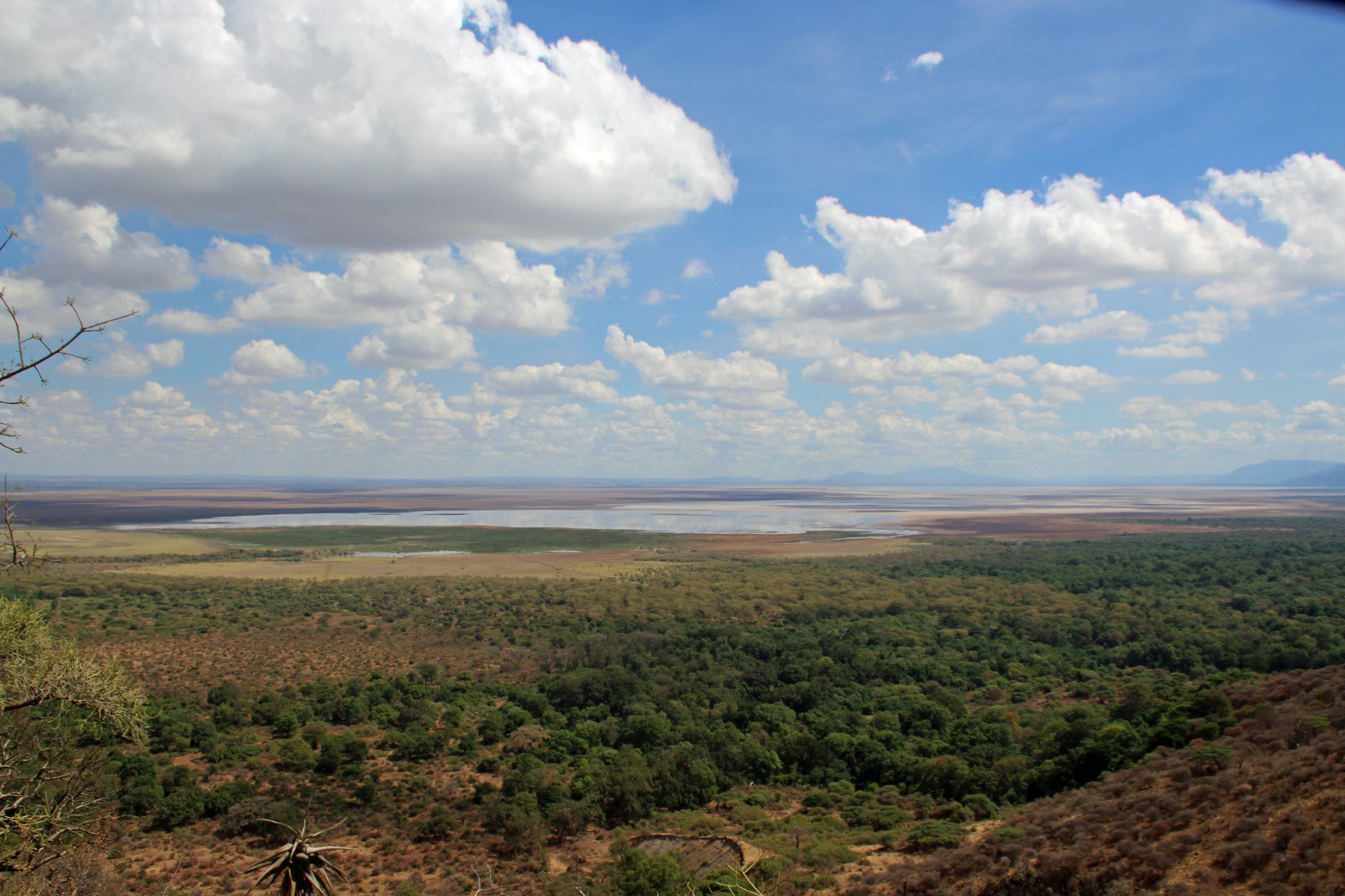
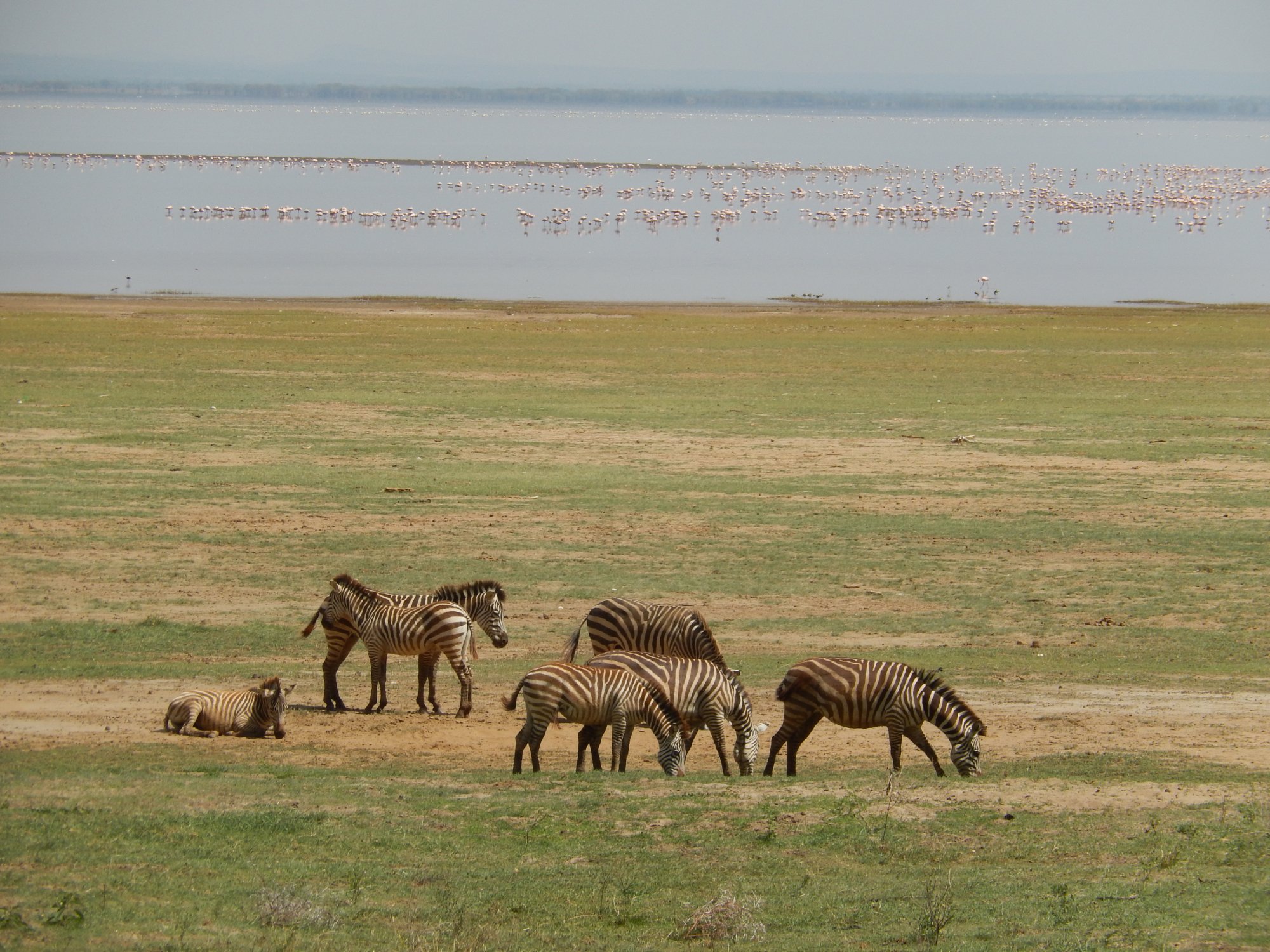
You leave Arusha and drive southwest to Lake Manyara, about two and a half hours away, entering a park squeezed between the Rift Valley wall and a shallow soda lake. The groundwater forest at the gate is thick with baboons and blue monkeys. Beyond it, open floodplain draws elephant, giraffe, zebra, and large buffalo herds, while the lake edge fills with pelicans, storks, and flamingos. Manyara is known for tree-climbing lions, which sometimes rest in the acacias. You game drive through the day with a picnic lunch, watching hippos wallow near the northern springs. Around five to six hours in the park. Overnight at a lodge on the escarpment above the lake. Meals: Breakfast, Lunch, Dinner.
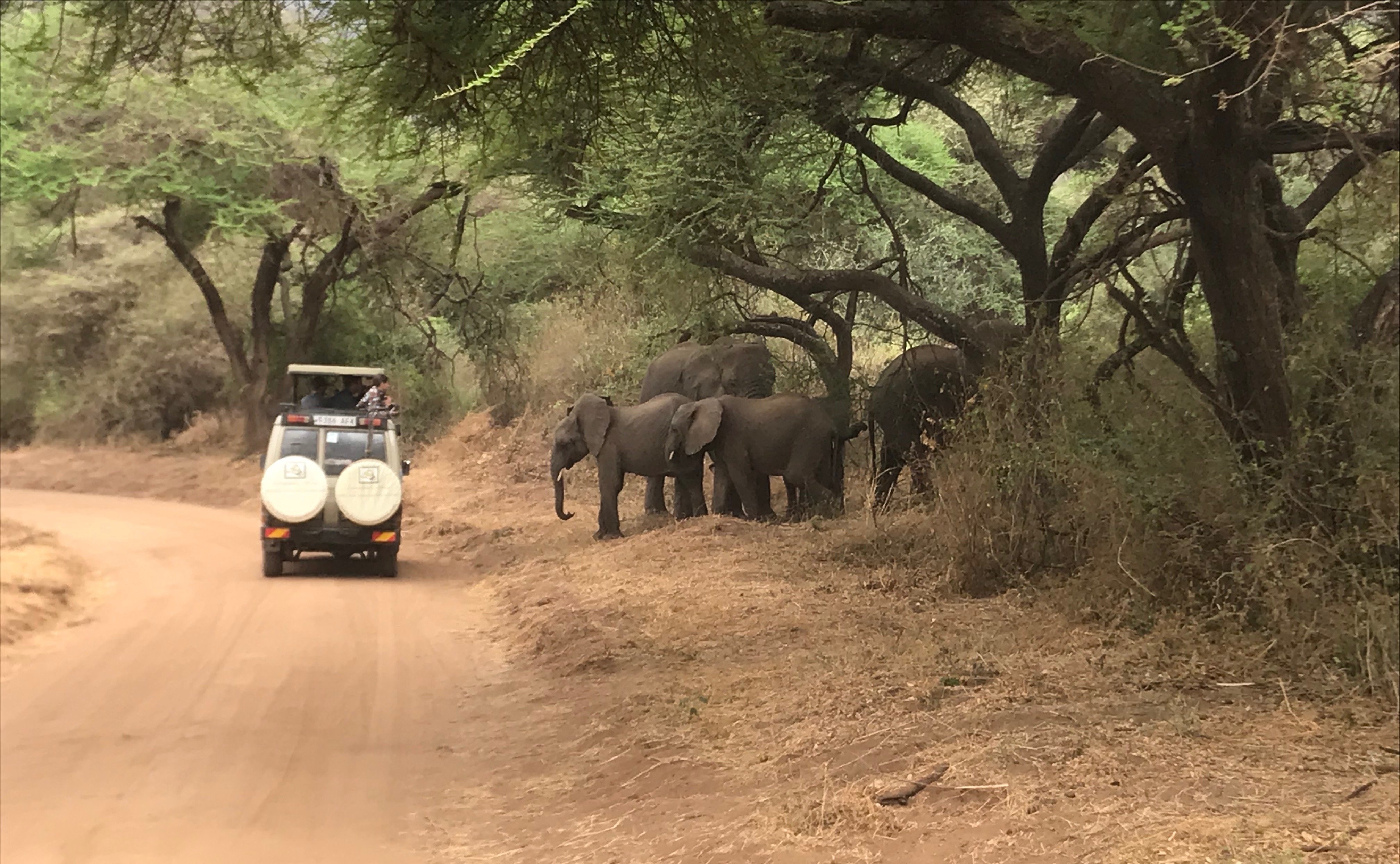
A morning drive brings you to Tarangire, a park defined by the river that runs through it and by huge, old baobab trees. In the dry months, animals gather here in numbers, and Tarangire holds some of the biggest elephant herds in the north. You follow the river valley watching for lion, giraffe, zebra, wildebeest, and the dry-country antelope such as fringe-eared oryx and lesser kudu. The birding is strong, with hornbills, bee-eaters, and the occasional flock of yellow-collared lovebirds. You spend a full day on game drives with lunch in the park. Around six hours of driving and viewing. Overnight at a tented camp near the park. Meals: Breakfast, Lunch, Dinner.
Today is a long, scenic drive northwest into the Serengeti. You climb past the Ngorongoro highlands, cross the crater rim road, and descend toward the plains, passing Maasai grazing lands and the Olduvai area on the way. As the grassland opens out, the first Serengeti wildlife appears: gazelle, zebra, and the resident predators that hunt the short-grass country. You reach the central Seronera region by afternoon and game drive toward camp, watching the light change over the plains. Distances here are large, so expect several hours in the vehicle broken by wildlife stops and a picnic lunch. Overnight at a tented camp in the central Serengeti. Meals: Breakfast, Lunch, Dinner.
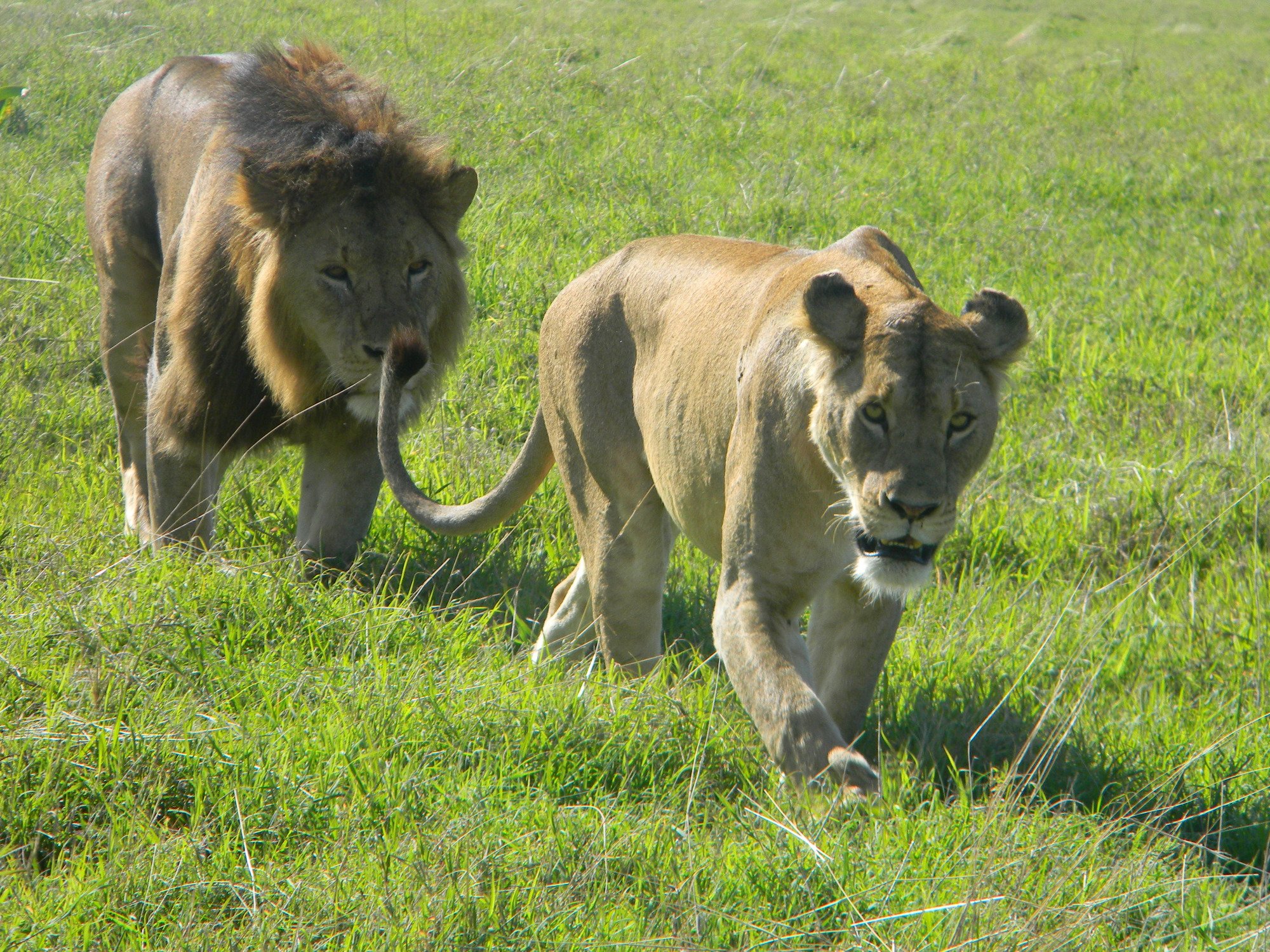
You have a full day to explore the Serengeti, starting at first light when predators are most active. The central Seronera valley holds resident lion prides, cheetah on the open plains, and leopard draped in the riverine trees. Depending on the season, you follow the movement of wildebeest and zebra herds, which shift between the southern plains and the western corridor through the year. Between big sightings there is constant activity: elephant, giraffe, topi, hyena, and a heavy cast of birds. You take a picnic lunch in the field to maximise time out, or return to camp for a break in the heat. Roughly eight hours of game viewing. Overnight at a tented camp in the Serengeti. Meals: Breakfast, Lunch, Dinner.
A second full Serengeti day lets you range further, perhaps north toward the Grumeti and Mara river systems or across a different stretch of plain, guided by where the game is concentrated. Your guide reads tracks, radio calls, and the behaviour of prey to find cats on the hunt. This is prime country for watching a full predator-prey cycle play out, and river crossings are possible in season. You can also request a slower, more photographic pace, waiting at a waterhole or a kill rather than covering ground. Meals are taken as picnics or back at camp. Around eight hours out. Overnight at a tented camp in the Serengeti. Meals: Breakfast, Lunch, Dinner.
You leave the Serengeti after an early game drive and head back toward the highlands, dropping into the Ngorongoro Conservation Area. The main event is a descent into the crater itself, a collapsed volcanic caldera whose walls enclose a self-contained grassland, lake, and forest. Down on the floor you have a good chance of seeing all of the big cats plus elephant, hippo, and the black rhino that shelter here. Flamingos crowd the soda lake, and Maasai still graze cattle along the rim. You spend the core of the day on the crater floor with a picnic lunch, then climb back out. Around six hours including the descent. Overnight at a lodge on the crater rim. Meals: Breakfast, Lunch, Dinner.
After breakfast you transfer to a nearby airstrip and board a light aircraft for the flight south to Ruaha, Tanzania's largest national park and a far quieter, more rugged place than the north. The flight gives you an aerial view of the changing landscape as the highlands give way to the southern woodlands. On arrival a ranger-guide meets you and drives to camp, with a first game drive along the Great Ruaha River in the afternoon. Ruaha is elephant country, and the river draws big herds, along with lion, giraffe, and both greater and lesser kudu. The pace here is unhurried and the crowds are gone. Overnight at a camp near the river. Meals: Breakfast, Lunch, Dinner.
A full day in Ruaha shows why it rewards the extra effort to reach. The park sits at a crossroads of eastern and southern species, so you see a wide antelope mix, from sable and roan to impala and the kudu the park is known for. Ruaha holds strong lion prides, and its wild dog and cheetah are a genuine possibility. Along the river, crocodile and hippo crowd the pools while elephant come down to drink and dig for water in the sand. You game drive morning and late afternoon, with the hot midday hours spent resting at camp. Guided walks may be offered where permitted. Around seven hours of activity split across the day. Overnight at a camp near the river. Meals: Breakfast, Lunch, Dinner.
Today you cross to the far west of the country by light aircraft, landing near the Mahale Mountains on the shore of Lake Tanganyika, one of the deepest and oldest lakes in the world. There are no roads into the park, so the final leg to camp is by boat along a forested shoreline that drops straight into clear water. The setting is a complete change of scene, with jungled peaks rising behind a narrow beach. You settle in, swim or relax, and meet the trackers who will lead the chimpanzee walks. In the evening your guide briefs you on forest etiquette and the health rules that protect the apes. Overnight at a camp on the lakeshore. Meals: Breakfast, Lunch, Dinner.
The heart of the trip is a trek to find the habituated chimpanzees that live in Mahale's forest. Trackers set out early to locate the group, then radio your guide, who leads you up into the trees along steep, sometimes muddy trails. Reaching the chimps can take anywhere from under an hour to several hours, so a basic level of fitness helps. Once you find them you have a strictly timed window, usually about an hour, to watch them feed, groom, play, and move through the canopy at close range. Face masks are required to protect the apes from human illness. Back at camp you have the afternoon to rest, kayak, or snorkel in the lake. Overnight at a camp on the lakeshore. Meals: Breakfast, Lunch, Dinner.
You have a second day in Mahale, which raises your chances of good chimpanzee viewing and lets you explore the forest and lake at a relaxed pace. If the group is nearby you can trek again, or you can spend time on the water fishing, kayaking, or snorkelling over the endemic cichlid fish that fill the shallows. The forest holds red colobus, red-tailed monkeys, and a heavy bird list, and the beach makes a fine base to simply watch the lake. Sunsets over Lake Tanganyika, with the mountains of the far shore in the distance, close out the day. This is remote, unhurried travel with no crowds. Overnight at a camp on the lakeshore. Meals: Breakfast, Lunch, Dinner.
After a final morning by the lake you take a boat back to the airstrip and board the light aircraft for the long flight back toward Arusha, usually with a stop or two along the way. Depending on your onward plans, you either connect to an international flight the same day or transfer to a day-use room in Arusha to rest and shower before an evening departure. Your guide handles the transfer to Kilimanjaro International Airport and sees you off. You leave having crossed the full width of Tanzania, from the northern craters and plains to the chimpanzee forests of the west. Meals: Breakfast.
This route works well in the dry months from around late June to October, when animals in the north and in Ruaha gather at rivers and waterholes and the tracks are firm. That window also lines up with the clearest chimpanzee viewing in Mahale, since the apes tend to feed at lower, easier ground and the forest trails are less slippery. The shorter dry spell around January and February is also good and often quieter. The long rains from roughly March into May bring green, dramatic scenery and lower prices, but some western camps close and forest treks can be hard going. Wildlife is present all year, so the choice is really about access, comfort, and how the Serengeti herds are moving in a given season.
The safari portion in the north and in Ruaha is easy, since you spend most of your time seated in the vehicle. Mahale is different. Finding the chimpanzees means walking on steep, forested slopes that can be hot, humid, and muddy, and the trek may last from under an hour to three or four hours each way. You do not need to be an athlete, but a reasonable level of everyday fitness, sturdy shoes, and a willingness to scramble over roots and rocks make a big difference. Trackers set the pace and rest often. If you have knee or heart concerns, tell us in advance so we can plan realistic expectations. The optional walking safari in Arusha National Park is gentle by comparison.
The north gives you the classic big-game experience: lion, leopard, cheetah, elephant, buffalo, giraffe, zebra, and the wildebeest herds of the Serengeti, plus black rhino in the Ngorongoro Crater. Tarangire adds big elephant herds and dry-country antelope, while Manyara is known for its birds and tree-climbing lions. Ruaha shifts the cast toward southern and eastern species, with large elephant numbers, big lion prides, greater and lesser kudu, sable, and a real chance of wild dog. Mahale is about the chimpanzees, but the forest also holds red colobus and other monkeys, and Lake Tanganyika teems with colourful endemic fish you can snorkel among. No sighting is guaranteed, but the range of habitats on this trip gives you an unusually broad list.
If you want to see the depth of Tanzania rather than just the famous northern loop, this route delivers. Most visitors only reach the craters and the Serengeti. By flying on to Ruaha and Mahale you add two of the country's wildest and least visited parks, and the chimpanzee encounter in particular is something few people experience. The light-aircraft legs cut out days of hard driving and give you time in the parks instead of on transfer roads. The cost reflects those flights, the remote camps, and the trekking permits, all of which are genuinely expensive to run. For a serious wildlife traveller with two weeks to spend, the variety and the sense of reaching truly remote country make it a strong choice.
Most of this route is in malaria country, including the western parks, so antimalarial tablets are strongly advised. See a travel clinic or doctor well before you leave to arrange the right course and to review routine and recommended vaccinations, which often include hepatitis A, typhoid, and tetanus. A yellow fever certificate is generally only required if you are arriving from a country where the disease is present, but rules change, so confirm before travel. Bring insect repellent, cover up at dusk, and use the nets and screens provided at camp. The higher, cooler areas such as the Ngorongoro rim carry little malaria risk, but the lakeshore at Mahale is warm and humid, so keep up your precautions across the whole trip.
This itinerary is normally run as a private safari, which means your own vehicle, guide, and flexible daily timing in the north, and set arrivals for the fly-in camps in Ruaha and Mahale. Private travel suits this route because the flight connections and remote camps need careful coordination, and because you may want to linger at a sighting or adjust the pace of the chimpanzee walks. Couples, families, and small groups of friends all work well. If you would prefer to share costs, ask about scheduled departures, though availability on the western legs is limited. Either way the western camps are small, so you are never in a crowd once you leave the northern parks.
Book as early as you can, ideally six months to a year ahead, because the good fly-in camps in Ruaha and Mahale are small and fill quickly in the dry season. Chimpanzee permits and light-aircraft seats are limited, so late planning narrows your options. Price varies mainly by season and by the standard of camp you choose. Park and conservation fees rise in peak months, remote camps charge more when demand is highest, and flight costs feed straight into the total. A classic-tier trip like this balances comfortable tented camps and lodges with the flights and permits that make the route possible. Travelling in the shoulder or green season can lower the cost, as long as the camps you want are open.