Lake Manyara National Park holds more than 400 recorded bird species, spread across four habitats that sit within a short drive of each other. A patient observer moving slowly can log close to 100 in a single good day. The park is a narrow strip between the Rift Valley wall and a shallow soda lake, and its forest, floodplain, shore and woodland each carry their own birds.
What makes the park so productive for birds is the way four very different habitats sit side by side within a short drive. You leave the entrance gate under tall groundwater forest, cross open floodplain grassland, skirt the edge of the alkaline lake, and climb into dry acacia woodland, all within a couple of hours. Each zone holds its own community of birds, and this guide walks through them one at a time so you know roughly what to look for and where. If you are planning a dedicated birding safari, understanding these habitat bands is the single most useful thing to carry in your head.
Why Lake Manyara Is Such a Rewarding Birding Safari Destination
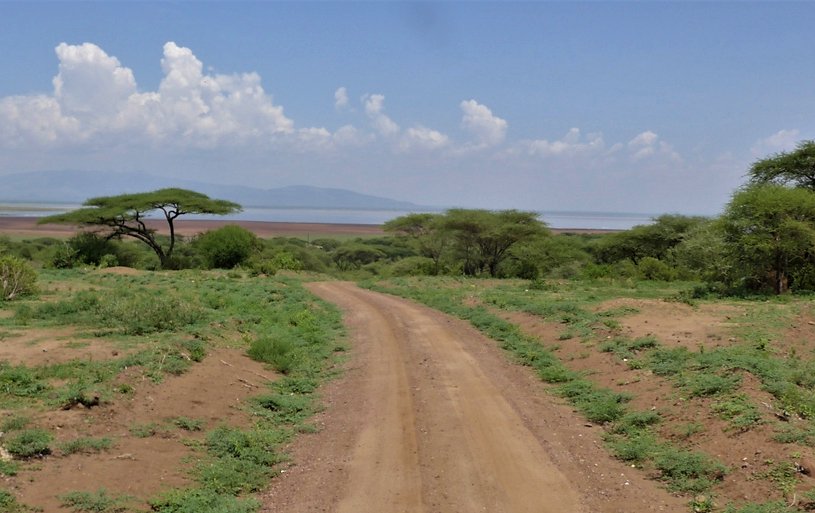
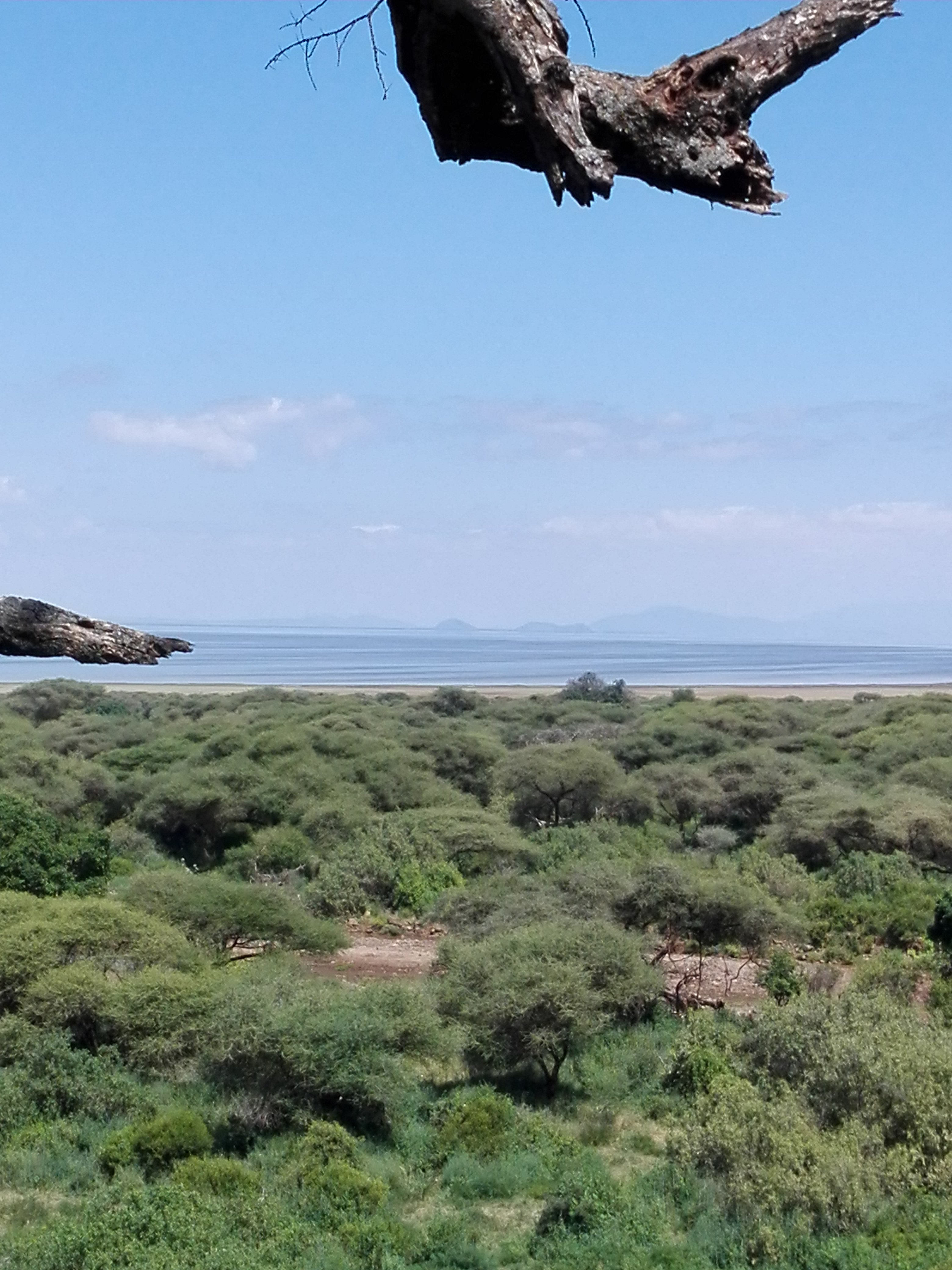
The park runs roughly north to south along the base of the western Rift escarpment. The escarpment forces groundwater to the surface, which feeds the forest near the gate and keeps the floodplain green even in drier months. The lake itself is shallow and alkaline, its water level swinging widely between the wet and dry seasons. That variability is the whole story for the waterbirds: in some years the lake edge teems with flamingos and waders, and in others it retreats far out of easy viewing range.
Because of this, no two visits look quite the same. Guides who work the park daily read the water before they read the checklist. When you talk to your driver about a birding-focused game drive, ask where the water is sitting that week, because it decides whether you spend your time scanning the shoreline or working the woodland and forest instead.
Reading the season: The window from November to April brings both Palearctic migrants arriving from the north and intra-African movers, and it overlaps with the breeding and nesting period for many resident species. This is generally the richest stretch for a birdwatching visit, though it is also the wetter, muddier time of year on the park tracks.
Waterbirds of the Soda Lake and Shoreline
The lake and its margins are the park’s signature birding spectacle, and the flamingos are the reason most people arrive with a camera. Two species occur here, the greater and the lesser flamingo, and when conditions align they gather in large pink rafts across the shallows. Their numbers rise and fall with the algae and tiny crustaceans the alkaline water produces, so a flamingos viewing that dazzles one month can thin out the next. Do not bank on a wall-to-wall pink shoreline every trip; ask before you build your whole day around it.
Beyond the flamingos, the shallows and shoreline hold a broad cast of long-legged waterbirds. Great white pelicans and the smaller pink-backed pelican work the open water, while yellow-billed storks and the ungainly marabou stork stalk the muddy margins. Herons, spoonbills and ibises wade the same edges, and in wetter months migratory waders crowd in alongside the resident shorebirds.
Flamingos and Large Waterbirds
The greater and lesser flamingo feed on algae and small crustaceans in the alkaline shallows, and their presence tracks water level closely. Great white pelican and pink-backed pelican fish the open water, sometimes in loose flotillas. Both yellow-billed stork and marabou stork patrol the mud, the marabou often loitering near carcasses further inland.
Herons, Spoonbills and Ibises
The towering goliath heron, along with grey heron and black-headed heron, works the shoreline for fish and frogs. The African spoonbill sweeps its flattened bill side to side through shallow water, while the African sacred ibis and hadada ibis probe the wet grass and mud. Glossy ibis turn up in the wetter floodplain pans.
Waders, Stilts and Avocets
The elegant black-winged stilt and the upturned-billed pied avocet favour the open alkaline flats. In the November to April window, migratory marsh sandpiper, common sandpiper, little stint and ringed plovers join resident lapwings along the water’s edge. Numbers of these migratory birds peak with the northern winter.
A quiet caution on the waders: many of the small brown shorebirds are genuinely hard to separate in the field, especially in worn or non-breeding plumage. A good guide with a scope makes the difference between a confident tick and a hopeful guess, and there is no shame in logging some birds only to family level.
Floodplain Grassland and Its Grassland Birds
Between the forest and the lake lies open floodplain, kept green by the same groundwater that feeds the forest. This is where you scan for the tall, graceful grey crowned crane, one of the most photographed birds in the park, often moving in pairs or small family groups across the short grass. It is a reliable but not guaranteed sighting, so keep your eyes on the middle distance as you cross the plain.
The floodplain also holds a scatter of ground-loving and open-country species. Crowned lapwing and blacksmith lapwing call sharply as vehicles pass, and in the drier fringes you may find Fischer’s sparrow-lark, two-banded courser and black-faced sandgrouse. These are birds of open ground, so slow driving and frequent stops serve you far better than covering distance quickly.
The park rewards patience over pace. The birder who stops often and scans slowly nearly always outscores the one racing between habitats.
Groundwater Forest Birds Near the Gate
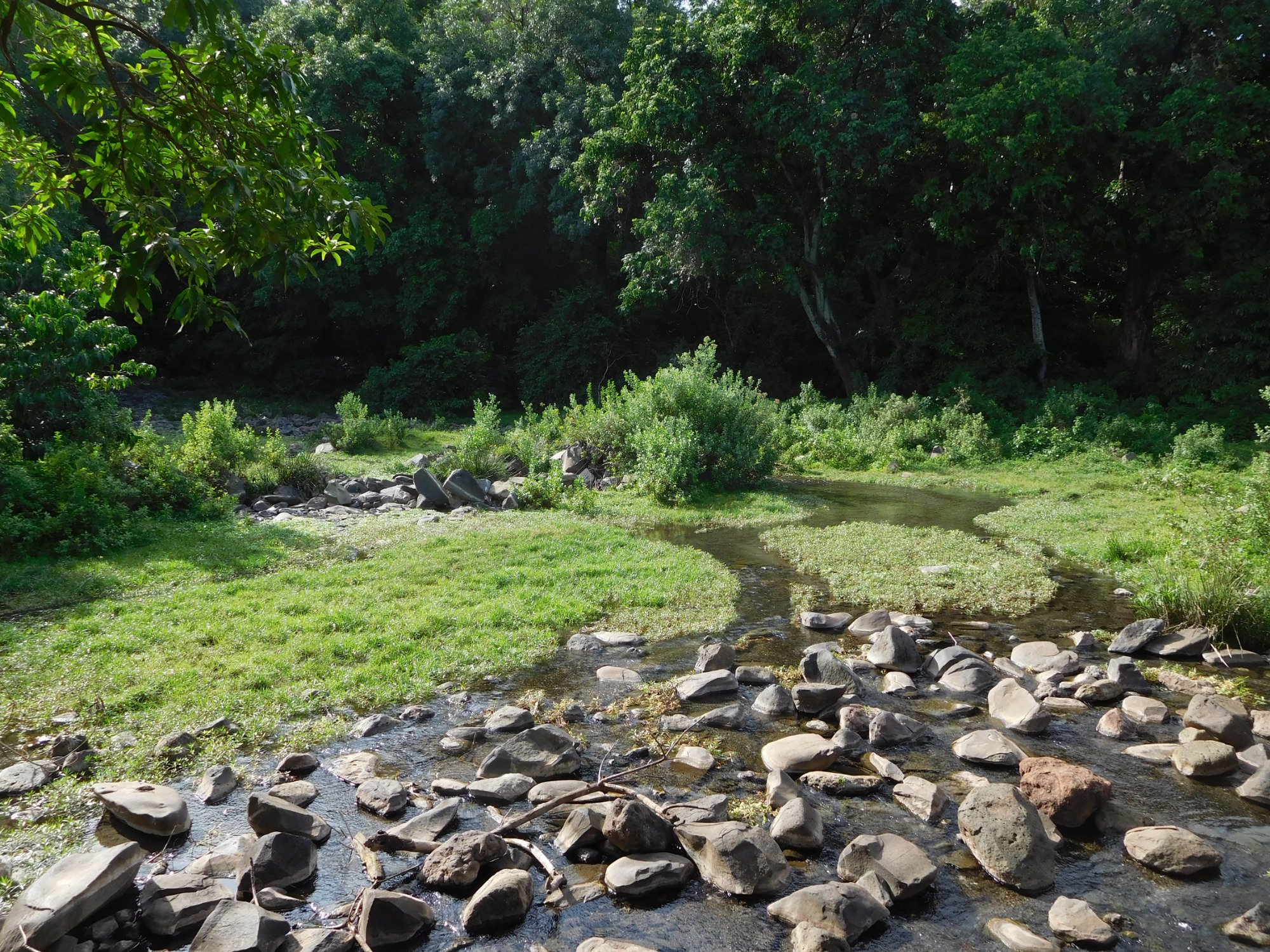
The tall groundwater forest just inside the main gate is a different world from the open lake, shaded and loud with birdsong and the calls of blue monkeys and baboons. This is where the forest specialists live, and several of them are birds you will struggle to find anywhere else on a northern Tanzania circuit. Sightings here take more effort because the canopy is high and dense, so listen as much as you look and be ready to crane your neck.
The standout is the silvery-cheeked hornbill, a large forest hornbill with a heavy pale casque and silvery-grey cheek patches, often heard well before it is seen thanks to the loud whoosh of its wingbeats. The forest also holds the shy crowned eagle, one of Africa’s most powerful raptors and a known predator of monkeys, which has been studied here in relation to how baboons respond to it.
Hornbills of the Canopy
The silvery-cheeked hornbill is the forest’s flagship bird, its wingbeats audible across the canopy. The smaller crowned hornbill, dark with a red bill, works the same trees. Both nest in the classic hornbill way, the female sealing herself into a tree cavity to be fed by the male through a narrow slit until the young are grown.
Turacos, Trogons and Cuckoos
Schalow’s turaco, with its long crest and crimson wing flashes in flight, is a forest highlight when it shows well, though it often stays frustratingly hidden. The Narina trogon sits quietly on mid-level branches and is easy to miss, while the African emerald cuckoo is far more often heard than seen.
Forest Floor and Understorey
The crested guineafowl, with its curly black topknot, forages the forest floor in noisy groups and is more approachable than the canopy birds. Robin-chats, greenbuls and other understorey species skulk in the shadows, rewarding the visitor who stops the vehicle and simply waits and listens.
Be honest with yourself about the forest: several of these birds are heard on most visits but seen on only some. The turaco and trogon in particular test patience. If you leave with good views of the silvery-cheeked hornbill and the crested guineafowl, you have done well for a single pass.
Acacia Woodland Raptors and Rollers
Climbing away from the lake into drier acacia woodland changes the cast again. This zone is where the woodland raptors and the brightly coloured perching birds come into their own, and it tends to offer easier, more open viewing than the forest. The park as a whole is known for its birds of prey, with something on the order of 50 raptor species recorded across all its habitats over time.
The lilac-breasted roller is the woodland’s crowd-pleaser, perching on exposed acacia branches and dropping onto insects, its blue and lilac plumage catching the light. Bee-eaters, weavers and starlings share the same woodland, while overhead and along the escarpment you can watch for the augur buzzard, the African fish eagle near water, and the occasional lanner falcon cutting along the rock face.
Woodland and Escarpment Raptors
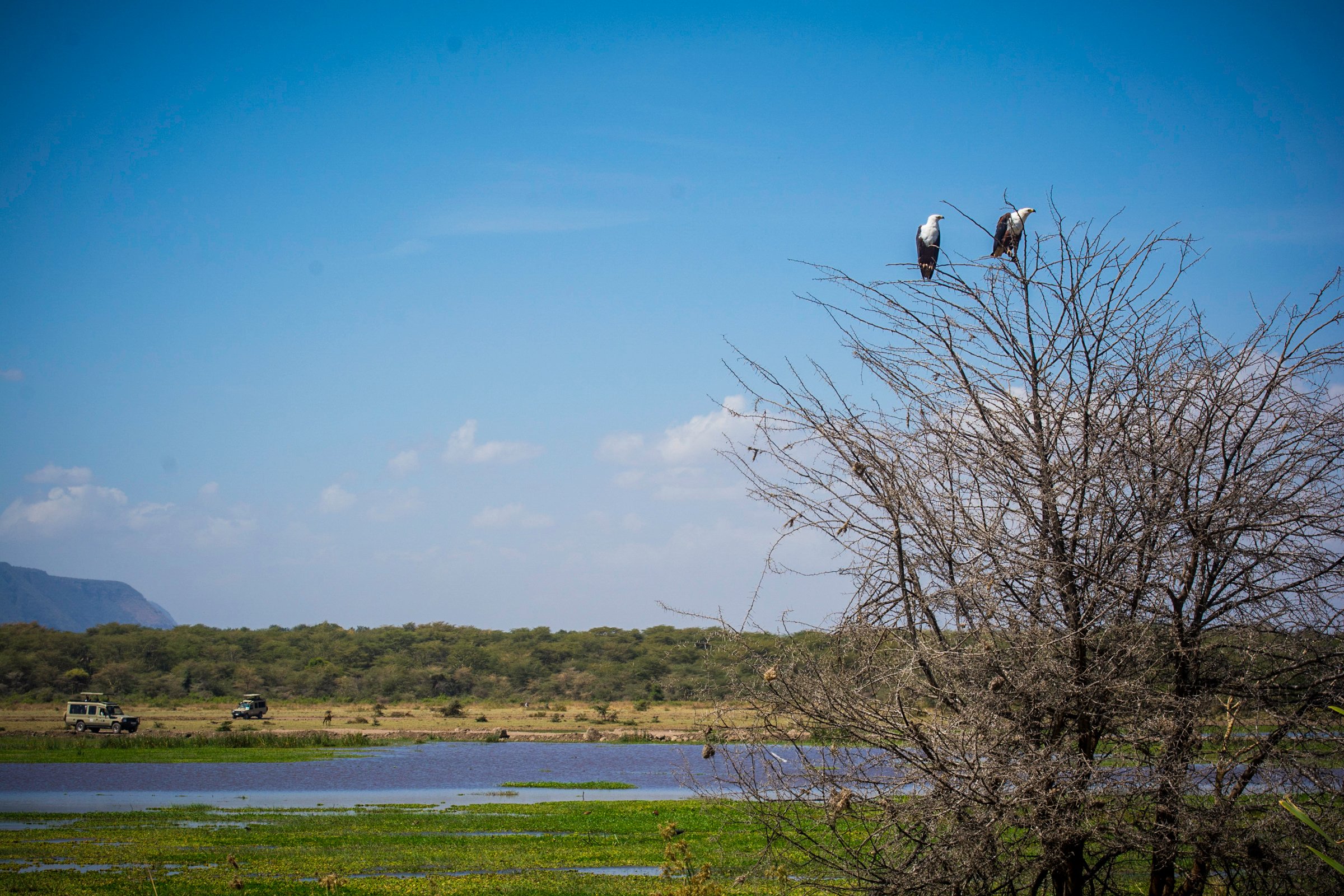
The African fish eagle calls from tall trees near the water, its ringing cry one of the defining sounds of the park. The augur buzzard and lanner falcon patrol the escarpment updrafts, while the martial eagle and bateleur turn up over the woodland. Raptor numbers and variety are a real strength of Manyara’s birding.
Rollers, Bee-eaters and Colour
The lilac-breasted roller is the classic woodland perch bird, joined by the European roller in the migrant season. Little bee-eater and white-fronted bee-eater hawk insects from low branches, adding constant movement and colour to the acacia belt.
Woodland Perching Birds
The superb starling flashes iridescent blue and chestnut around picnic sites and open ground. Weavers build their woven nests in the acacias, and the secretary bird strides the woodland edges and grassland hunting snakes on foot. These are among the more dependable, easily seen birds in the park.
Planning a Birdwatching Visit to Lake Manyara
A half-day drive gives you a taste, but a full day lets you work each habitat properly and gives the water and light time to shift in your favour. Because the park is a long, thin strip, you are never far from a habitat change, and a good plan simply moves you through forest, floodplain, lakeshore and woodland in turn rather than backtracking. Early morning is best for forest song and woodland activity, while the light on the lake and its flamingos often improves through the day.
11-Day Northern Circuit & Ruaha Wilderness Safari
10-Day In-Depth Serengeti & Northern Circuit Safari
11-Day Northern Circuit & Mahale Chimpanzee Safari
Carry binoculars you trust, and consider hiring a specialist bird guide if your checklist matters to you, since the forest species in particular are hard to pin down without local knowledge. Keeping your own running bird checklist as you go turns the day into a more focused, rewarding exercise and helps you notice which habitats you have not yet worked. Above all, set expectations sensibly: the 400-plus figure is a lifetime park total, not a day list, and honest birding here means logging what you actually see and hear rather than what the brochure promises.
The reward for that honesty is a park that quietly overdelivers. Few places let you move from a canopy hornbill to a floodplain crane to a shoreline flamingo to a woodland roller in the space of a single morning. Manyara’s birds are its real headline act, and they repay every slow, patient hour you give them.
Frequently Asked Questions About Lake Manyara Birds
How many bird species live at Lake Manyara?
More than 400 species have been recorded in the park over the years. That figure spans every habitat and every season, including migrants that are only present part of the year, so it represents a long-term total rather than what any single visitor will see. On a strong day across all the habitats, an observer might record close to 100 species, though 40 to 70 is a more typical realistic day count.
What is the best time of year for birding at Lake Manyara?
The stretch from November to April is generally the richest, because Palearctic and intra-African migrants are present and many resident species are breeding and nesting. This is also the wetter season, so tracks can be muddy and some areas harder to reach. Birders who prioritise variety accept the wetter conditions for the payoff in species.
Will I definitely see flamingos at the lake?
Not necessarily. Flamingo numbers depend on the lake’s water level and the algae and crustaceans it produces, both of which vary widely between seasons and years. In good conditions the shallows hold large pink flocks, but in other periods the birds are few or distant. Ask your guide about current water levels before building your day around a flamingo sighting.
Which birds are hardest to see at Lake Manyara?
The groundwater forest species test patience most. Schalow’s turaco, the Narina trogon and the African emerald cuckoo are frequently heard but only sometimes seen, hidden in a high, dense canopy. The crowned eagle is also shy and not guaranteed. The silvery-cheeked hornbill and crested guineafowl are easier forest sightings by comparison.
Do I need a specialist bird guide?
You can enjoy the obvious birds without one, but a specialist guide sharply improves your forest and wader results, where identification is genuinely difficult. A guide with a spotting scope helps separate similar shorebirds and knows the calls of the forest skulkers. If your species list matters to you, the extra cost is usually worth it.
How much does a birding visit to Lake Manyara cost?
Costs vary with park entry fees, vehicle and guide hire, and whether you add a specialist bird guide, so ask your operator for a current quote rather than relying on a fixed figure. Park fees are set per person per day, vehicle and driver-guide costs are usually shared across a group, and a dedicated bird guide adds a further daily rate. Getting an itemised quote before you travel avoids surprises at the gate.