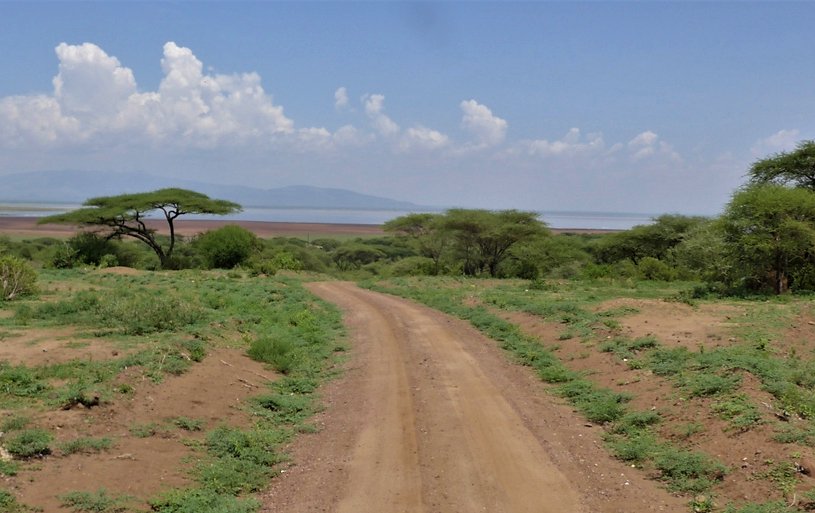
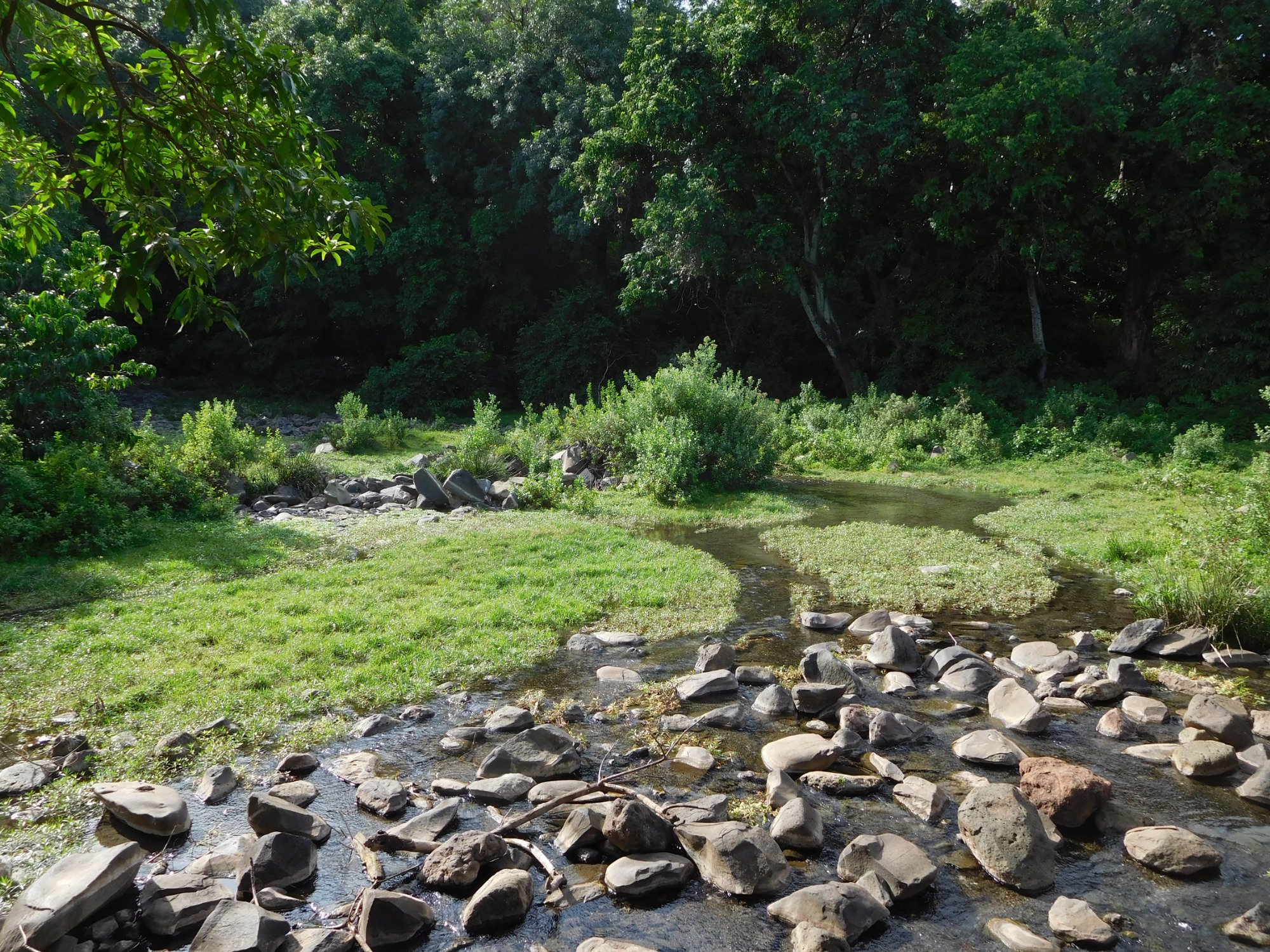
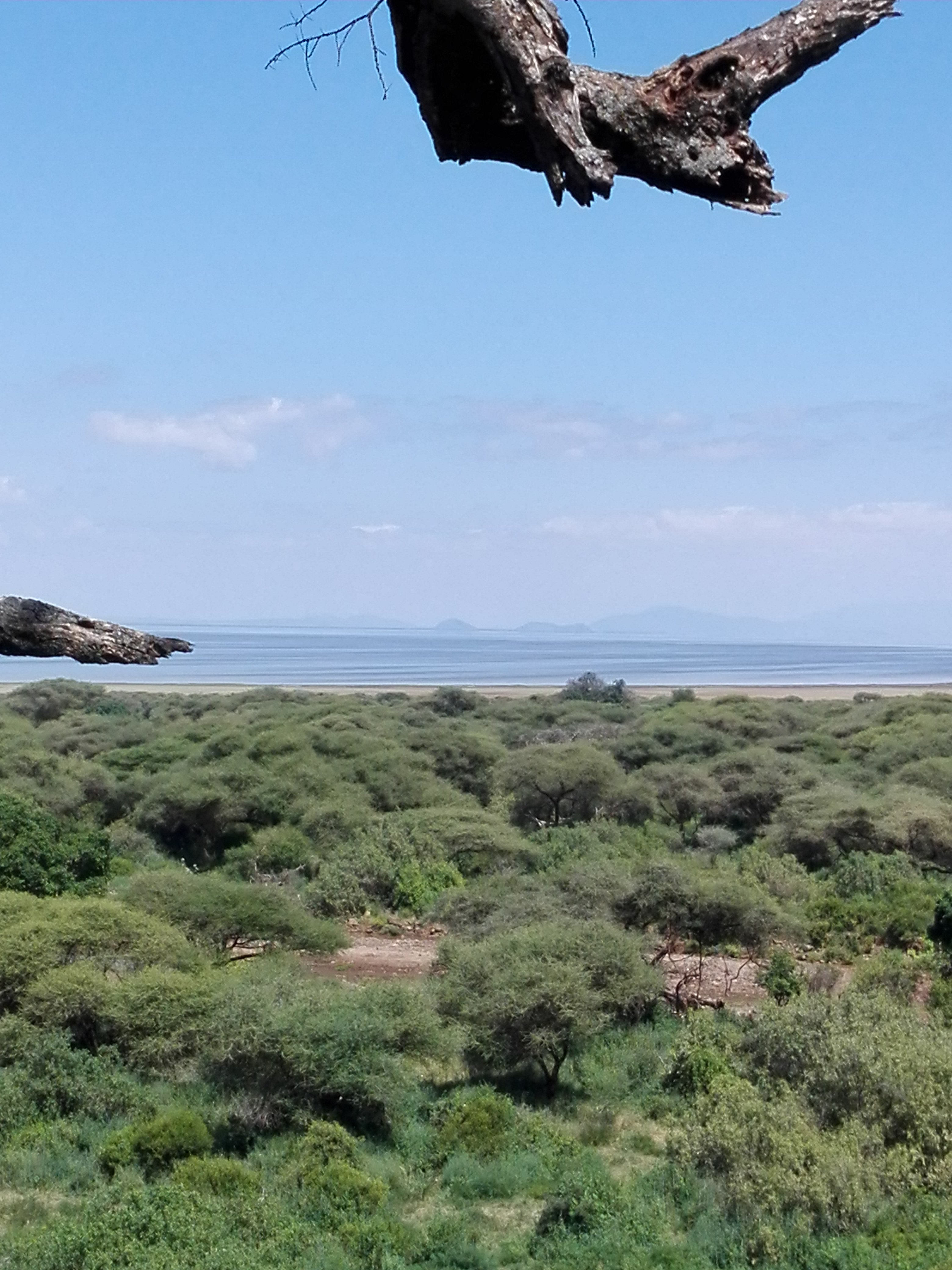
Lake Manyara holds several monkey species, led by olive baboons, blue monkeys and vervet monkeys, with bushbabies active after dark. Most visitors meet their first troop within a few hundred metres of the gate, where the shady groundwater forest concentrates primate sightings. The park is a narrow strip of forest, floodplain and alkaline lake pressed against the Great Rift Valley wall in northern Tanzania.
This guide walks through the main monkey species of Lake Manyara, how to tell them apart, what they do through the day and night, and where along the park road you have the best chance of seeing each one. It also covers a plain warning about feeding the bolder species at picnic sites, because that single habit causes most of the trouble people have with monkeys here.
Sightings on safari are never guaranteed. Some drives deliver baboons within a minute of the gate and blue monkeys overhead in the canopy, while other days the forest stays quiet and the troops are resting deeper in the trees. Treat every list below as a good chance rather than a promise.
The primate cast of a Lake Manyara game drive
Lake Manyara is best known for its groundwater forest, a band of tall fig and mahogany trees fed by springs that seep out of the Rift wall above the basin. That forest, plus the acacia woodland and the lake edge, gives several primate species enough room to live side by side. Field guides usually list five primates for the park: the olive baboon, the vervet monkey, the blue or Manyara monkey, and two small nocturnal bushbabies, the Pangani lesser galago and a greater galago. Only the first three are day active and easy to see on a normal drive.
The forest at the entrance is the single richest spot. Troops of over a hundred baboons move through the undergrowth while blue monkeys travel in the branches above them, and vervets work the sunnier edges. Because so much happens in one place, it pays to slow right down for the first stretch of road and let your eyes adjust to movement in the leaves. Many of the park’s other animals in Lake Manyara, from bushbuck to elephant, use the same forest, so time spent here rarely goes to waste.
Olive baboons, the big troops near the gate
The olive baboon is the animal most people notice first at Lake Manyara. The park is often cited as holding one of the densest baboon populations in Africa, and the troops here can run to a hundred animals or more. They are large, dog faced, grizzled brown and completely at ease with vehicles, which makes them easy to watch for long stretches.
What makes baboons rewarding on a game drive is their social life. Sit with a troop for ten minutes and you see grooming lines, mothers carrying infants under the belly and then on the back, young animals wrestling, and the constant low grunting that keeps the group together. Dominant males keep order and the whole troop reads as a busy, structured society rather than a scatter of individuals. For a fuller look at these troops, see the dedicated guide to baboons in the park.
Baboons range across every habitat in Manyara, from the forest to the open floodplain, so you are likely to meet them more than once in a day. Their confidence is also the reason for the feeding warning further down this page. A baboon that associates cars and people with food becomes a genuine nuisance and, occasionally, a danger.
Blue monkeys and the endemic Manyara monkey
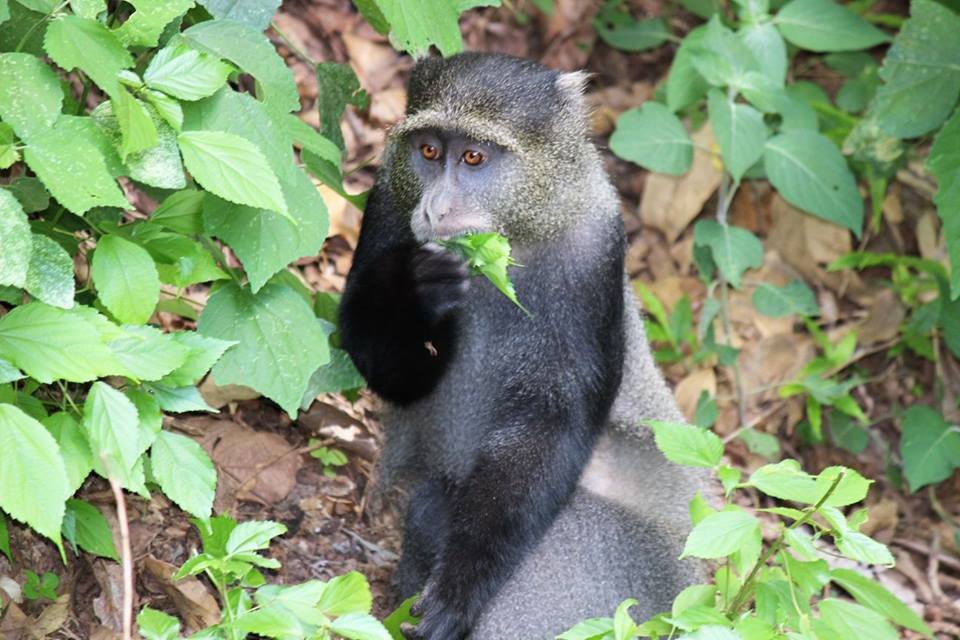
The blue monkey, also called the Sykes monkey or gentle monkey, is the classic forest guenon of East Africa. Despite the name it is not really blue. The body is a dark olive to grey, the face is dark, and the cap, feet and front legs look almost black, while the throat and chest carry a paler patch. Blue monkeys stay high in the canopy far more than baboons or vervets, so you often see them as a shape crossing a gap in the branches or hear the crash of a leap before you find the animal.
There is a genuine point of interest here for wildlife travellers. The blue monkeys of the Manyara area were formally described in 2020 as a distinct subspecies, the Manyara monkey, endemic to a small part of central northern Tanzania. Their range runs from the Ngorongoro highlands south through Lake Manyara National Park to a couple of nearby forest reserves. The subspecies is listed as endangered, with a small total range, so the animals you watch drifting through the forest canopy are part of a population that exists almost nowhere else on earth. That fact alone makes a patient blue monkey sighting worth the wait.
The blue monkeys of this forest belong to a subspecies described only recently and found in barely any other place, which turns a canopy sighting into something quietly special.
Blue monkeys tend to keep to the thicker forest because the open ground feels dangerous to them. Watchers have noted that they sometimes come lower when baboon troops are around, seeming to use the larger, bolder monkeys as cover. If you want blue monkeys, the deep shade of the groundwater forest is your best bet, and a good driver guide will know which stretches the local troop favours.
Vervet monkeys of the forest edge
The vervet monkey is the small, neat grey monkey you see sitting on branches at the forest edge and along the roadside. It is easy to identify once you know the marks. The coat is a grizzled pale grey, the face is black ringed with a pale band of hair, and the hands and feet are black too. The underparts are whitish. Adult males carry the famous blue scrotum and reddish belly skin, which is why old field notes sometimes describe them with a wink.
Vervets are ground and edge animals rather than deep canopy specialists, which is exactly why they turn up around picnic spots and open areas. They live in troops with a clear pecking order, forage on fruit, seeds, leaves, insects and flowers, and are quick and alert. On a drive they are usually the easiest monkey to photograph because they perch in the open and hold still in the sun.
How to tell the three day monkeys apart
Sorting out the three common monkeys is simpler than it sounds once you fix on a few features. Size and shape do most of the work, and the rest comes down to face and where the animal is sitting.
The baboon is by far the largest, a heavy ground dweller with a long dog like muzzle, walking on all fours through the undergrowth or across the road in a big loose troop. Nothing else in the park looks like it. If the animal is big, brown and on the ground, it is a baboon.
The vervet is small and slim, pale grizzled grey with a clean black face inside a pale fringe, usually sitting in the open at the forest edge or on a low branch in the sun. It is the tidy little grey monkey that watches you from a fence post or a picnic table.
The blue or Manyara monkey is mid sized and darker, an olive to charcoal forest monkey that stays high in the canopy and moves through the treetops rather than sitting in the open. If a dark monkey crosses a gap in the tall trees well above your head, that is your blue monkey. A useful rule of thumb on a game drive: ground and huge means baboon, open edge and pale grey means vervet, high canopy and dark means blue monkey.
Bushbabies and the night shift
Two small primates in Manyara belong to the night and almost never appear on a standard day drive. These are the bushbabies, or galagos, tiny wide eyed leapers with soft fur, huge forward facing eyes for night vision and long powerful hind legs that fire them between branches. The park holds a small Pangani lesser galago and a larger greater galago, the second of which is recorded from Lake Manyara among other Tanzanian parks.
Bushbabies weigh only a couple of hundred grams and spend the day curled in tree holes or dense tangles, coming out after dark to hunt insects and feed on gum and fruit. Their loud, child like wailing call is where the English name comes from, and in forest camps near the park you may well hear them before you ever see one. Most day visitors will not spot a galago at all, but if you stay overnight at a lodge inside or beside the forest, a torch swept through the trees after dinner sometimes catches the bright reflection of their eyes. Treat any bushbaby sighting as a lucky bonus rather than something to plan a trip around.
Where monkeys fit into the wider forest
The primates of Manyara are not a separate show bolted onto the park. They are part of a tight web of life that the springs and the Rift wall make possible. The tall canopy that suits blue monkeys also shelters turacos and silvery cheeked hornbills, the fig crop that feeds the monkeys draws in bushbuck and elephant, and baboon troops dig and turn the ground as they forage. Reading up on the groundwater forest habitats helps make sense of why the monkeys concentrate where they do and why the entrance forest is so productive for wildlife watching.
Because the forest strip is narrow, monkey watching and general game viewing happen in the same few kilometres, so you rarely have to choose between them. A slow morning drive through the forest, a pause at the hippo pools and lake edge, and a return through the trees in warmer light is enough to meet all three day monkeys on a good day and to enjoy the birds and larger mammals that share their space.
The plain warning, do not feed the monkeys
This is the part every visitor should take seriously. Do not feed the vervets and baboons, and do not leave food where they can reach it. Both species learn fast, and once a troop links people and vehicles with an easy meal, the behaviour spreads and sticks.
Baboons are inquisitive and strong and will snatch food straight from a hand, a bag or an open car window. Vervets are just as quick, grabbing items off tables, out of hands, and sometimes slipping through open lodge windows. The real problem starts when a fed animal expects food from everyone. If a person then pulls the food away or tries to take back a snatched item, a cornered monkey may bare its teeth, lunge, and in rare cases bite. A bitten visitor and a monkey that has learned to raid people is a bad outcome for both.
At picnic sites keep food packed away until you are ready to eat, do not eat with baboons or vervets sitting nearby, close car windows when a troop is around, and never hand over a scrap even once. Feeding a single monkey teaches the whole troop, and the habit is very hard to undo.
Keeping food out of reach is about more than your own comfort. Monkeys that raid picnic areas often end up in conflict with people, and habituated troops can face being moved or worse. The kindest thing you can do for the monkeys of Lake Manyara is to let them stay wild by giving them nothing.
Getting the most from your monkey watching
11-Day Northern Circuit & Mahale Chimpanzee Safari
14-Day Ultimate Tanzania Safari, North to West
12-Day Kilimanjaro Climb & Serengeti Safari
A few simple habits improve your odds. Start early, when the troops are active and the light in the forest is soft. Go slowly through the entrance forest and stop often to scan the canopy, since blue monkeys give themselves away by movement and sound more than by sitting in plain view. Ask your guide to point out the differences between the species the first time you see each one, and the sorting becomes second nature within a drive. Keep quiet and let the troop settle, because a relaxed group of baboons or vervets goes back to grooming and play and gives you far better watching than a nervous one.
Above all, hold your expectations lightly. Baboons are close to certain, vervets are very likely, blue monkeys are a good chance in the forest, and bushbabies are a rare after dark treat. Come with that honest picture and Lake Manyara’s primates will almost always give you more than you hoped for.
Frequently asked questions about Lake Manyara monkeys
Which monkey species will I actually see at Lake Manyara?
On a normal day drive you are very likely to see olive baboons and vervet monkeys, and you have a good chance of blue or Manyara monkeys in the groundwater forest near the entrance. The two bushbaby species are nocturnal and rarely seen without an overnight stay and a bit of luck. No sighting is guaranteed, but baboons in particular are close to certain.
What is the difference between a blue monkey and a vervet monkey?
The vervet is a small pale grizzled grey monkey with a clean black face and pale fringe that sits in the open at the forest edge. The blue monkey is larger and much darker, an olive to charcoal forest guenon that stays high in the canopy and moves through the treetops. If it is pale grey and in the open it is a vervet, and if it is dark and high in the trees it is a blue monkey.
Is it safe to have a picnic with baboons and vervets around?
It is fine as long as you keep food packed away and never feed the monkeys. Both species snatch food from hands, tables and open car windows, and a fed animal that is later refused can bare its teeth, lunge or bite. Keep windows closed when a troop is near, eat only when no monkeys are close, and give them nothing at all.
What is the Manyara monkey and why does it matter?
The Manyara monkey is a subspecies of blue monkey formally described in 2020 and found only in a small part of central northern Tanzania, from the Ngorongoro highlands south through Lake Manyara. It is listed as endangered with a small range, so watching one in the park means watching an animal that lives almost nowhere else, which is a real highlight for keen wildlife travellers.
Can I see bushbabies at Lake Manyara?
Bushbabies, or galagos, live in the park but are nocturnal and very hard to see on a day drive. Your best chance is an overnight stay at a lodge in or beside the forest, where you may hear their wailing call after dark and occasionally catch their bright eye shine with a torch. Treat any sighting as a lucky bonus.
Do I need to pay extra to see the monkeys?
No. The monkeys are part of the general game viewing inside the park, so they are covered by your normal park entry and vehicle fees rather than any separate charge. There is no special primate permit for Lake Manyara the way there is for gorilla or chimpanzee tracking elsewhere. Your guide and driver will simply help you find and identify the troops during your drive.