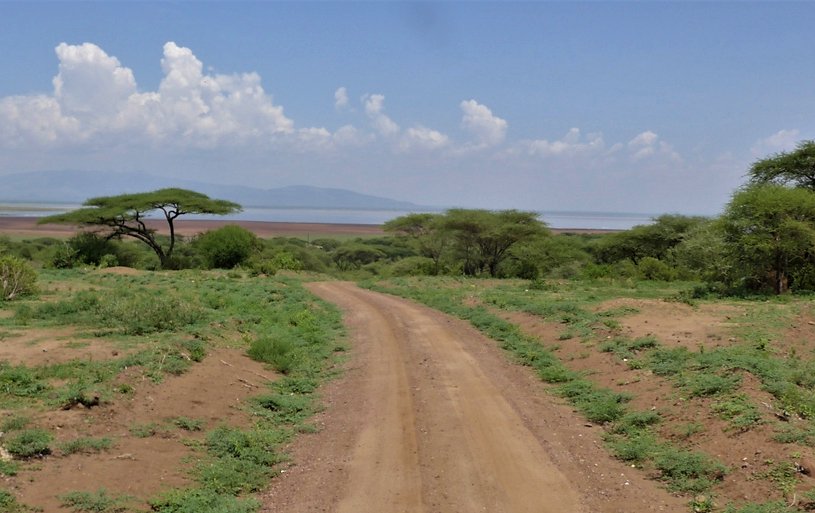
A Tarangire National Park safari is best known for giant baobab trees and some of the largest elephant herds in Africa, on the northern circuit a short drive southeast of Arusha. Visitors often make it the first stop on a northern loop, with game viewing along the Tarangire River at its peak in the dry months. The park runs to roughly 2,850 square kilometres of grassland, swamp and riverine woodland threaded by the river that names it.
This guide walks through what a game drive here is really like, why the dry season packs the riverbanks with elephants, how the park pairs with Lake Manyara and Ngorongoro, and what to expect from the birdlife and the wider wildlife. The tone throughout is honest about sightings, because no park guarantees lions on cue, and Tarangire rewards patience more than most.
Why a Tarangire National Park Safari Feels Different
The first thing most people notice on a Tarangire game drive is the trees. Baobabs stand across the whole park, thick trunked and often more than a thousand years old, and Tarangire holds one of the highest densities of them in East Africa. They store water in their fibrous wood to get through the long dry stretch, and elephants sometimes gouge into the bark to reach it, leaving scars that heal over the years. The landscape rolls in low ridges dotted with these trees, red termite mounds, and stands of acacia, which gives Tarangire a look distinct from the open Serengeti or the forested edge of Lake Manyara.
The second thing is the space. Tarangire stays quieter than its more famous neighbours, and you can drive for a long stretch without passing another vehicle. That matters when you find a herd of elephants at the river or a lion resting in the shade, because you often have the sighting to yourself rather than sharing it with a line of trucks. For travellers who want the feel of the bush without a crowd, this is a strong reason to give the park a full day or two rather than treating it as a quick passing visit.
Plan for the light. The baobabs photograph best in the low sun of early morning and late afternoon, when the trunks glow and the shadows stretch long. Ask your guide to time the drive around those hours rather than the flat midday glare.
The Giant Baobabs and the Shape of the Land
Baobabs are the signature of Tarangire, and they are worth understanding beyond the photographs. These are slow growing trees built for drought, with swollen trunks that can hold thousands of litres of water. In a park where the surface water shrinks to almost nothing for half the year, that stored moisture is a resource, and the marks left by elephants tell the story of hard seasons. Some of the older trees have hollows large enough to shelter in, and guides often have a favourite specimen they like to stop beside.
The land around them is not flat. Tarangire runs along a broad valley with the river cutting through the middle, and the ground rises into gentle hills studded with more baobabs and the tall spires of termite mounds. Swamp systems, chiefly the Silale Swamp in the south, hold green even when the rest of the park browns off. That mix of river, swamp, woodland and open grass is what packs so much varied wildlife into a relatively compact area, and it is why a Tarangire safari tour can feel busier with sightings than the size of the park suggests.
Elephants and the Dry Season Concentration
Tarangire is, more than anything, an elephant park. It holds one of the largest elephant populations in Tanzania, and in the dry season the numbers along the river are hard to overstate. As the seasonal pools and pans out on the surrounding Maasai Steppe dry up, elephants converge on the Tarangire River because it is the only reliable water for a long way around. Families gather into huge dry season herds, and groups of two and three hundred animals moving together are a genuine possibility rather than a brochure exaggeration. Across the peak months the park may hold several thousand elephants at once.
Watching a big herd at the water is the highlight of most trips here. You see the whole social range at once, from bulls testing each other to calves learning to use their trunks, all crowded onto the banks and into the shallows. The Silale Swamp draws them too, along with buffalo and other grazers that follow the last of the green. Predators track the concentration, so the same riverbanks that hold the elephants also give you a reasonable chance at lion, and the park has a healthy lion population that includes animals known for resting up in the branches during the heat, much as the climbers do over at Lake Manyara. Sightings are never promised, but the odds tilt in your favour when the wildlife is packed into a narrow strip of water.
In the driest weeks the Tarangire River becomes the whole region’s water supply, and the wildlife arrives to prove it.
What a Tarangire Game Drive Is Like
A typical day on a Tarangire game drive starts early. Guides like to be out as the sun comes up over the baobabs, partly for the light and partly because the animals are active and moving before the heat settles in. You spend the first hours working the river and the tracks that run beside it, stopping wherever there is movement, which in the dry season is often. A herd of elephants can hold you in one spot for an hour, and that is time well spent rather than time lost.
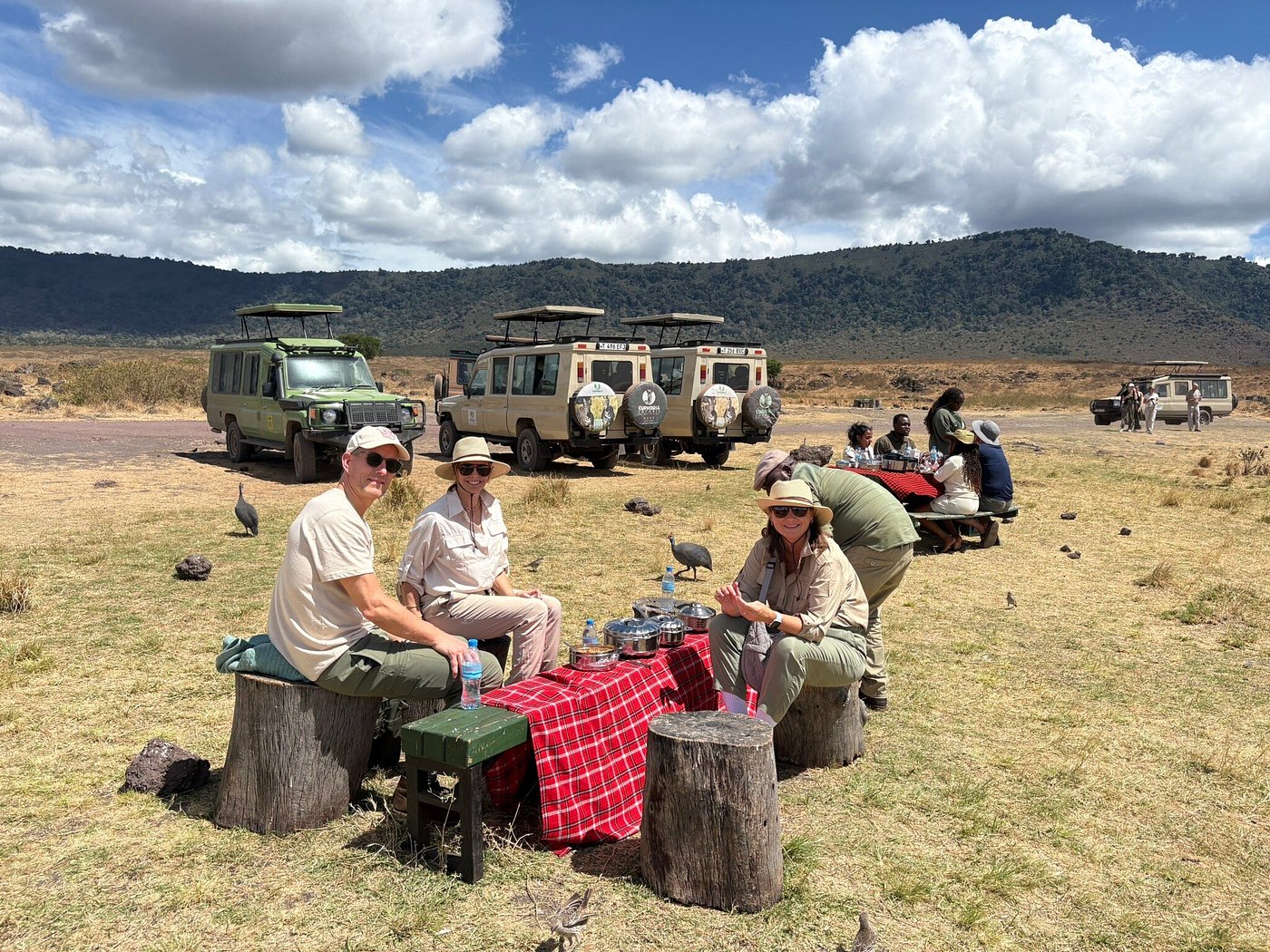
By mid morning many operators pause for a bush breakfast, coffee and food set out at a viewpoint while vervet monkeys keep an eye on the table. The middle of the day is slower, with the wildlife resting in shade, so drives often head back toward camp or push into the swamp margins where the grazing keeps animals in the open. Late afternoon brings a second active spell as the temperature drops. Because the park is quieter than the Serengeti, the pace of a Tarangire drive tends to be unhurried, and you rarely feel rushed off a sighting to make room for the next vehicle.
River game drives follow the Tarangire River where the dry season action concentrates, best for elephant herds and the predators that shadow them.
Silale Swamp drives work the green southern wetland that holds grazers and birdlife when the rest of the park browns off.
Walking safaris are offered in parts of the park and give the rare chance on the northern circuit to explore on foot with an armed guide, at a slower and closer scale.
The Birdlife on a Tarangire Safari Tour
Birders rate Tarangire highly, and with good reason. The park lists well over 500 species, a higher diversity than you find on the open Serengeti plains, thanks again to that mix of habitats. Along the river and around the swamp you get kingfishers, bee eaters and herons, while the woodland holds hornbills and the small, bright yellow collared lovebirds that are one of the park’s specialities. Out in the grass you may spot ground hornbills stalking along, kori bustards, and ostriches, and overhead there is a good range of raptors including martial eagles.
The birding stays strong year round but peaks in the wet months from November to May, when migrant species arrive and the resident birds come into breeding colour. If a mixed trip is what you want, a Tarangire safari tour lets you build a serious bird list alongside the big mammals without having to choose one over the other, which is not something every northern park offers.
Best Time for a Tarangire Safari
The clearest advice for a first visit is to come in the dry season, roughly June to October, and if you can, aim for the later part of that window. This is when the elephant concentration is at its strongest, because the water outside the park has gone and the herds have no choice but to gather at the river. The vegetation is thin, the sightlines are open, and predators work the crowded banks. Many guides point to the first weeks of October, when the park is at its driest, as the single best stretch for sheer numbers of animals in the Silale Swamp and along the water.
The wet season, November through May, is a different park. Rain refills the pans across the surrounding steppe, so the wildlife spreads out and the great elephant gatherings break up as animals disperse far beyond the river, some of them drifting all the way toward Lake Manyara. The catch is that the park turns green and quiet, the crowds thin out further, and the birding reaches its best. There is no wrong season exactly, but the two experiences are genuinely different, and dry season visitors chasing the classic huge elephant herds should time their trip with that in mind. A good Tarangire safari specialists team can match the dates to what you most want to see.
Pairing Tarangire on the Northern Circuit
Tarangire rarely stands alone. It is the gateway park of Tanzania’s northern circuit, the run of reserves that also takes in Lake Manyara, the Ngorongoro Crater and the Serengeti, and it slots in naturally at the start of a trip out of Arusha. The standard flow gives Tarangire a night or two up front, then moves on to the other parks before looping back by road or light aircraft.
Lake Manyara is the closest neighbour, a compact park built around a shallow soda lake beneath the Rift Valley wall, known for its flamingos, its own elephants and its tree climbing lions. It sits directly on the route, and the short hop makes it easy to string the two together; if you want the practical detail, read up on the drive from Lake Manyara before you set your order. Travellers often ask how the two parks stack up against each other, since they lie so close and both do elephants and lions well, and a side by side look at Lake Manyara vs Tarangire helps decide how many nights each deserves.
Past Manyara the circuit climbs to the Ngorongoro Crater, the collapsed volcanic caldera that holds a dense population of wildlife on its floor, and then pushes on to the vast Serengeti for the open plains and, in the right season, the wildebeest migration. Tarangire’s role in that sequence is to set the tone with something the others cannot match: the baobab country and the river herds. Skipping it to save a day is a common mistake, and one worth avoiding.
Order matters less than nights. Whether you do Tarangire first or fold it in at the end, give it enough time to see the river in the morning and the afternoon. A single midday passing visit will not show the park at its best.
How Tarangire Compares to the Serengeti
People often frame this as a contest, but the two parks do different jobs. The Serengeti is about scale and the migration, endless plains and the drama of big cats on open ground. Tarangire is about the elephants, the trees and the quiet. You will generally see fewer vehicles here, the sense of having the bush to yourself is stronger, and the landscape has more texture with its baobabs and ridges. What Tarangire cannot offer is the sheer sweep of the Serengeti or a migration on that scale; its own seasonal movements are real but modest by comparison.
For most trips the honest answer is to do both rather than pick one, which is exactly why the northern circuit exists. Tarangire gives you the elephant experience and the trees, the Serengeti gives you the plains and the cats, and the parks in between fill out the range. Approached that way, a Tarangire National Park safari is not a lesser version of anything but a distinct chapter that stands on its own terms.
Practical Notes for Your Tarangire Safari
6-Day Arusha, Tarangire, Serengeti & Ngorongoro Safari
11-Day Northern Circuit & Mahale Chimpanzee Safari
5 Days Lake Manyara, Tarangire & Ngorongoro
Getting to Tarangire is straightforward. The park entrance sits a couple of hours by road from Arusha, which makes it the easy first stop on a driving circuit, and light aircraft serve the region for those flying between parks. Most visitors travel in a fitted safari vehicle with a raised roof and a guide who knows where the herds tend to gather at a given time of year, which counts for a lot in a park where the wildlife shifts with the water.
Accommodation ranges from lodges and permanent tented camps on the park boundary to more mobile setups inside, and the choice affects how early you can be at the river in the morning. Bring layers, because dry season dawns are cool before the day heats up, along with sun protection, binoculars for the birds and the distant herds, and a decent zoom if you care about photographs. Beyond that, the main thing a Tarangire trip asks of you is a little patience and the willingness to sit with a sighting rather than rush to the next one.
Frequently Asked Questions About a Tarangire Safari
How many days should I spend in Tarangire?
One full day gives you a proper sense of the park, but two nights let you work both the morning and afternoon river action without rushing, and give you a spare drive if the first is quiet. On a longer northern circuit, one to two nights is the usual allocation, with more time weighted toward the Serengeti.
Is Tarangire good for seeing lions and other predators?
Yes, the park has a healthy lion population, and the dry season concentration of prey along the river improves your chances. Leopard and cheetah are present too but harder to find. As with any park, predator sightings are never guaranteed, and a knowledgeable guide who tracks recent movements makes a real difference.
How much does a Tarangire safari cost?
Costs vary widely with the style of trip. Park entry fees are charged per person per day, and the larger expense is the vehicle, guide and accommodation. Budget camping trips run at the lower end, mid range lodge safaris sit in the middle, and private tented camps cost considerably more. A multiple park northern circuit priced as a package usually works out better value than booking Tarangire as a single day.
Can I combine Tarangire with Lake Manyara and Ngorongoro?
Yes, and most people do. The three sit on the same northern circuit route out of Arusha, with Tarangire and Manyara close together at the start and Ngorongoro a little further along. Stringing them together in one trip is the standard way to visit, often with the Serengeti added on for the plains and the migration.
Is Tarangire worth visiting outside the dry season?
It depends on what you want. The big elephant herds break up in the wet months as the wildlife disperses across the wider landscape, so the classic dry season spectacle fades. In exchange you get green scenery, far fewer visitors and the year’s best birding. For a first trip focused on elephants, the dry season is the safer choice.
What wildlife might I see on a Tarangire game drive?
Elephants are the headline, along with buffalo, zebra, wildebeest, giraffe, and a range of antelope. Lions are regularly seen, with leopard and cheetah as harder finds. The park also holds smaller specialities and over 500 bird species, from lovebirds and hornbills to ostriches and large raptors. Exact sightings depend on the season and a measure of luck.