A budget Lake Manyara safari is well within reach if you share a group vehicle, sleep cheaply in Mto wa Mbu, and keep the park visit short. Travellers can join a shared day trip from Arusha, split the 4×4 and guide, and cut the bill by more than half. Lake Manyara National Park sits below the Rift Valley wall in northern Tanzania, close enough for a same day return.

This guide walks through how to plan a Lake Manyara budget safari that keeps the good parts and trims the fat. It covers joining a shared group tour to split the vehicle, sleeping cheaply around Mto wa Mbu, treating the park as a short visit rather than a full day, and choosing an operator you can trust without paying luxury rates. Along the way I will be honest about what you give up, because budget travel is a set of trade offs, not a magic discount.
The single biggest saving on any Lake Manyara trip is sharing the safari vehicle. The car, the fuel, and the guide cost the same whether one person or six ride in it, so filling those seats is where the money quietly disappears.
Why Lake Manyara Suits a Budget Safari
Lake Manyara is small by Tanzanian standards, and that works in your favour. The drive from Arusha runs about two and a half hours, so a day trip is genuinely doable. You leave in the morning, spend the good light hours in the park, and sleep back in Arusha or in a cheap room nearby. There is no need for internal flights, no need for two or three nights of lodge bills, and no long transfer to some remote corner of the country.
The park also packs a lot into a short visit. The road hugs the forest, then the lake shore, so you move through different habitats in a couple of hours. Groundwater forest gives way to open floodplain, and the birdlife alone keeps the drive busy. For a first safari or a warm up before a bigger park, Manyara gives you a real taste of Tanzania wildlife without the cost of a multi day expedition. That compact size is exactly why a budget safari here makes sense.
Join a Shared Group Day Trip to Split the Vehicle
The heart of any cheap Lake Manyara plan is the shared group tour, sometimes called a joining safari. Instead of hiring a whole vehicle for yourself, you book a seat and ride with other travelers who booked the same departure. The fixed costs, meaning the 4×4, the fuel, and the driver guide, get divided among everyone on board. A car that would sink a solo traveler suddenly becomes affordable when four to six people share it.
Good operators cap these shared vehicles so that every person still gets a window seat, which matters when you are trying to photograph a lion in a tree. Ask before you book how many seats they sell per car. A packed minibus is a false economy if you spend the game drive craning over shoulders. A well run joining tour keeps numbers sensible while still cutting your bill by more than half compared with going private.
The trade off is simple. You lose control over timing and pace. Shared departures leave at a set hour, usually early morning, and the itinerary follows the group rather than your whims. If you want to sit with a herd of elephants for forty minutes while everyone else is hungry for lunch, you may be outvoted. For most people chasing value, that is a fair swap. You can dig into the numbers further in this breakdown of day trip cost before you commit.
What a shared day trip usually covers. A typical joining tour includes round trip transport from Arusha, park entry fees, a driver guide, bottled water, and a packed or hot lunch. Read the inclusions line by line, because the gap between two quotes is often just whether park fees and lunch are bundled or added later.
Sleeping Cheap Around Mto Wa Mbu
The little town of Mto wa Mbu sits right at the park gate, and it is the budget traveler’s best friend. If you would rather break the trip over two days without paying lodge prices, this is where you stay. The town has a run of simple guesthouses, homestays, and campsites that cost a fraction of anything inside the park boundary.
Camping is the cheapest bed of all. Several campsites in and around Mto wa Mbu let you pitch a tent or take a basic bandas with shared showers and a communal kitchen. Many also run a small restaurant and bar, so you are not cooking over a fire unless you want to. If you do not carry a tent, plenty of these places rent one or offer a permanent tent already set up on a platform.
Budget guesthouses give you a private room with a mosquito net and an en suite bathroom for not much more than a campsite. Some are family run homestays that fold in a home cooked dinner, which saves you another restaurant bill. Staying outside the park like this is the honest budget move, because concession fees for sleeping inside the gate add a heavy nightly charge on top of everything else. For a fuller list of where to bed down cheaply, this rundown of budget lodges is worth a read.
Sleeping in Mto wa Mbu instead of inside the park is the quiet decision that keeps a Manyara safari genuinely cheap.
Treat Manyara as a Short Visit
Here is a truth that saves real money. You do not need a full day inside Lake Manyara. The park is compact, and a well planned morning game drive of four or five hours covers the forest, the hippo pool, and the lake shore comfortably. Because entry fees run on a rolling window, a shorter visit does not always cut the gate charge, but it frees the rest of your day for the drive home or a cheap afternoon in town.
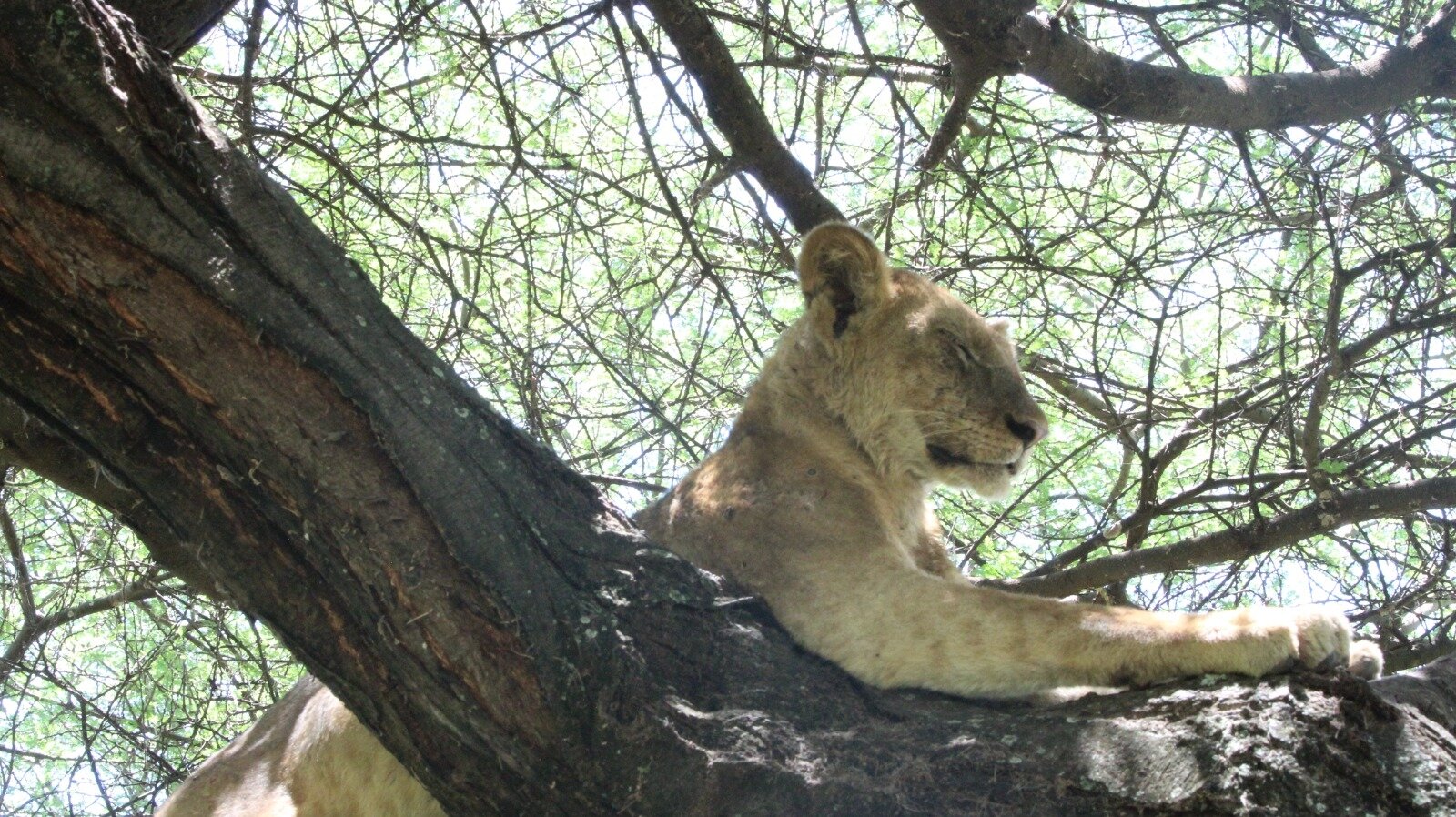
Many budget travelers pair a short Manyara visit with the drive to or from Ngorongoro or Tarangire, so the park becomes a half day stop rather than a standalone trip. If Manyara is your only park, a single focused morning drive gives you the tree climbing lions, the baboon troops, the giraffes, and the birds without the long midday lull when animals hide from the heat. You see the best of the park in the best light, then move on. That efficiency is the point of a lean safari.
Cut the Canopy Walk or Night Drive if Funds Are Tight
Lake Manyara sells a couple of paid extras that are lovely but not required. The treetop canopy walk is a suspended walkway through the forest that carries its own permit fee on top of park entry. The night game drive is another add on, run after dark to look for nocturnal animals, and it costs a further chunk per person.
Both are genuinely good. Neither is the reason you came. If your budget is tight, cut them first. The core game drive already delivers the wildlife the park is famous for, and you can walk a forest canopy or do a night drive at other parks or on a future trip. Spending your limited money on the drive itself, rather than on the extras, is the cleanest way to protect the experience while shrinking the bill. Skip the add ons, keep the safari.
Priority order when money is short. Pay for the park entry and the shared vehicle first, because those buy you the actual game drive. Treat the canopy walk and night drive as bonuses to add only if cash is left over.
Choose a Reputable but Affordable Operator
The cheapest quote is not always the real bargain. A budget safari operator that cuts corners can leave you with a tired vehicle, a bored driver, or fees you thought were included appearing at the gate. The goal is not the lowest number on paper. It is a fair price from a company that actually delivers the day it promised.
Look for operators with a steady run of recent independent reviews, clear written inclusions, and a real office you can reach. A trustworthy company tells you the vehicle type, the maximum group size, and exactly which fees are covered before you pay. Vague answers and pressure to book fast are warning signs. Reading the fine print on your safari cost quote line by line is the single best defence against surprise charges.
You can also protect yourself by paying a deposit rather than the full amount up front where possible, and by keeping your booking messages so the agreed inclusions are in writing. A good affordable operator has nothing to hide and will happily put the details down. The saving from picking a slightly cheaper but reputable company over a big brand name is real, and it does not cost you the quality of the guiding.
Honest Trade Offs of a Budget Safari
Budget travel is a trade, and it is only fair to name what you give up. On a shared group tour you accept fixed timings, a set route, and the company of strangers, some of whom will want different things from the day than you do. Camping and guesthouses mean simpler beds, occasional cold showers, and thinner walls than a lodge. A short visit means you skip the slower, sit and wait style of game viewing that rewards patience.
6-Day Lake Manyara, Tarangire, Serengeti & Ngorongoro Safari
6-Day Arusha, Manyara, Tarangire & Ngorongoro Safari
9-Day Grand Northern Circuit Safari
None of this ruins the safari. The lions still climb the trees, the flamingos still turn the shallows pink, and the guide still knows where the elephants feed. What you are really buying with a budget plan is access. You get into the park, you see the wildlife, and you keep enough money for the rest of your trip. For most travelers that is a very good deal, as long as you go in with clear eyes about the comfort you are trading away.
Plan the vehicle sharing, sleep in Mto wa Mbu, keep the visit short, drop the extras, and pick a company you can trust. Do those five things and Lake Manyara becomes one of the best value wildlife days in Tanzania, no fat wallet required.
Frequently Asked Questions
How much does a shared Lake Manyara day trip from Arusha cost?
A joining group day trip from Arusha typically runs from around 170 to 270 US dollars per person, depending on how many travelers share the vehicle and which season you visit. The price usually bundles round trip transport, the park entry fee, a driver guide, water, and lunch. The more people fill the car, the lower the per person figure drops, which is why solo travelers should always ask about joining an existing departure.
What is the Lake Manyara National Park entry fee?
Non resident adults pay roughly 50 to 59 US dollars per person for a 24 hour entry, with the exact figure shifting slightly between high and low season. Children aged 5 to 15 pay a reduced rate of about 18 US dollars. On a shared tour this fee is normally included in your package price, but always confirm that in writing, since an excluded gate fee is the most common hidden cost on cheap quotes.
How much is camping or a budget guesthouse in Mto wa Mbu?
Camping around Mto wa Mbu starts near 15 to 40 US dollars per night depending on the site and whether you bring your own tent. Simple guesthouses and homestays with a private room and bathroom sit in a similar range, often with breakfast included. These options are far cheaper than sleeping inside the park, where concession fees add roughly 47 US dollars per person per night on top of your room.
Are the canopy walk and night drive worth the extra money?
The treetop canopy walk costs about 24 US dollars per adult and the night game drive around 59 US dollars per person, both on top of standard park entry. They are enjoyable but not the main reason to visit. If your budget is tight, skip both and spend your money on the core game drive instead, which already shows you the tree climbing lions, hippos, and birdlife the park is known for.
Is a half day really enough time at Lake Manyara?
Yes for most budget travelers. The park is compact, and a focused morning drive of four to five hours covers the forest, the hippo pool, and the lake shore comfortably. Animals are most active in the cooler morning light anyway, so a short, well timed visit often shows you more than a long day spent waiting out the midday heat. It also frees the rest of the day for the drive home.
How do I avoid getting ripped off by a cheap operator?
Check for recent independent reviews, ask for written inclusions listing the vehicle type and maximum group size, and confirm which fees are covered before you pay. A reputable budget company answers clearly and puts details in writing. Be wary of quotes far below the market and of pressure to pay everything up front. Paying a deposit and keeping your booking messages gives you a record if anything differs from what was promised.