The common Lake Manyara safari mistakes are rushing the visit, expecting guaranteed sightings, and turning up with no plan, and each one leaves people feeling short changed. Visitors can fix them with patience, a realistic idea of what the wildlife does, and a well timed game drive. Lake Manyara National Park is a small but varied reserve below the Rift Valley wall in northern Tanzania, where a little preparation pays off.
Read this alongside our guide to what to expect on safari so you go in with the right picture of the park before you book anything.
Rushing The Game Drive In Too Little Time
The single most common mistake is treating Lake Manyara as a quick stop between Arusha and the Ngorongoro Crater. Drivers pull in, do a fast loop of the groundwater forest, glance at the hippo pool, and turn around inside two hours. You can technically say you visited. You will also have skipped the parts of the park where the good sightings happen.
The park stretches long and narrow along the base of the Rift Valley wall, and the wildlife thins and clusters as you move south toward the hot springs. A rushed loop stays near the entrance and never reaches the open floodplain where elephants, buffalo, and the occasional lion spend their afternoons. Give the park at least half a day, and a full day if you can spare it. Better still, sleep one night inside or next to the park so you get both an early morning and a late afternoon game drive, which roughly doubles the wildlife activity you see for the same park fee. Our first time tips go deeper on how to structure that first day.
Arriving In The Heat Of Midday Instead Of Early Morning
Plenty of visitors roll up to the gate at eleven or noon, wonder where all the animals went, and blame the park. The animals did not leave. They found shade. By late morning the heat pushes predators under bushes and drives most plains game to rest, and the forest goes quiet.
The fix costs you nothing but an early alarm. Be at the gate when it opens. The first two hours after sunrise are when lions, leopards, and other predators are still moving, when the light is soft for photography, and when the forest birds are loudest. If a midday arrival is your only option, do not write the day off. Head straight for the hippo pool and the lakeshore, where animals gather at water regardless of the hour, then wait out the worst heat and drive again as the afternoon cools. Our notes on the best time to visit cover both the daily timing and the seasonal side of this.
Expecting Guaranteed Tree Climbing Lions
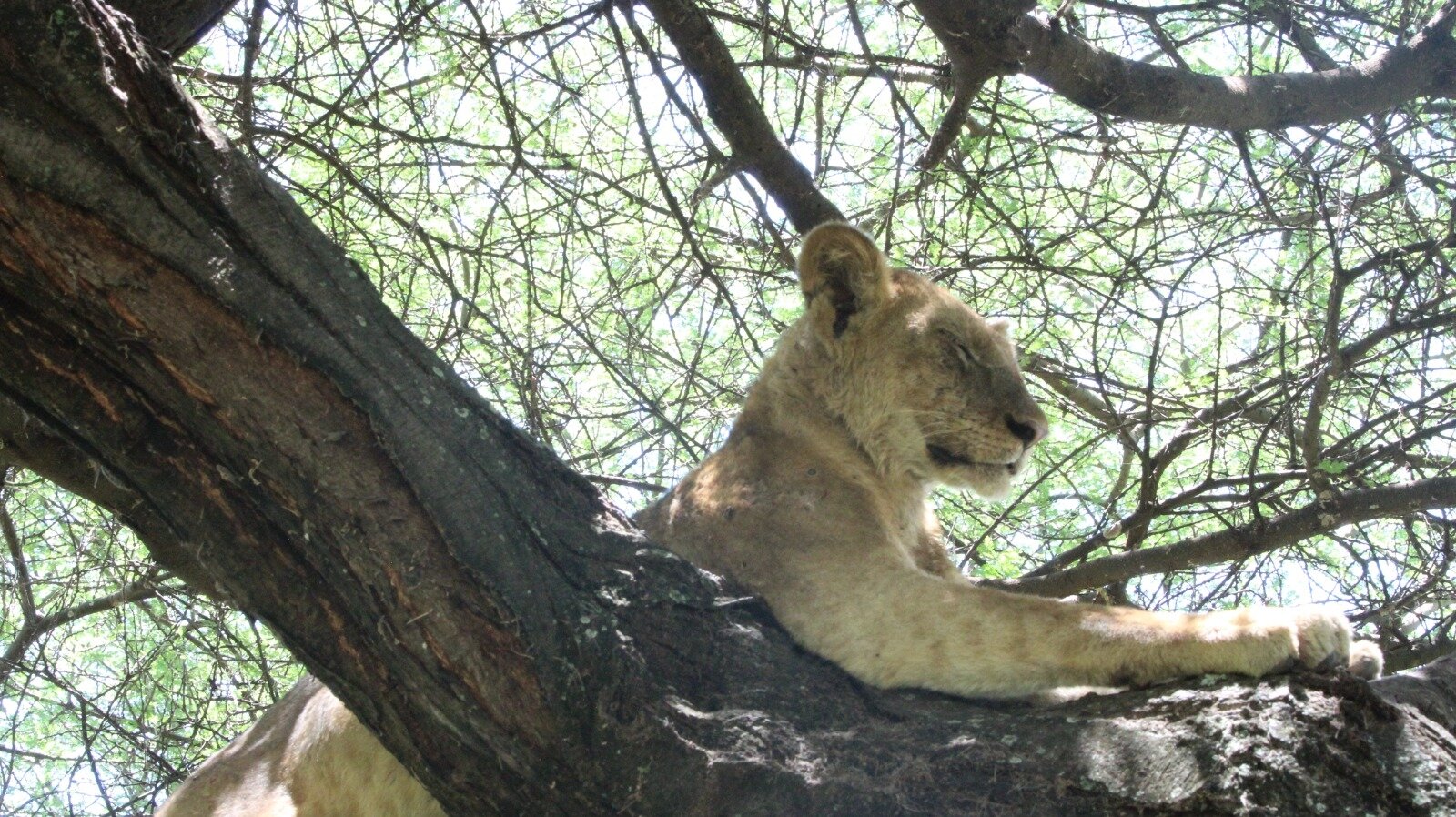
Lake Manyara is famous for lions that lounge in acacia and sycamore branches, and that fame sets a trap. Visitors arrive certain they will photograph a lion draped over a limb, and treat anything less as a failure. The truth is more honest and more interesting. The tree climbing behaviour is real but never guaranteed on any given day. The lions here have done it since at least the 1950s and pass the habit down through generations, yet whether you catch it depends on the individuals, the season, and plain luck.
Sightings improve in the dry months from June to October, when heat and biting insects give the lions a reason to get off the ground, and when the thinner vegetation makes them easier to spot at all. Even then, some visitors go home without seeing a lion in a tree, and a few go home without seeing a lion. Set your expectation to “possible and worth watching for” rather than “promised,” keep your guide scanning the acacia line, and treat a treed lion as the bonus it genuinely is.
Assuming The Flamingos Will Blanket The Lake
The postcard image of Lake Manyara shows a pink shoreline of flamingos stretching to the horizon. Real visits rarely match it. Flamingo numbers swing wildly with water levels, rainfall, and the algae the birds feed on. Some weeks the lake carries huge flocks. Other weeks the birds have moved to another soda lake in the region entirely, and you see scattered groups through binoculars far out on the flats.
Both lesser and greater flamingos are present through the year, so you are unlikely to see none, but the dense pink carpet is a matter of timing and chance, not a fixture. Bring binoculars or a long lens, because even in a good spell the birds keep their distance out on the shallows. If close, reliable flamingo photography is your main goal, build your trip around the wetter months and accept that the lake still makes no promises.
Wildlife is not a zoo. The parks that disappoint are usually the ones visited with a checklist instead of an open afternoon.
Feeding Or Crowding The Baboons
Lake Manyara has one of the largest baboon troops in Africa, and they gather right by the forest road where everyone slows down. They are clever, bold, and completely used to vehicles. Every season a few visitors think it is charming to toss a snack or hold food out a window, and every season that ends badly. A fed baboon is a bold baboon, and a bold baboon will climb into an open vehicle and take what it wants.
Baboons snatch food, phones, sunglasses, and anything shiny in a blink, and a startled one can bite. The fix is simple and firm. Never feed them, keep windows up when a troop crowds the road, do not leave food or bright items on open seats, and enjoy them through the glass or the roof hatch from a sensible distance. The same rule protects the animals, since primates that learn to raid vehicles often end up in conflict with people and lose.
Skipping The Canopy Walk Above The Forest
Most safari visitors keep their whole trip inside the vehicle and never step onto the treetop walkway near the entrance. That is a missed chance. The walkway is a suspended series of bridges that runs about 370 metres through the groundwater forest and rises to roughly 18 metres, putting you at eye level with the canopy where the vehicle never takes you.
It is not a wildlife guarantee either, but it changes your angle on the park and gets you out of the seat after hours of driving. Time it for after your early game drive, when the forest has warmed and the birds and monkeys are active in the branches around you. It suits families and anyone who wants a slower, closer look at the forest layer that a safari vehicle rushes straight through.
Passing On The Night Drive
Daytime is only half of Lake Manyara. The park is one of the few in northern Tanzania that permits guided night drives, and many visitors never book one because they assume the day covers everything. It does not. A night drive opens a different cast of animals entirely, the nocturnal residents you simply cannot see between sunrise and sunset.
With a spotlight you have a real chance at bush babies, genets, civets, porcupines, and owls, and predators like leopards and hyenas are more active once the heat drops. Be honest with yourself about the unpredictability, since some nights are quiet and the sightings are never promised. Even so, the sounds, the eyeshine in the dark, and the chance of something you would never meet by day make it one of the more memorable things you can do here. Book it in advance, because night drives run on set slots and fill up.
Wearing The Wrong Colours For The Tsetse Flies
The wooded stretches of Lake Manyara hold tsetse flies, and their bite is sharp. Visitors who did no homework tend to show up in dark blue or black, which is close to the worst choice possible. Tsetse flies are drawn to dark blue and black, so those colours turn you into a target through the very areas where the flies are thickest.
Dress in khaki, olive, tan, and other muted earth tones, which attract far less attention from the flies and double as sensible safari colours that do not spook wildlife. Skip bright white too, which shows every speck of dust, and keep a light long sleeved layer handy for the wooded sections. It is a small adjustment that saves a lot of swatting and itching on your game drive.
Over Packing The Itinerary Around The Park
A different timing mistake happens at the planning stage, not the gate. Travellers try to bolt Lake Manyara onto an itinerary already crammed with the Serengeti, the Ngorongoro Crater, and Tarangire, all in a handful of days. The result is a blur of long transfers and single night stops where you spend more time moving than watching animals.
Stringing together one night stays wears you out and gives you no real feel for anywhere. Give each major destination at least two nights where you can, and let Lake Manyara have its own unhurried slot rather than a leftover hour on a transit day. On the packing side, the same “less is more” logic applies to your bag. Most lodges do daily laundry, and light aircraft cap luggage near 15 kilograms, so soft sided bags and three days of clothes are plenty. A lighter load and a looser schedule both make the trip better.
Choosing The Cheapest Operator Blindly
The last mistake is the one that quietly ruins everything else. People compare quotes, pick the lowest number, and assume a safari is a safari. It is not. The operator you choose shapes the day more than the park does, because the guide behind the wheel decides where you go, how patiently you wait, and whether that shape in the acacia gets spotted at all.
6-Day Arusha, Manyara, Tarangire & Ngorongoro Safari
11-Day Northern Circuit & Mahale Chimpanzee Safari
3-Day Family Ruaha National Park Safari
The cheapest quotes usually cut where you feel it most. That can mean older vehicles that break down and eat your game viewing time, overworked or underqualified guides, long unoptimised drive routes, and fees left off the quote so the real bill climbs later. A rock bottom price is not a bargain if the guide cannot read the bush or the vehicle strands you at midday. Read recent independent reviews, ask exactly what the price includes, confirm park fees and activities are covered, and weigh the guide’s reputation above the sticker. Paying a fair rate for a strong guide is the highest value decision on the whole trip.
Nearly every mistake here comes down to two habits: expecting guarantees the wild does not give, and rushing a park that pays out to patience. Fix those two and a Lake Manyara safari usually takes care of itself.
Frequently Asked Questions
How long should I spend on a Lake Manyara safari?
Give the park at least half a day, and a full day if your schedule allows. The best value comes from staying one night in or near the park so you get an early morning drive and a late afternoon drive, since those are the two windows when wildlife is most active. A rushed ninety minute loop near the entrance misses the southern floodplain where a lot of the good sightings happen.
Am I guaranteed to see tree climbing lions?
No. The behaviour is real and Lake Manyara is one of the few places you can hope for it, but it is never guaranteed on any given day. Your chances improve in the dry season from June to October, when the vegetation thins and heat gives lions a reason to climb. Treat a treed lion as a lucky bonus rather than a certainty, and keep your guide scanning the acacia line.
When is the best chance of seeing lots of flamingos?
Flamingo numbers rise and fall with water level, rainfall, and algae, so no month promises the dense pink carpet from the postcards. Both lesser and greater flamingos are present year round, and the wetter months tend to bring larger gatherings. Bring binoculars or a long lens either way, because the birds usually stay far out on the shallow flats.
How much does a Lake Manyara safari cost?
It varies widely with your operator, group size, and whether you camp or stay in a lodge. Budget day trips from Arusha usually run in the low hundreds of dollars per person, while private guided days with a quality operator cost more. Always confirm whether the quote includes park entry fees, activities like the night drive, and taxes, since fees left off a cheap quote are a classic way the real total climbs later.
Is the night drive worth booking?
For many visitors, yes. Lake Manyara is one of the few northern parks that allows guided night drives, and they reveal nocturnal animals you cannot see by day, such as bush babies, genets, civets, and porcupines, with a better chance at leopards and hyenas after dark. Sightings are unpredictable and never promised, but the experience is different enough from a day drive to be worth it. Book ahead, because slots are limited.
What should I wear to avoid tsetse fly bites?
Stick to khaki, olive, tan, and other muted earth tones, and avoid dark blue and black, which strongly attract tsetse flies through the wooded parts of the park. A light long sleeved layer helps in the forest sections, and earth tones double as good general safari colours that do not spook wildlife. Skip bright white too, since it shows dust badly.