
A Lake Manyara walking safari is a guided bush walk on foot, letting you cover a few kilometres slowly and read the small details a game drive rolls straight past. Visitors set out with an armed ranger and a guide, tracking fresh prints, insects and birdcalls rather than chasing big game, usually in the cool of early morning. Lake Manyara National Park sits below the Rift Valley escarpment in northern Tanzania.
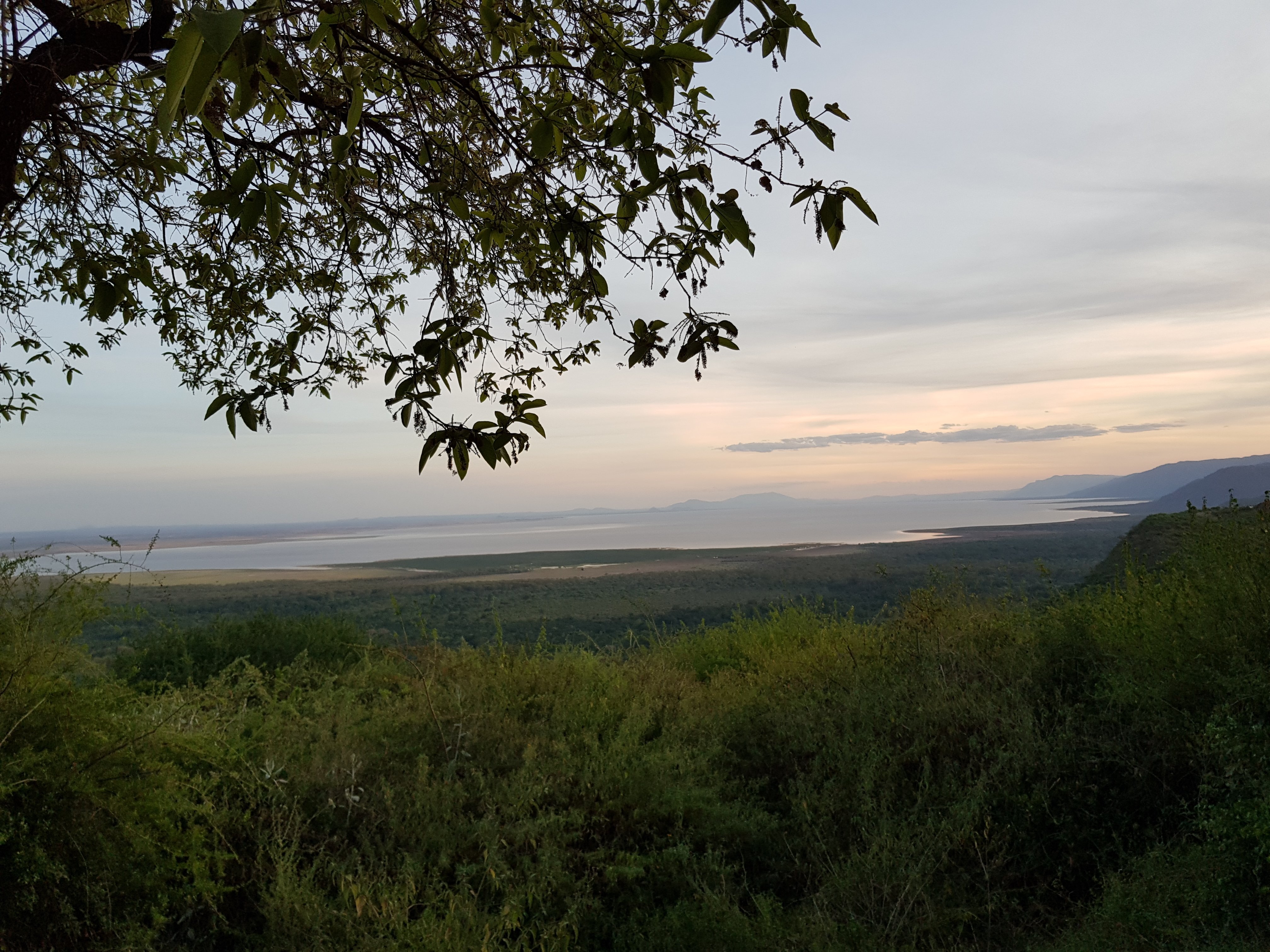
This guide covers what a Lake Manyara walking safari actually involves, where the walks happen, the rules an armed ranger will hold you to, how fit you need to be, and why a walk on foot pairs so well with time spent in the vehicle. If you are still shaping your days in the park, it sits alongside the wider list of things to do in Lake Manyara.
What a Lake Manyara Walking Safari Is
A walking safari at Lake Manyara is a guided bush walk led by a licensed guide and accompanied by an armed park ranger. You move in a small group, on foot, at a pace set by the terrain and by whatever the guide wants to show you. Nobody is trying to tick off the big animals. The point is the ground level detail: the way a track tells you which direction an animal was heading, the plants the Maasai use for medicine, the difference between elephant dung a day old and dung from that morning.
The park sits at the foot of the Great Rift Valley escarpment, and that wall of rock shapes almost everything you walk through. Rivers and perennial springs run off the escarpment and feed a tall groundwater forest below the rift wall. Walk into that forest and the light drops, the air cools, and you are under sycamore fig, croton, and quinine trees with monkeys moving overhead. Step back out toward the lake and the ground opens into acacia woodland and grass. Few parks pack that much variety into a short walk, which is part of why a guided bush walk here rarely feels repetitive.
A walking safari is not a substitute for a vehicle safari, and it is not marketed as one. Think of it as a different lens on the same park. You will see fewer big animals on foot and far more of the small stuff that makes the ecosystem work.
Where the Guided Bush Walk Happens
Walks tend to run along the park margins and the quieter edges rather than through the middle of dense wildlife concentrations, which keeps the group safe and keeps disturbance low. A common route follows the shoreline zone, working toward the hot springs and a flamingo lookout, where the alkaline lake draws waterbirds in numbers when conditions are right. Flamingo sightings depend heavily on water levels and season, so treat them as a possibility rather than a promise.
Other walks head into the groundwater forest near the northern end of the park, close to the gate and the town of Mto wa Mbu. This is the shaded, humid part of the park, thick with fig and mahogany, and it is where you are most likely to watch blue monkeys and baboons at close range on foot. Some operators run a longer escarpment walk or hike that climbs toward the rift wall, trading forest cover for open views back across the lake and the plains. The Msasa area, starting from a picnic site and working up through a river gorge toward the top of the rift valley wall, is one of the routes used for that kind of climb, and it takes two to three hours depending on pace.
Just outside the park, the village of Mto wa Mbu runs its own guided walks through farmland, banana groves, and workshops. Those are cultural walks rather than wildlife walks, but they slot neatly into the same day and give you a sense of the community living right against the park boundary. If you want the elevated forest experience without the full bush walk, the park’s canopy walkway is a separate, easier option on a raised treetop bridge.
What You Cover on Foot That a Vehicle Misses
The honest pitch for a walking safari is scale. A vehicle is built to close distance to big animals fast. Walking is built to notice small things slowly. On a good walk your guide will stop constantly, and each stop is usually about something you would never register from a moving car.
Tracks and signs come first. Elephant tracks pressed into soft ground near a stream, hippo trails worn into the grass where the animals move between water and grazing, the neat prints of an antelope, the drag of a tail. A guide reads these like a page: who passed, roughly when, and where they were going. Droppings tell their own story, from what an animal has been eating to how recently it stood where you are standing.
Plants get real attention on foot. You learn which trees carry the groundwater forest, which acacia the elephants strip, and which plants the local Maasai and Iraqw communities use for food or medicine. Insects that a game drive never notices become part of the walk, from termite mounds and their engineering to columns of ants and the dung beetles working a fresh pile. And birds are far easier on foot, because you can stand still and let a guide point out herons, storks, weavers, and the smaller forest species by call before you even see them. Manyara records well over 400 bird species, and a slow walk is one of the better ways to appreciate that.
A game drive shows you the animals. A walk shows you how the whole place fits together, from the soil up.
Safety Rules on the Walking Trek
Every walking safari begins with a safety briefing, and it is worth listening to properly. The ranger and guide will run through how the group moves and what to do if an animal is close. The rules are simple and they exist for good reasons.
You walk in single file, behind the armed ranger, who leads. You keep quiet and talk in low voices, because sound carries and the whole point is to avoid surprising animals. You do not wander off or drift out of the line. You watch the wind: guides constantly read wind direction so that your scent does not travel ahead to animals before you have seen them, and they adjust the route based on that and on animal behaviour. Fast movements and bright, pale clothing are discouraged, so neutral greens and browns are the standard advice. If the guide raises a hand to stop, you stop.
The ranger carries a firearm as a last resort. It is there for the rare case of a genuine threat, and in practice it almost never comes off the shoulder. The far more important safety tools are the guide’s judgement, the group’s discipline, and the habit of keeping a respectful distance from anything large. Most operators also require a communication device and a first aid kit on the walk, and they keep group sizes small, usually somewhere between four and eight people, so the guide can manage everyone.
Before the walk: listen to the full briefing, wear neutral colours and closed shoes, bring water and a hat, and leave strong perfume behind. During the walk: stay in line, stay quiet, follow hand signals, and never step between the ranger and an animal.
Fitness, Age, and How Long the Hike Lasts
A Lake Manyara walking safari is not a fitness test. Most walks last between one and three hours and cover gentle to moderate ground, and the shorter forest routes are well within reach of anyone comfortable on their feet for an hour or two. The pace is slow by design, with frequent stops, so you are rarely pushing hard.
The longer escarpment hike asks more of you. Climbing toward the rift wall involves a sustained uphill stretch, uneven footing, and heat once you leave the forest shade, so it suits walkers with a reasonable level of fitness. If you are unsure, tell your operator in advance and they will match the route to the group. Sturdy closed shoes matter on any of these walks, as does water, sun protection, and a light layer for the cooler forest.
Walking safaris in Tanzania generally carry a minimum age, commonly around twelve, because the rules around keeping quiet and following instructions are hard to guarantee with young children and the stakes on foot are higher than in a vehicle. Check the exact age limit with your operator, as it can vary.
Best Time of Day and Season for the Walk
Early morning is the standard and the best choice. Walks are usually arranged to start not long after the gate opens, when the air is cool, the light is soft, and animals are active before the heat settles in. Morning also gives you the clearest tracks, because overnight movement leaves fresh signs in the soil for your guide to read. A late afternoon walk is sometimes possible and can be lovely in the cooler light, but midday is avoided because the heat is tiring and wildlife goes quiet.
Across the year, the dry season from roughly June to October is the easier time to walk. Paths are firmer, the grass is shorter so you can see further, and animals gather around the remaining water. The green season brings its own rewards, with bird numbers up and the forest at its most alive, but wetter ground and taller grass can make walking trickier and reduce visibility. Whatever the season, a walk usually needs booking at least a day ahead, since it depends on ranger availability at the gate.
How the Walk Complements a Game Drive
The best way to use a walking safari is not to choose it instead of a drive but to run the two together. Spend the core of your wildlife time in the vehicle, where you can cover ground and reach the areas where big animals concentrate, and use the game drive for the elephants, giraffe, buffalo, and the chance of Manyara’s tree climbing lions. Then carve out a morning walk for everything the drive cannot give you.
The two experiences answer different questions. The drive answers what is here. The walk answers how it lives. After a walk you tend to read the park differently from the vehicle too, because you have handled the tracks and learned the plants, and the landscape sliding past the window means more. Pairing a slow bush walk with a full day of driving is, for a lot of visitors, the version of Manyara they remember longest, precisely because it is the version they experienced with their feet on the ground.
6 Days Lake Manyara, Serengeti & Ngorongoro Crater
5-Day Arusha, Lake Manyara, Tarangire & Ngorongoro Safari
13-Day Grand Tanzania North and South Safari
A walk also fits neatly around the park’s other walking activities. Many visitors combine a morning bush walk with the raised treetop bridge and a village walk in Mto wa Mbu, building a day that stays out of the vehicle almost entirely without losing the sense of being deep in the park.
Planning Your Lake Manyara Walking Safari
Arrange the walk through your safari operator or lodge, or ask at the park gate, and give at least a day’s notice so a ranger can be assigned. Confirm the route and how long it runs, whether it is a gentle forest loop or the longer escarpment climb, and check the minimum age if you are travelling with teenagers. Pack closed walking shoes, neutral clothing, water, a hat, sunscreen, and binoculars, and skip strong scents. Come with the right expectation, which is that you are trading the odds of big animal sightings for a far closer, quieter reading of the park, and the walk will deliver on exactly that.
Frequently Asked Questions
Is a Lake Manyara walking safari safe?
Yes, when you follow the rules. Every walk is led by a trained guide and an armed park ranger, starts with a safety briefing, and keeps the group in single file at a safe distance from large animals. Incidents are rare because the whole approach is built around avoiding surprises. Your part is to stay quiet, stay in line, and follow the guide’s signals.
How much does a walking safari at Lake Manyara cost?
A guided walk is charged as a walking or nature walk fee on top of your normal park entry, and it is usually a modest addition rather than a major expense. Expect a fee per person for the ranger led walk, often in the region of a few tens of US dollars, with the exact amount depending on the operator, the length of the walk, and group size. Confirm the current rate with your operator when you book, as fees are set by the park authority and change over time.
How long does the guided bush walk last?
Most walks run one to three hours. Shorter forest routes sit at the lower end, while the longer escarpment hike toward the rift wall can take two to three hours or more. The pace is slow, with frequent stops, so the time passes more easily than the distance suggests.
What will I actually see on foot?
Expect tracks, droppings, plants, insects, and birds, along with smaller mammals and primates such as monkeys and baboons in the forest. You may see larger animals at a distance, but the walk is not built around big game the way a drive is. Bird watching is especially good on foot because you can stand still and listen.
Do I need to be very fit for the walk?
Not for the shorter forest walks, which suit anyone comfortable on their feet for an hour or two on gentle ground. The escarpment hike is more demanding, with a sustained climb and uneven footing, so it suits walkers with reasonable fitness. Tell your operator your comfort level and they will match the route to you.
When is the best time to do the walk?
Early morning is best, soon after the gate opens, when it is cool, the light is good, and tracks from overnight are fresh. Across the year the dry season from about June to October gives firmer paths and shorter grass, which makes walking and wildlife spotting easier.
Can children join a walking safari at Lake Manyara?
There is usually a minimum age, commonly around twelve, because staying quiet and following instructions matters so much on foot. The exact limit varies between operators, so check when you book if you are travelling with younger children.


