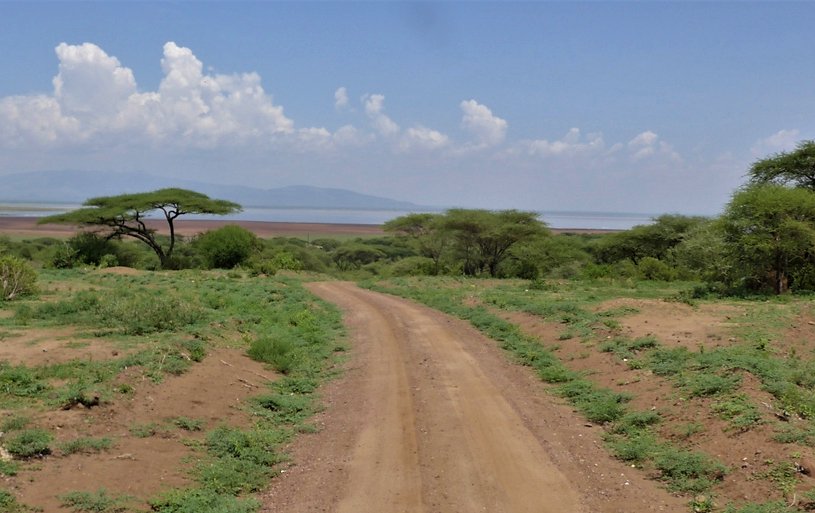
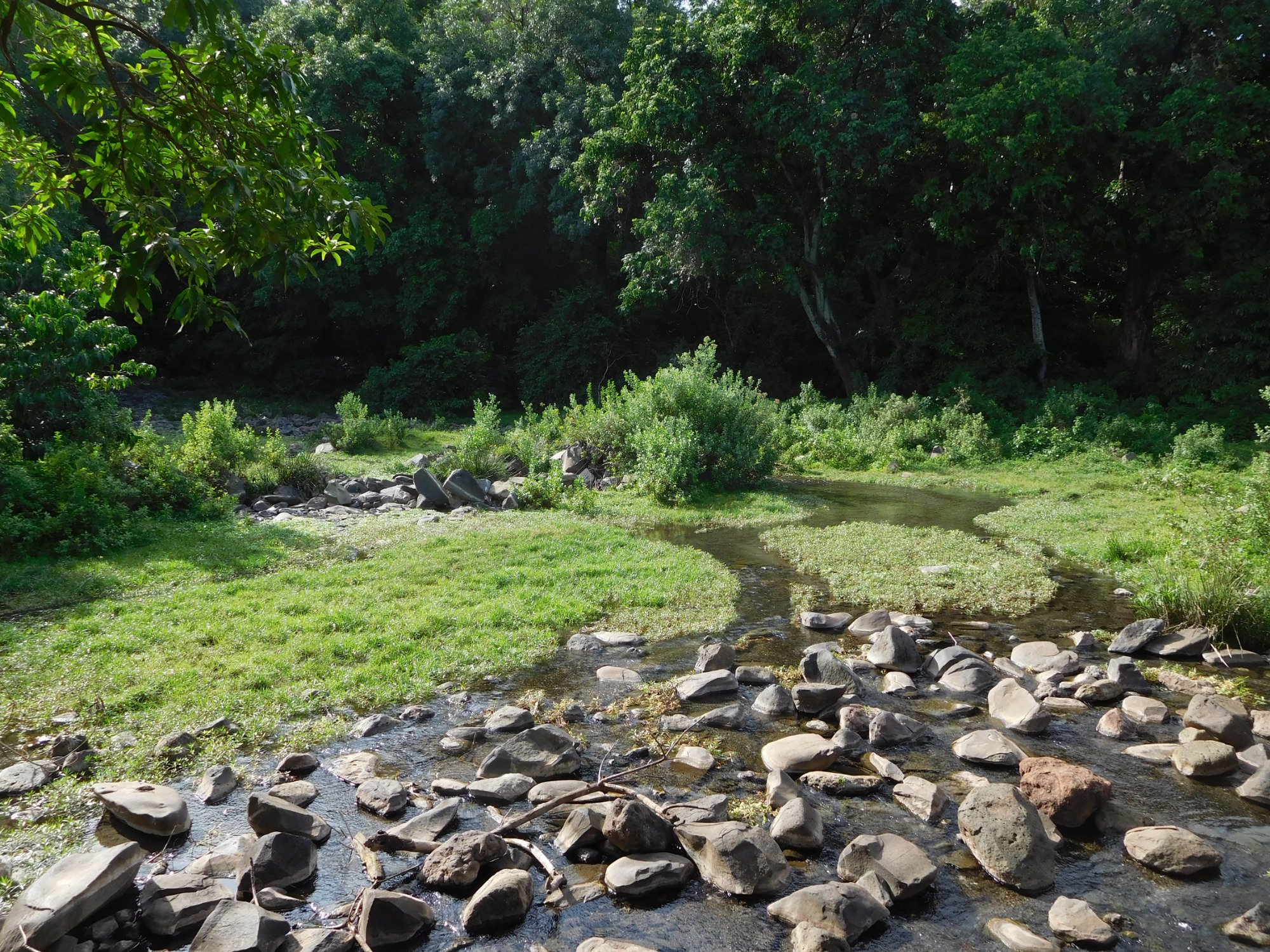
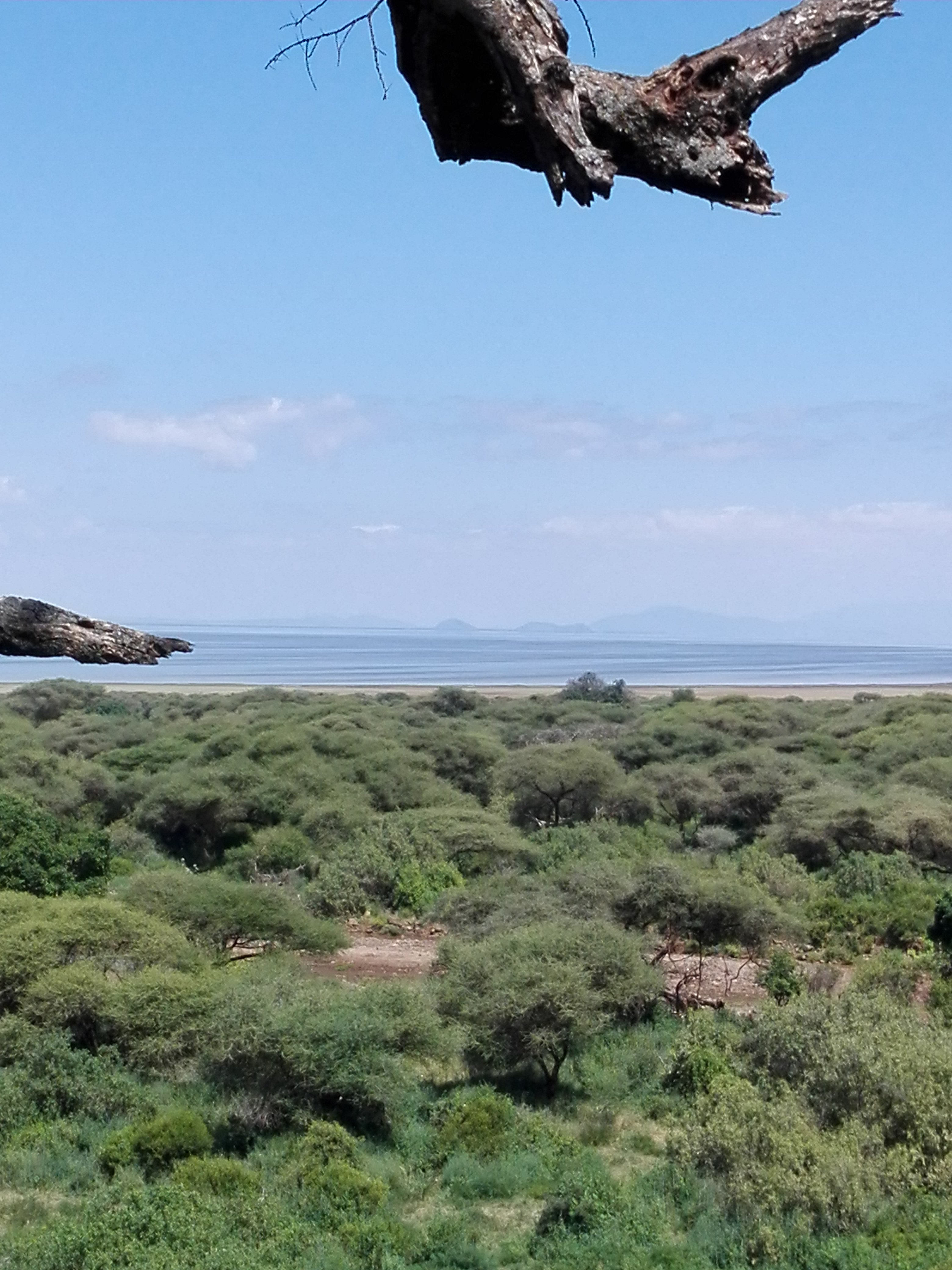
Masai giraffe are among the most reliable large animals to see at Lake Manyara National Park, browsing the acacia woodland and the open ground between the groundwater forest and the lakeshore. As Tanzania’s national animal and the tallest land animal alive, they stand out clearly across the park’s mixed habitat. Lake Manyara is a narrow park in northern Tanzania, squeezed between the Great Rift Valley escarpment and an alkaline lake, where giraffe move in loose herds.
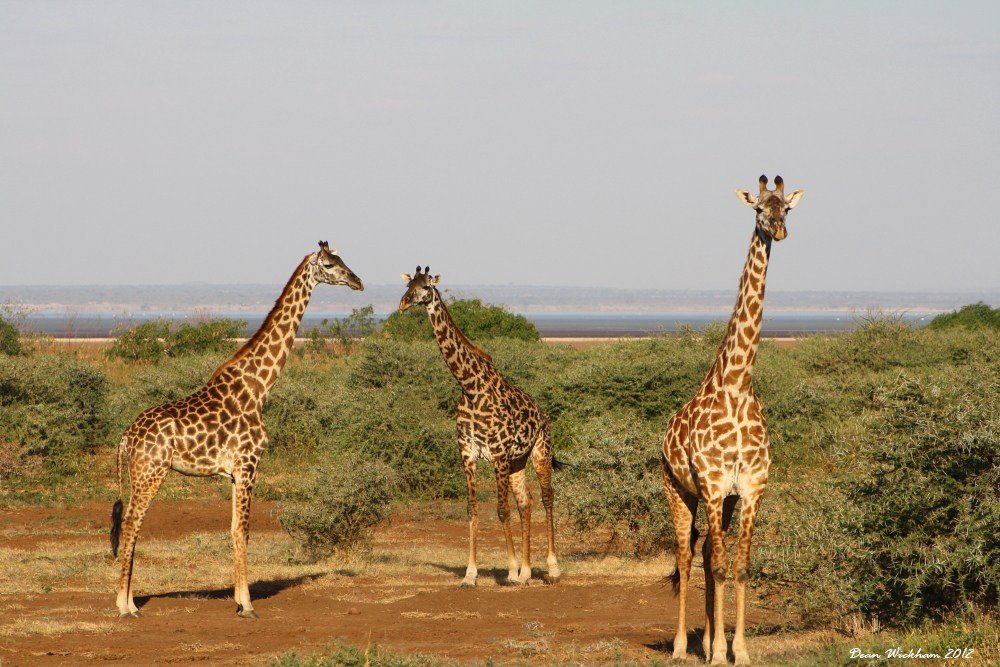
Giraffes are among the more reliable big-mammal sightings at Lake Manyara, but they are not guaranteed on every drive. They browse widely and move quietly. Give the acacia belt time and scan above the tree line, not just at ground level.
Where Masai Giraffes Browse In Lake Manyara
Lake Manyara packs several habitats into a small area, and the giraffes favour a couple of them clearly. The park runs roughly 330 square kilometres, and much of the terrain a giraffe can use sits in a thin strip along the base of the escarpment. The dense groundwater forest near the entrance gate is too closed and too tall in the canopy for comfortable giraffe browsing, so you rarely find them deep in it. Instead they concentrate in the acacia woodland that opens up once you pass through the forest, and in the transitional ground where that woodland thins toward the grassy floodplain and the lake.
This acacia belt is the giraffe’s larder. The park’s umbrella thorn and other acacia species carry the small, protein-rich leaves that make up most of a Masai giraffe’s diet, and the trees are spaced widely enough that a six-metre animal can reach into the canopy without fighting through dense undergrowth. The same trees feed Lake Manyara’s large elephant population, so you sometimes see giraffes and elephants working the same stand of acacia from different heights, the elephants stripping bark and branches low down while the giraffes take the top growth. If you want the wider picture of what shares this habitat, the animals in Lake Manyara range from tree-climbing lions to hippos, and the giraffes overlap with most of the browsers and grazers along this corridor.
The open zones between forest and lake matter too. Where the woodland breaks into scattered trees and grass, giraffes step out to move between feeding patches, and this is often where you get the clearest, longest look at them. A giraffe half-hidden inside acacia can be surprisingly hard to pick out; the same animal crossing open ground is impossible to miss.
What A Masai Giraffe Looks Like Up Close
The Masai giraffe is the largest of all the giraffes and carries the most distinctive coat. Bulls stand around 5.5 to 6 metres tall and can weigh well over a tonne; cows are shorter and lighter, usually under 4.9 metres. On a game drive that height difference is one of the easiest ways to sex an animal from the vehicle, along with the shape of the horns.
The coat is the signature. Masai giraffes wear dark, jagged, vine-leaf-shaped patches that run right down the legs to the hooves, and these are the raggedest-edged and often the darkest markings of any giraffe. No two animals carry the same pattern, so researchers identify individuals from their patches the way you might read a fingerprint. Older bulls tend to darken with age, and a very dark, almost chocolate-brown male is usually an old, dominant animal. The patterning is not just decoration; it helps break up the outline among the dappled shade of acacia canopy and plays a part in shedding body heat.
Both sexes carry skin-covered horns called ossicones. In bulls the tops wear bald and smooth from sparring, while cows and youngsters keep a neat tuft of hair on top, another quick field cue. The tongue is the other feature worth watching for if you get a close, patient sighting. It stretches to around 45 centimetres, is dark on the exposed part to resist sunburn, and is tough enough to strip leaves from between the long thorns of an acacia. Watch a feeding giraffe for a minute and you will see it curl that tongue around a branch and draw the leaves off, working carefully around spines that would deter almost anything else.
A very dark, almost chocolate-brown bull towering over the acacia is usually an old, dominant male. The lighter, tuft-horned animals nearby are cows and their young.
How Giraffes Move Through The Park
Giraffes are wanderers rather than territory holders. They range in loose, shifting groups often called towers, with no fixed leader and no defended patch of ground. The makeup of a tower changes through the day as animals drift together and apart, so the four giraffes you photograph in the morning may not be the same four you see grouped in the afternoon. Cows commonly travel with their calves and other cows, while old bulls are frequently solitary, walking the woodland alone between feeding stands.
Their movement through Lake Manyara follows the food and the terrain. Because the park is long and narrow, giraffes tend to move along the acacia corridor rather than ranging in wide circles, which is helpful for visitors because it narrows down where to look. They cover ground at a deceptively fast walk, and a giraffe that seems to be standing still is often slowly stripping one tree before ambling to the next. When alarmed they break into a rocking gallop that eats distance quickly, though at Lake Manyara you more often see the calm, unhurried browsing pace.
Younger bulls form bachelor groups and test each other through necking, a contest where two males stand shoulder to shoulder and swing their heavy, ossicone-tipped heads against each other. Most necking you might see on a drive is low-key sparring rather than a serious fight, but between mature bulls the blows carry real force and settle who breeds. It is not a daily sighting, so count it as a bonus if you catch it. For a sense of which corners of the park reward this kind of patient watching, the best wildlife spots tend to be the same acacia stands and open margins where giraffes gather.
Conservation Status Of The Masai Giraffe
The good news of a giraffe sighting comes with a hard fact behind it. The Masai giraffe is now listed as Endangered on the IUCN Red List, with a population that is still falling. Numbers have dropped by roughly half over the past three decades, and current estimates put the wild population at somewhere around 35,000 animals across Kenya and Tanzania. For an animal that many visitors assume is common, that is a sobering figure.
The pressures are familiar ones. Poaching has risen with civil unrest in parts of the range and with demand for giraffe parts, including tail-hair items and bone carvings. Habitat loss is the other big driver: as human settlement expands into former wildland, giraffes lose browsing range, come into conflict over crops, and face vehicle strikes on new roads. Because Masai giraffe populations are increasingly separated by unsuitable ground and human development, groups become isolated from one another, which makes the overall picture more fragile than the headline count suggests.
Taxonomy has shifted too. In 2025 the IUCN’s giraffe specialists formally recognised four distinct giraffe species rather than treating all giraffes as one, which means the Masai giraffe is now assessed on its own rather than lumped in with other populations. That change matters for conservation because it makes the specific decline of this species visible instead of hidden inside a larger, healthier-looking total. Seeing giraffes browse the Lake Manyara acacia is a reminder that protected parks like this one carry real weight for a species under this much pressure.
Best Time To See Giraffes On A Game Drive
Giraffes are active through the day, which makes them more forgiving than cats or other animals that hide up in the heat. Even so, the timing of your drive changes both the quality of the sighting and how crowded the park feels. The dry season, roughly June to October, is the easier stretch for game viewing generally. Vegetation thins, animals are drawn toward reliable water, and the acacia woodland opens up enough that a tall browser stands out against the trees.
Early morning is the pick of the day. The light is soft, giraffes are already up and feeding, and you beat the mid-morning arrivals who drive in from Arusha and fill the main tracks. By early afternoon the park can feel busy near the entrance, and animals along the popular loops get more traffic. A dawn start along the acacia belt gives you the best mix of good sightings and quiet tracks. The Endala loop and the more open woodland stretches are reliable places to scan, and the margins where trees give way to grass are where a browsing giraffe is most likely to be caught in the open.
Look up, not just out. A giraffe’s body can vanish behind acacia, but the head and neck rise clear of the canopy. Scanning the tree line at giraffe height turns up animals you would otherwise drive straight past.
Reading A Giraffe Sighting Honestly
It helps to set expectations. Giraffes are one of the steadier sightings at Lake Manyara, more dependable than the famous tree-climbing lions and easier than leopard, but they are not a certainty on a short visit. On a full morning drive through the acacia zone most vehicles find at least a few, and often a small tower with calves. On a rushed, midday loop in the wet season, when the woodland is thick and green and animals are dispersed, you can genuinely miss them.
What you see also varies in quality. A distant giraffe deep in the trees is a tick on the list but a poor photograph. A tower crossing open ground near the lake margin, or a bull working an isolated acacia against clear sky, is the sighting people remember. The difference is usually patience and position rather than luck, which is why a slow drive through the right habitat beats racing between the headline attractions. Keeping a running tally with a wildlife checklist is a good way to track what you have actually seen well versus what you glimpsed and want to return to.
Giraffes And The Wider Lake Manyara Ecosystem
Giraffes do not live in isolation, and part of what makes watching them at Lake Manyara worthwhile is the company they keep. The acacia woodland they depend on also shelters elephants, buffalo, zebra, wildebeest and impala, and the same trees that feed giraffes support the park’s celebrated lions, which sometimes rest in the branches. Overhead, Lake Manyara carries a heavy birdlife, with hundreds of species recorded, so a giraffe sighting often comes framed by flamingos on the distant lake and hornbills or storks in the nearer trees.
The health of the giraffe population tracks the health of the acacia belt itself. When the woodland is intact and undisturbed, giraffes browse it steadily and their calves have cover; when it is degraded, they thin out. In a park this small, that link is easy to see over a single visit. Watching a Masai giraffe reach into an umbrella thorn is, in a quiet way, a reading of how the whole strip of habitat between the escarpment and the lake is doing.
Practical Notes For Watching Giraffes
6-Day Arusha, Manyara, Tarangire & Ngorongoro Safari
4-Day Tarangire, Lake Manyara & Ngorongoro Safari
7-Day Lake Manyara, Tarangire, Serengeti & Ngorongoro Safari
A few small habits improve giraffe watching at Lake Manyara. Keep the engine off and voices low once you find a tower; giraffes are not especially skittish, but a settled animal browses naturally and gives you far better viewing than one edging away. Watch feeding behaviour for a full minute or two rather than snapping a photo and moving on, because the tongue work and the way an animal navigates the thorns is the interesting part. If you find a bachelor group, hang back and see whether any sparring starts.
Position the vehicle so the light is behind you and the giraffe is against open sky or lighter background where possible, which turns a routine sighting into a strong image. And if the first pass through the acacia turns up nothing, do not write the day off. Giraffes drift, and a stretch of empty woodland at nine in the morning can hold a feeding tower an hour later. The animals reward a second, slower loop more than almost anything else in the park.
Frequently Asked Questions
Are giraffes easy to see in Lake Manyara National Park?
They are one of the more reliable large-mammal sightings, especially on a morning drive through the acacia woodland, but they are not guaranteed on a short or midday visit. In the dry season, with thinner vegetation, most full drives through the right habitat turn up at least a few. In the thick wet season the woodland can hide them, so give the acacia belt time and scan at giraffe height.
What kind of giraffe lives in Lake Manyara?
The Masai giraffe, which is Tanzania’s national animal and the largest of all the giraffe species. You can recognise it by its dark, jagged, vine-leaf-shaped patches that run all the way down the legs. It is now listed as Endangered by the IUCN, with numbers down by around half over the past thirty years.
Where in the park should I look for giraffes?
Focus on the acacia woodland that opens up past the groundwater forest, and on the margins where that woodland thins toward the grass and the lake. Loops such as the Endala loop pass through good giraffe ground. They are rarely deep in the closed forest near the gate, so do not waste your scanning time there.
What is the best time of day for giraffe sightings?
Early morning. The light is soft, giraffes are already feeding, and you beat the mid-morning crowds arriving from Arusha. Giraffes stay active through the day, unlike many animals, so afternoon drives can also work, but a dawn start gives the best mix of good sightings and quiet tracks.
How much does it cost to visit Lake Manyara for game viewing?
Park entry for non-resident adults typically runs in the region of 50 to 60 US dollars per person per day, with lower rates for East African residents and children, plus vehicle and guide costs if you book through an operator. Fees change from season to season, so confirm the current rate with the park authority or your tour operator when you plan, as an organised game drive bundles entry, transport and a guide into one price.
Why are Masai giraffes endangered if I can still see them on safari?
Because a healthy sighting inside a protected park does not reflect the wider trend. Across Kenya and Tanzania the Masai giraffe population has fallen by roughly half in thirty years to around 35,000 animals, driven by poaching and by habitat loss as human settlement expands. Parks like Lake Manyara hold relatively secure populations, which is exactly why they matter so much for the species.