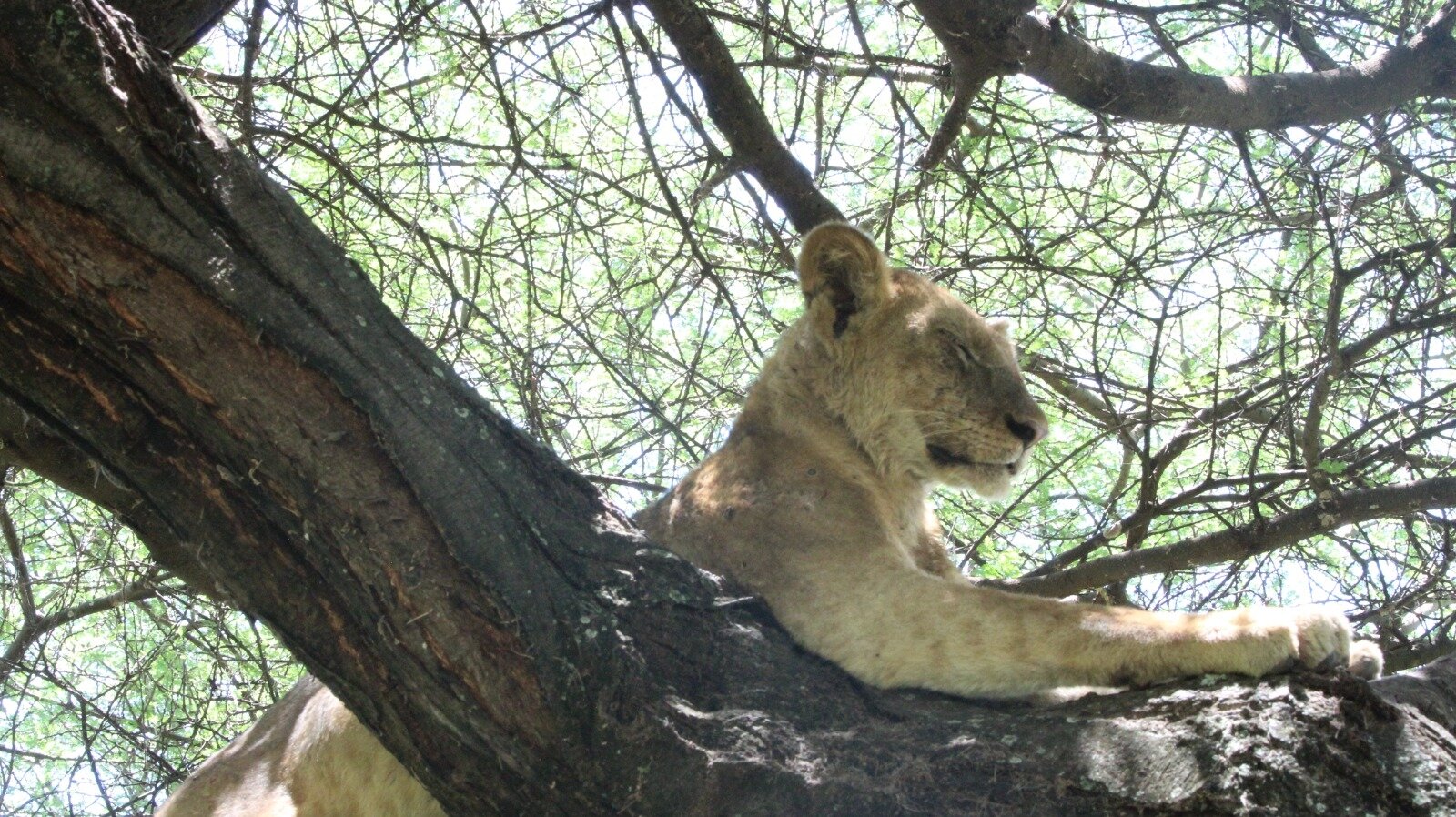
The Arusha to Lake Manyara day trip is one of northern Tanzania’s most popular short safaris, with the park about 126 kilometres west of town on smooth tarmac most of the way. Leave after breakfast, spend a good part of the day watching wildlife, and return for dinner. One long day is enough to see hippos, giraffes, big troops of baboons, and, with luck, the lions that rest in the acacia branches.

This guide walks through the drive, a realistic timeline for the day, what you actually see inside the park, the difference between shared group and private trips, and how to add a Mto wa Mbu cultural walk if you want more than game viewing. Everything here is written for someone planning the trip themselves, so it stays practical.
The Drive from Arusha to the Mto wa Mbu Gate
The road from Arusha heads west through Makuyuni, then turns toward Mto wa Mbu, the busy little town that sits right at the base of the Rift Valley wall below the park. The full distance is roughly 126 kilometres, and on a clear run the drive takes about two hours. If the road is quiet you might do it a little faster, closer to an hour and a half, but traffic through town centres, road works, and the occasional herd of cattle crossing the tarmac all add minutes, so plan for two.
The tarmac is in good shape almost the whole way, which makes this one of the easier drives in the region. You pass open plains, small farming villages, and roadside stalls selling fruit and carvings. Many drivers stop once for coffee, a stretch, and a bathroom break, usually near Makuyuni. By the time you reach Mto wa Mbu you are at the park’s main gate, where your guide handles the entry paperwork while you get your first look at the groundwater forest that greets you inside. If you want the full picture of the route options, including flying in, our page on how to get there lays them out.
Leave early. The park gate opens at 6:30 in the morning and closes to new arrivals well before dark. An early pickup means you reach the park while animals are still active in the cool hours, and it gives you room to absorb delays without cutting your game drive short.
A Realistic Day Trip Timeline
Most operators run this as a full day, and here is roughly how the hours fall. Your guide picks you up between 6:00 and 6:30 in the morning, sometimes a touch earlier if your hotel is on the far side of Arusha. You drive the two hours west, with one short stop, and reach the Mto wa Mbu gate somewhere between 8:30 and 9:00.
From the gate you begin your game drive straight away. The morning is prime time because the air is still cool and animals move around before the heat sets in. You work your way from the forest near the entrance out toward the lake shore and the open grassland, spending two to four hours depending on how much you want to see and how the sightings go. Around midday you break for a packed lunch, usually at a designated picnic site with a view over the lake or the hippo pool.
After lunch, many day trips do a second, shorter loop to catch anything missed in the morning, then start the drive back to Arusha in the mid to late afternoon. You are typically back at your hotel between 5:30 and 6:30 in the evening. That makes for a day of about eleven to twelve hours door to door, most of it enjoyable, some of it spent on the road. If you would rather trade a longer drive for a shorter one, a comparable trip runs from the other main hub, and our Moshi day trip page covers that starting point.
What You See on a Lake Manyara Safari
Lake Manyara packs a lot of variety into a small area, which is part of why it works so well as a day trip. Just past the gate you drive through a shady groundwater forest fed by springs from the escarpment, and this is where you meet the park’s famous troops of baboons, some of the largest in Africa, along with blue vervet monkeys and, often, elephants moving between the trees.
Beyond the forest the land opens up toward the lake itself, a shallow alkaline body of water that draws big flocks of birds. Both greater and lesser flamingos gather here, and when water levels are right the far shore turns pink with them. Closer in you find hippos wallowing in the hippo pool, along with giraffes, zebras, wildebeest, impala, buffalo, and warthogs feeding on the flats. The birdlife is a highlight in its own right, with pelicans, storks, and dozens of smaller species along the water’s edge.
The park’s headline act is its tree-climbing lions. Manyara is one of very few places where lions regularly rest up in the branches of acacia and sausage trees during the day. Guides suggest they climb to escape biting insects and the heat of the ground, and to keep an eye on the plains below. Sightings are never guaranteed, and the lions are elusive, but the acacia woodland in the central and southern parts of the park is where your guide will look. Even without them, a day here delivers a full cast of animals in a short space.
A shallow soda lake, a spring-fed forest, and lions that nap in trees, all within a park you can cover in a single day.
Shared Group Day Trips vs Private Day Trips
When you book, the first choice is whether to join a shared group trip or go private. Both get you into the same park with the same wildlife, but the experience and the cost differ.
A shared group day trip puts you in a safari vehicle with other travellers, usually strangers who booked the same departure. You split the cost of the guide, the vehicle, and fuel across everyone in the truck, which is why shared trips are the cheaper option. The trade-off is that you follow a set itinerary and a fixed pickup schedule, and you share window space and the guide’s attention with the rest of the group. For solo travellers and couples watching the budget, it is a sensible way to see the park.
A private day trip is just your own party in the vehicle. You pay the full cost of the guide and the car yourselves, so the per-person price is higher, but you gain flexibility. You can ask to linger at a good sighting, adjust the pace, request an earlier or later start, and shape the day around what you want to see. Families, friend groups, and anyone who values control over the schedule tend to prefer private. If you want a fuller comparison of the options for visiting, our day tour overview goes into more detail on how these trips are put together.
Adding a Mto wa Mbu Cultural Tour
Because the park gate sits right beside Mto wa Mbu town, it is easy to add a cultural tour to your safari day, either before you enter the park or after your game drive. Mto wa Mbu is one of the most mixed communities in Tanzania, with people from many of the country’s tribes living side by side, and a walk through it is a genuine change of pace from wildlife watching.
A village walk usually runs two to three hours with a local guide. You pass through banana plantations and rice fields, visit a local market, stop at a woodcarving workshop where Makonde artisans shape figurines and masks, and often finish with a home-cooked local lunch. Some visitors swap the safari vehicle for a bicycle and ride between the plantations and the edge of the lake, which is a relaxed way to see the farmland and catch views of the flamingos from ground level.
Adding the cultural tour does stretch an already long day, so think about how you want to balance it. A common approach is a morning game drive, lunch, then a shorter afternoon village walk before the drive home. If wildlife is your main goal, keep the cultural add-on brief. If you want a fuller sense of the place and its people, give it the full afternoon and treat the game drive as the morning highlight.
Booking Your Arusha Day Trip and What Is Included
Day trips out of Arusha are easy to arrange, and most reputable operators bundle the same core items into the price. A standard package covers hotel pickup and drop-off, transport in a safari vehicle with a pop-up roof, an English-speaking driver guide, park entry fees, a packed lunch, and drinking water. Government tax is normally folded into the quoted rate as well.
Things that are usually not included are tips for your guide, any souvenirs you buy along the way, and optional extras like the Mto wa Mbu cultural walk. When you compare quotes, check exactly what falls inside the price, since park fees are a large share of the total and a very low quote sometimes means fees are charged on top. Confirm the pickup time, the vehicle type, and whether lunch is a packed box or a sit-down meal, so there are no surprises on the morning of the trip.
Tips for the Long Safari Day
This is a rewarding day, but it is a long one, and a little preparation makes it far more comfortable. A few things worth doing before you go.
Pack layers. The early morning start and the open forest sections can be cool, while the middle of the day on the plains gets hot, so a light fleece you can shed works well. Bring a hat, sunglasses, and sunscreen for the exposed lake shore. Carry more water than you think you need, even though the operator provides some, because the dry air catches people out.
Bring binoculars if you can, since much of the birdlife and some of the lion sightings are at a distance. Keep your camera charged and bring a spare battery, as there is nowhere to plug in during the day. A small amount of cash is handy for tips, drinks, and anything you pick up in Mto wa Mbu. Motion sickness sufferers should take something before the drive, as the road has its bends near the Rift Valley wall.
6-Day Arusha, Manyara, Tarangire & Ngorongoro Safari
10-Day In-Depth Serengeti & Northern Circuit Safari
7-Day Serengeti, Ngorongoro, Tarangire & Manyara Safari
Manage the middle of the day. Wildlife activity dips when the sun is high, so do not be discouraged if the hours around lunch feel quiet. The animals are resting in the shade, and sightings usually pick up again as the afternoon cools. Use the slow stretch for the picnic and a walk at the hippo pool viewpoint.
Finally, keep your expectations realistic about the drive. Two hours each way on tarmac is comfortable by Tanzanian safari standards, but it is still four hours of driving inside your day. Treat the road time as part of the experience, watch the villages and the plains roll by, and you will arrive at the gate relaxed rather than rushed. Done right, a single day at Lake Manyara gives you a real taste of a Tanzanian safari without needing to commit to a longer trip.
Frequently Asked Questions
How long does it take to drive from Arusha to Lake Manyara?
The drive covers about 126 kilometres and takes roughly two hours each way on good tarmac. A very clear run can be closer to an hour and a half, but town traffic and a coffee stop usually bring it back to about two hours, so plan around four hours of total driving for the day.
How much does an Arusha to Lake Manyara day trip cost?
Shared group day trips generally run from about 170 to 275 US dollars per person, with the exact figure depending on group size and what is included. Private day trips cost more per person, often in the range of 230 to 300 US dollars or higher, because your party covers the full cost of the guide and vehicle rather than splitting it. Park fees, lunch, and tax are normally part of the quoted price.
Is a day trip enough time to see Lake Manyara?
Yes. Lake Manyara is a compact park, and a full day gives you time to drive from the forest through to the lake shore, watch the main wildlife, and break for lunch. You will not cover every corner, but you can comfortably see baboons, hippos, giraffes, flamingos, and, with some luck, the tree-climbing lions in a single day.
What wildlife will I see at Lake Manyara?
Expect large troops of baboons and blue monkeys in the groundwater forest, plus elephants, giraffes, zebras, wildebeest, impala, buffalo, and warthogs on the flats. The lake draws greater and lesser flamingos and many other birds, and hippos gather at the hippo pool. The park’s famous tree-climbing lions are present but elusive, so sightings are a bonus rather than a certainty.
Can I add a Mto wa Mbu cultural tour to the day?
Yes, and it is a natural pairing because the town sits right at the park gate. A village walk of two to three hours takes you through plantations, a market, and a woodcarving workshop, often with a local lunch. Adding it lengthens the day, so many people do a morning game drive followed by a shorter afternoon cultural walk.
What is the best time of year for a Lake Manyara day trip?
The dry season from June to October is best for general game viewing, since sparse vegetation and fewer water sources concentrate the animals and improve your odds of spotting lions. The wetter months from November to May are quieter for big game but excellent for birds, with flamingo numbers often at their peak when the lake is full.