The dry season at Lake Manyara runs from roughly June to October, when the rains step back, the grass thins, and animals gather at the lake and permanent water for the clearest game viewing of the year. Visitors get firm roads and strong sightings of elephant, buffalo and the tree-climbing lions, at the cost of higher prices and busier tracks. It pairs naturally with our wider look at the best time to visit Lake Manyara.

Manyara is a compact park, around 325 square kilometres, squeezed between the Rift Valley escarpment and a shallow soda lake. That small footprint means the dry season changes are easy to notice. Water sources shrink, the leaf cover falls away, and animals that spent the wet months spread thin start drawing back toward the springs and the lake edge. The result is a park that rewards patience and a good pair of eyes.
Quick orientation: Lake Manyara’s dry season runs June to October. Days are warm and sunny, mornings are genuinely cold, rain is close to absent in July, August and September, and wildlife concentrates near the shrinking water. Expect firm tracks, some dust, and busier roads than the green months.
What The Dry Season Weather Feels Like At Lake Manyara
The headline is simple: warm, bright afternoons and cold starts. Daytime highs sit around 26 degrees Celsius, roughly 79 Fahrenheit, and can climb toward the low 30s on the hottest afternoons near the lake. That part is comfortable and predictable. The surprise for many first-timers is the morning. Night temperatures drop to around 14 degrees Celsius, about 57 Fahrenheit, and that chill hangs on through the first hour or two of a dawn game drive. An open safari vehicle moving at speed makes it feel colder still.
June is one of the coolest months of the year here, which catches people off guard given the equatorial setting. A warm fleece or medium jacket, plus a hat and something for your hands, makes the early game drive far more pleasant. By mid-morning the sun has usually burned off the cold and you will be peeling layers back down to a shirt. Humidity stays low across the whole season, so the heat rarely feels heavy.
Rainfall is the other defining feature. July, August and September are the driest months on the calendar, with average rainfall dropping to around a single millimetre. For practical purposes that means rain is not something you plan around during the core dry season. June can still carry a little residual moisture from the long rains, and October occasionally sees the first warning showers of the coming wet months, but the heart of the season is dependable sunshine.
Why Wildlife Concentrates Around Water In The Dry Months
The single biggest reason the dry season earns its reputation is water. As the months without rain stack up, the scattered pools and seasonal streams that let animals roam widely in the green season simply dry out. Fresh water becomes scarce, and by September there is a real shortage inside the park. Animals that could drink anywhere in April now have to come to the places that still hold water: the groundwater forest springs at the northern entrance, the swampy pockets fed by the escarpment, and the edges of the soda lake itself.
This funnelling effect is what makes dry-season game viewing feel productive. Instead of searching a green, spread-out park, you are working a smaller set of reliable water points where sightings stack up. Elephants are a good example. Manyara holds one of Tanzania’s higher elephant densities, and in the dry months you often see them near the water bodies, sometimes digging in dry riverbeds to reach what is left below the surface. Buffalo and other grazers follow the same logic.
The dry-season pattern in short: less rain means fewer water sources, fewer water sources means animals gather where water remains, and gathered animals are far easier to find and photograph. It is the same mechanism that drives good sightings across northern Tanzania, and Manyara’s small size makes it especially noticeable.
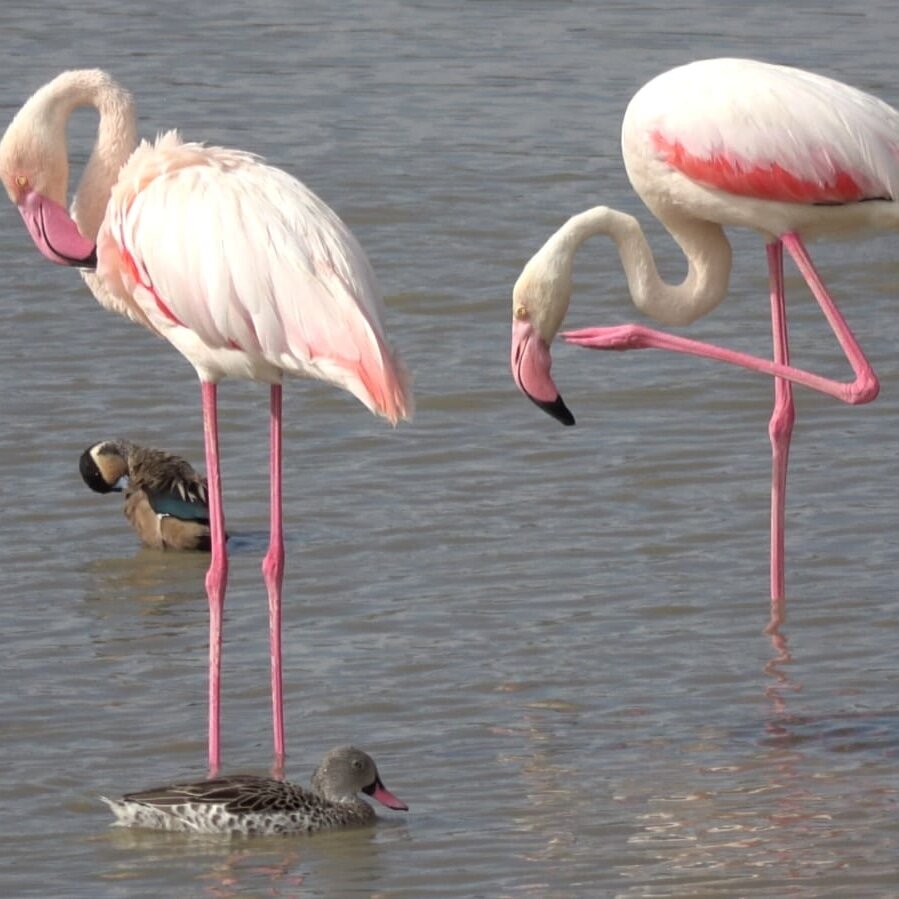
One honest caveat concerns the flamingos. In the wetter months the soda lake can hold huge flocks, and the pink band along the shore is one of Manyara’s signature scenes. As the lake shrinks in the dry season, many flamingos move on to other Rift Valley soda lakes such as Natron or Bogoria in search of the algae they feed on. You may still see good numbers, but if flamingos are your priority the picture is stronger in the greener stretch. Our wet season guide covers that side of the calendar.
Easier Game Viewing As The Vegetation Thins
Water pulls animals together; thinning vegetation makes them visible once they arrive. Through the green months Manyara’s woodland and forest carry heavy leaf cover, and grass on the floodplain grows tall enough to hide a resting lion or a browsing bushbuck. July marks the point where that cover starts falling away in earnest. Leaves drop, grass dies back, and sightlines open up across the acacia woodland and the grassy flats.
For a park with six distinct habitats packed into a small area, this shift matters a lot. The dense groundwater forest near the gate stays relatively shady and green thanks to its springs, so that section changes least. But the open woodland where elephants browse, the floodplains where you scan for predators, and the lakeshore all become much easier to work. Animals that would have been screened by foliage in March stand out clearly against bare branches and short grass.
The tree-climbing lions deserve a mention here, because they are the sighting most visitors hope for. Manyara’s lions have a well-known habit of resting up in the big fig, acacia and sycamore trees during the heat of the day. Nobody is certain why, though avoiding ground-level heat and biting tsetse flies are common theories. The dry season, with its sparser canopy, is often the better time to spot them draped across a branch. It is worth stressing that these lions are never guaranteed on any given drive. Some visitors see them easily, others spend days without a glimpse, and that is normal for a wild population.
Firmer Tracks And Better Access
The condition of the roads is a quiet but real advantage of the dry months. Manyara’s track network is limited, and in the wet season the black-cotton soils and the low-lying ground near the lake can turn greasy and slick, keeping some routes off-limits. Once the rains stop and the ground bakes hard, the tracks firm up. Vehicles reach parts of the park that are awkward or impassable when it is wet, and a game drive covers more ground with less risk of getting bogged.
Firm tracks also make for a smoother, faster day. You spend less time nursing the vehicle through mud and more time actually looking for animals. The lakeshore road and the routes out toward the southern reaches of the park are generally more dependable in the dry season, which widens the area realistically on offer during a half-day or full-day drive.
On the ground: Even in the dry season, keep expectations sensible about the far south of the park. Manyara narrows to a thin strip along the lake, and the deep southern sections stay remote. Most dry-season drives concentrate on the forest, the woodland and the northern lakeshore where sightings are richest.
Cool Mornings, Warm Light And Dust
The rhythm of a dry-season day at Manyara has a particular character. You set out cold, wrapped in layers, into still air and low light. Those early hours are prime for activity: predators are still moving, elephants are on the march to water, and the light is soft and kind for photographs. As the morning warms, animals settle into shade and the pace of sightings eases, which is why many people are back at camp for lunch and a rest before an afternoon drive.
Dust is the trade-off you accept for all that firm, dry ground. By August and September the tracks throw up a fine haze, especially when other vehicles are ahead of you. It settles on everything, so a dust cover or a soft cloth for your camera and binoculars is worth packing, along with a scarf or buff if you are sensitive to it. The dust is rarely severe enough to spoil a drive, but it is a genuine feature of the late dry season rather than an occasional nuisance.
Light quality is a compensation. The clear, low-humidity air gives sharp, bright conditions through the middle of the day and rich colour at the edges. For photographers chasing the tree-climbing lions or elephants at the water, the combination of open sightlines and clean light is hard to beat. If you want to line up the animal calendar in more detail, our overview of the best time for wildlife viewing lays it out month by month.
Crowds And Pricing In Peak Season
The dry season is also the peak season, and that is the main downside to weigh. July through October is when demand for northern Tanzania is highest, so lodges and camps around Manyara raise their rates and availability tightens. If you are booking accommodation, budget for the top of the range and reserve well ahead, particularly for the popular July and August window.
Inside the park you will share the roads. During peak months, and especially on afternoon drives, popular sightings can draw a cluster of vehicles. That said, perspective helps. Manyara sees only a fraction of the traffic that builds up on the Serengeti plains or the floor of the Ngorongoro Crater. It is busier than its own green season, but it is not overwhelmed, and a good guide can time drives and pick routes to sidestep the heaviest congestion. Setting out at gate opening, while most vehicles are still finishing breakfast, is the simplest way to have the forest tracks largely to yourself.
Weighing the busier, pricier peak against the ease of viewing is a personal call. Most people decide the strong sightings and reliable weather are worth the higher cost and the shared roads. If crowds and budget matter more to you than peak conditions, the shoulder edges of the season, early June and late October, offer a softer compromise.
Month By Month Through The Dry Season
The dry season is not uniform. Conditions shift steadily from the damp edge of June to the bone-dry peak of September and October, and knowing the arc helps you pick your window.
June is the transition. The park is still green and leafy after the long rains, water is plentiful, and the lake often sits high. Vegetation can still be thick enough to make some sightings harder, but the crowds and the peak prices have not fully arrived, so it is a popular choice for people who want dry-ish weather ahead of the rush. Mornings are cold, as June ranks among the coolest months.
July is the true start of the dry season. Water availability begins to fall, vegetation starts thinning, and both changes push game viewing in the right direction. The weather is sunny and mild, rainfall is near zero, and the park is comfortably into good-viewing territory. This is also where peak-season pricing and busier roads take hold.
August continues the drying trend. Cover keeps falling, tracks are firm and dusty, and sightlines across the woodland and floodplain are wide open. It is one of the most reliable months for weather and one of the busiest for visitors, so early starts pay off.
September is often the sharpest month for concentration. Fresh water is genuinely short, animals lean on the remaining springs and the alkaline lake, and wildlife becomes easier to find across the park. Sparse vegetation and clean light make it a strong month for photography and for the tree-climbing lions. Rainfall stays at its annual low.
October holds the dry conditions but sits at the edge of change. Viewing remains excellent as animals stay tied to water, and the park is still firmly in peak form. Toward the end of the month the first tentative showers can arrive, a signal that the green season is not far off. It is a fine time to visit if you want peak sightings with a slightly softer crowd than midseason.
Across all five months the underlying logic holds steady: as the park dries, viewing improves. The difference between June and September is largely one of degree, with the later months offering tighter concentration and thinner cover at the price of more dust and, in June’s case, cooler and greener conditions.
Planning A Dry Season Safari At Manyara
Putting it together, a dry-season visit to Lake Manyara plays to the park’s strengths. You get dependable sunshine, wildlife pulled in toward a handful of water points, open sightlines through thinned woodland, and firm tracks that let a game drive cover real ground. The costs are the cold mornings, the late-season dust, the peak-season prices and the shared roads, all of which are manageable with the right layers, an early alarm and realistic expectations.
Manyara also works beautifully as part of a longer northern circuit rather than a standalone trip. Its small size means a half or full day covers it well, and it sits on the route to Ngorongoro and the Serengeti, so many travellers fold it into a broader itinerary in the same dry window. No matter how you slot it in, arriving with warm clothes for dawn, a dust cover for your gear and a flexible attitude toward the tree-climbing lions will set you up for the park at its best.
Frequently Asked Questions
Is the dry season really the best time for game viewing at Lake Manyara?
For classic game viewing, yes. From June to October the vegetation thins and water sources shrink, so animals gather at the remaining springs and the lakeshore where they are far easier to find. September and October tend to offer the tightest concentration. The main exception is flamingos, which are stronger in the wetter months, and general birding, which peaks with the migrant arrivals in the green season.
How cold does it actually get in the mornings?
Colder than most people expect for the tropics. Overnight and dawn temperatures can drop to around 14 degrees Celsius, about 57 Fahrenheit, and June is among the coolest months. That chill lingers through the first part of an early game drive, so a warm jacket, hat and layers are worth packing. By mid-morning the sun usually warms things back into shirt-sleeve comfort.
Will I definitely see the tree-climbing lions in the dry season?
No sighting is guaranteed. The dry season, with its sparser canopy, is often the better time to spot lions resting in the fig, acacia and sycamore trees, but they are a wild population and some visitors miss them entirely. Treat a tree-lion sighting as a wonderful bonus rather than a certainty, and give yourself the best odds by going out early and staying patient.
How much does a dry season safari at Lake Manyara cost?
The dry season is peak season, so it is the priciest window. Park entry fees are set per person per day, and accommodation around Manyara moves to its highest rates from around July to October, with the July and August peak the most expensive and the most heavily booked. If you are cost-conscious, the shoulder edges in early June or late October can be gentler on both price and crowds while still offering dry-season conditions.
Is dust a problem during the dry months?
It is a feature to prepare for rather than a dealbreaker. By August and September the firm, dry tracks throw up fine dust, especially behind other vehicles. A dust cover or soft cloth for cameras and binoculars, plus a scarf or buff, keeps it comfortable. In exchange you get firmer roads, better access and the clear, bright light that makes the dry season so good for photography.
Which dry season month should I choose?
It depends on your priorities. June is cooler and greener with fewer crowds but thicker cover. July and August bring reliable weather and steadily improving viewing at peak prices. September often gives the sharpest wildlife concentration and thinnest vegetation. October holds excellent conditions with a slightly softer crowd before the first showers hint at the coming wet season. Any of them can deliver a strong safari.