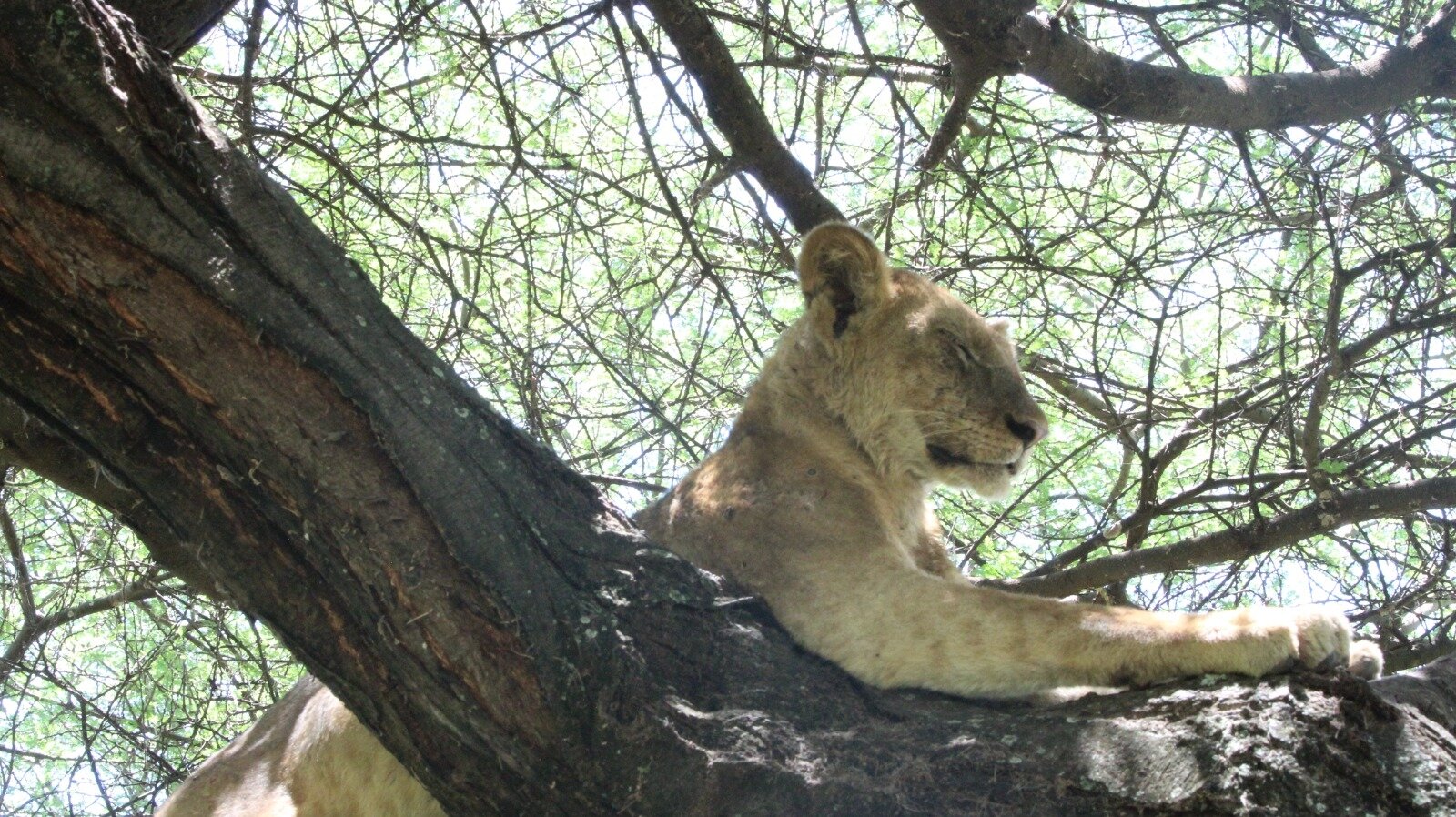
Lake Manyara suits a honeymoon because it is compact, scenic, and easy to reach on the first day of a northern Tanzania trip. Newlyweds can watch flamingos wash the shallows pink and look for tree climbing lions within hours of landing, then move on to bigger parks. Lake Manyara National Park sits below the Rift Valley wall near Arusha, a gentle and romantic opener to a longer safari.
This is not the place people picture when they think of endless plains and a million wildebeest. Manyara is smaller and more intimate, a green ribbon of forest and lake pressed between the Rift Valley wall and the water. For a couple, that intimacy is the point. You are close to everything, the drives are short and relaxed, and the lodges have learned how to look after two people who want a little quiet and a little celebration in equal measure.
Why start here. Lake Manyara sits about ninety minutes from Kilimanjaro International Airport by road, so it works as a gentle first night before you push deeper into the circuit. You arrive, you ease into safari rhythm, and nobody is exhausted on day one of the honeymoon.
Why a compact park makes a smart honeymoon safari
Lake Manyara National Park covers roughly 330 square kilometres, and close to two thirds of that is the lake itself. What is left is a narrow band of land that manages to hold more variety than its size suggests. In a single short drive you pass through groundwater forest fed by springs, open acacia woodland, grassy floodplain, and the bright alkaline shoreline. That density of habitat means you see a lot without covering much ground, which matters when you would rather be back at the lodge by lunch with a cold drink and no schedule.
The wildlife roster is genuinely good for such a small area. Elephants move through the forest, large baboon troops line the road, hippos wallow near the springs, and giraffe pick their way across the woodland edge. The lake draws waterbirds in enormous numbers, and when conditions are right the flamingos gather in the hundreds of thousands, turning the far shallows a soft rose colour. Manyara is also famous for its tree climbing lions, which drape themselves along acacia and fig branches in the heat of the day. Nobody can promise you a lion in a tree, but the park is one of the few places on earth where you have a real chance.
For couples weighing a longer luxury safari against a shorter romantic stop, Manyara answers the question neatly. You do not need three nights here. One or two is plenty to feel you have properly seen it, which frees up your calendar for the bigger parks and the beach at the end.
The intimate lodges that make a romantic safari feel private
Where you sleep does more heavy lifting on a honeymoon than the game viewing itself, and Manyara gives you two distinct styles to choose between. The first sits inside the park. The second lines the top of the escarpment with the whole Rift Valley laid out below.
The only permanent lodge within the park boundary is andBeyond Lake Manyara Tree Lodge, a set of ten stilted treehouse suites built from natural timber and tucked into a mahogany forest. The suites are raised off the ground on decks, with outdoor showers and freestanding baths that look straight into the trees, and elephants sometimes drift through the glades beneath you. Being inside the park means you wake to birdsong and animal movement rather than a fence line, and you can be on a game drive within minutes of finishing your coffee. It is remote, quiet, and built for two people who want the forest close.
Up on the ridge, escarpment lodges trade the forest for the long view. Places like the Escarpment Luxury Lodge and Lake Manyara Serena look out over the valley and the lake far below, which gives you sunsets that seem to go on forever and cool evening air. These lodges tend to have pools, open fireplaces, and a habit of setting up private dinners on request. The choice between forest and ridge really comes down to temperament. If you want to feel inside the wild, choose the tree lodge. If you want the panorama and a pool to lie beside in the afternoon, choose the escarpment. Our notes on the best lodges go deeper on the specific properties if you are still deciding.
Inside the park. andBeyond Lake Manyara Tree Lodge puts you among the trees with quick access to drives and a real sense of seclusion.
On the escarpment. Ridge lodges give you sweeping lake views, pools, and cool evenings, with private dinners set up on request.
Romantic extras. Rose petals, bush breakfasts, and in room massages are standard requests that most lodges will happily arrange when they know you are celebrating.
Private game drives and sundowners for two
The heart of a Manyara honeymoon is the drive, and it pays to book it privately. A private game drive means the vehicle is yours, the pace is yours, and you can linger at the hippo pool or the flamingo shallows for as long as you like without a stranger checking their watch. Mornings tend to be cooler and busier with animal movement, so an early start rewards you, but the beauty of a compact park is that even a short afternoon loop turns up plenty.
As the light softens, the sundowner takes over. Lodges will drive you to a chosen spot on the escarpment edge or down near the lakeshore, set out chairs and a small bar, light a fire, and pour you a drink while the sky changes colour over the water. It is a simple ritual and it lands hard on a honeymoon. You have the day’s sightings to talk over, a fire crackling, and no reason to be anywhere else. Ask your lodge in advance and they will usually build one into your stay.
A short drive, a fire on the ridge, and a drink in hand while the lake turns pink below. That is the whole appeal of Manyara for two people in no hurry.
If you want a fuller picture of the daily rhythm before you arrive, our guide on what to expect on safari walks through timings, distances, and how a typical day unfolds so there are no surprises.
The canopy walk and other slow honeymoon moments
Not everything at Manyara happens from a vehicle. The park has a treetop walkway, the first of its kind in Tanzania and one of the longest in Africa, that carries you along a series of suspension bridges roughly 370 metres through the forest. The walkway starts near ground level on a gentle boardwalk and rises steadily until you are around eighteen metres up among the branches, eye to eye with monkeys, butterflies, and forest birds. There is a little bounce and sway to the bridges, so it is not for anyone truly uneasy about heights, but for most couples it is a fun, giddy hour and a good story to bring home.
The canopy walk also changes the rhythm of the day in a useful way. Safari can become a loop of early drives and long lunches, and stepping into the forest on foot breaks that pattern and slows everything down. You move at walking pace, you talk, you stop on the little viewing decks built around the tree trunks, and you notice the small things the vehicle rushes past. Guided nature walks and the hippo pool boardwalk offer the same gentle change of gear.
Pairing Manyara with Ngorongoro on a northern honeymoon tour
Manyara almost never travels alone. It sits at the foot of the road that climbs to the Ngorongoro Crater, so the two pair naturally into the first act of a honeymoon tour. You spend your opening day or two easing into safari at the lake, then drive up into the highlands and drop into the crater, a collapsed volcanic caldera with walls rising all around a floor thick with wildlife. The crater is one of the most reliable places in Africa to see lion, elephant, buffalo, and the rare black rhino in a single morning, and the sheer scale of the setting makes it feel like a natural amphitheatre.
The logic of doing Manyara first is partly geographic and partly emotional. The lake is lower, warmer, and softer, a gentle introduction. Ngorongoro is higher, cooler, and grander, a step up in drama. Arriving at the crater rim after a day at the lake gives the trip a rising shape, which is exactly what you want when each day is meant to feel a little bigger than the last. Many couples spend one night near the crater rim so they can descend early, before the day vehicles arrive, and have the floor closer to themselves.
Building the wider safari and beach honeymoon itinerary
A honeymoon that starts at Manyara usually wants a big middle and a soft ending, and Tanzania is set up to deliver both. After the lake and the crater, most couples push on to the Serengeti, where the plains open out and the great herds move across the grass. Depending on the month, you might position yourselves for the calving season in the south early in the year, or the river crossings and dense dry season game viewing later on. Three or four nights in the Serengeti gives you time to slow down, take a balloon flight if the budget stretches, and settle into a camp that feels like it belongs to you alone.
Then comes the reward. From a Serengeti airstrip you can fly to Zanzibar in a couple of hours, trading dust and early starts for white sand and warm water. This is the piece that turns a safari into a honeymoon. You spend the last three to five nights doing very little, swimming, sailing a dhow at sunset, sleeping late, and letting the trip settle into memory. A rough shape that works well looks like two nights at Lake Manyara and Ngorongoro to open, three or four nights in the Serengeti in the middle, and four nights on the Zanzibar coast to finish.
Order matters. Do the active safari days first while you are fresh and excited, and save the beach for last so you fly home rested rather than dusty. Ending on Zanzibar also means your final photographs are of the two of you on the sand, which is a nice note to close on.
The transitions between these stages are short flights on small aircraft, which keeps travel days from eating into your holiday. That efficiency is one of the quiet reasons Tanzania has become such a strong honeymoon choice. You are rarely more than a couple of hours from your next bed, and you never backtrack.
Quiet romantic touches worth arranging in advance
The difference between a good honeymoon and a memorable one often comes down to small things booked ahead of time. Lodges genuinely enjoy marking a honeymoon, but they do it far better with notice. A bush breakfast laid out under a tree after an early drive, a private dinner set apart from the main table, a bath drawn with flowers, or a couples massage in your own suite are all standard requests that cost little and land warmly. Tell your operator you are on honeymoon when you book, and mention it again when you check in.
7-Day Lake Manyara, Tarangire, Serengeti & Ngorongoro Safari
3-Day Family Mikumi National Park Safari
14-Day Ultimate Tanzania Safari, North to West
Keep the plan light. The temptation on a first big trip is to pack every day full, but a honeymoon rewards space more than it rewards activity. Leave an afternoon free to swim and nap. Say yes to the sundowner and no to the third drive of the day. The park is small enough that you do not need to chase it, and the whole appeal of a Manyara start is that it lets you breathe. The best romantic touches are usually just time, quiet, and someone else handling the logistics so the two of you do not have to.
Manyara will not be the biggest chapter of your Tanzania honeymoon, and it is not trying to be. It is the warm, easy opening that sets the tone, close to the airport, gentle on the body, and generous with its flamingos and forest. From there the trip only grows, up to the crater, out across the Serengeti, and down to the sea, but it is nice to begin somewhere soft.
Frequently asked questions about a Lake Manyara honeymoon safari
How many nights should we spend at Lake Manyara on a honeymoon?
One or two nights is usually right. The park is compact, so a single full day of game viewing plus the canopy walk covers it comfortably, and a second night lets you slow down without feeling you are lingering. Most couples treat Manyara as the gentle opening act and save more nights for the Serengeti and the beach.
Is Lake Manyara a good place to start a Tanzania honeymoon?
Yes. It sits about ninety minutes from Kilimanjaro International Airport by road, so it makes an easy first stop that eases you into safari rhythm without a long transfer. Starting soft at the lake and building up toward Ngorongoro and the Serengeti gives the whole trip a pleasing rising shape.
Which lodge is more romantic, inside the park or on the escarpment?
Both work, and it comes down to taste. andBeyond Lake Manyara Tree Lodge is the only lodge inside the park, with stilted treehouse suites in the forest and quick access to drives. Escarpment lodges trade the forest for sweeping lake views, pools, and cool evenings. Choose the tree lodge to feel inside the wild, or the ridge for the panorama.
What does a Lake Manyara honeymoon safari cost?
A wider Tanzania safari and Zanzibar honeymoon typically runs somewhere between about 5,800 and 20,000 US dollars per couple, depending on the season and how luxurious your lodges are. Lake Manyara itself is a small slice of that, usually a night or two of lodging plus park fees and a private drive. Peak season and premium camps sit at the top of the range, while shoulder season and mid range lodges bring it down.
Will we see tree climbing lions and flamingos?
Neither is guaranteed, but your odds are reasonable. Tree climbing lions are most often spotted in the drier months when they rest in the branches through the heat of the day. Flamingos gather in the largest numbers in the wetter months, when the lake fills and the algae they feed on bloom. If both matter to you, the shoulder between the seasons gives you a fair chance at each.
Should we do the canopy walk if one of us dislikes heights?
Take it gently. The treetop walkway rises to around eighteen metres and the suspension bridges have some bounce and sway, so it can unsettle anyone truly nervous of heights. That said, the netting is high and secure and the pace is slow, so many hesitant walkers manage it fine and enjoy the views. If it feels like too much, the ground level boardwalks and the hippo pool walk offer the forest without the elevation.