





Tanzania tour companies fall into two groups: local ground operators registered in Tanzania that run the vehicles and guides, and international agents that resell those trips with a markup. Before you book, check the operator holds a valid TALA licence, read independent reviews, and confirm the bank account matches the registered business. Knowing which type you are dealing with, and how the licensing works, is what protects your deposit.
This guide walks through the real landscape of Tanzania tour companies and safari operators: who they are, how they are structured, how the licensing works, what a trustworthy firm looks like, and the warning signs that should make you close the tab and move on. The goal is simple. By the end you should be able to read a company’s website, ask a handful of sharp questions, and know within a day or two whether the people on the other end of the email are worth your deposit.
The Two Main Types Of Tanzania Tour Companies
Most firms selling a Tanzanian trip fall into one of two camps, and knowing which one you are talking to changes everything about price and communication.
The first is the local ground operator. These are companies registered in Tanzania, usually with an office in Arusha, Moshi, or increasingly Karatu, that own or hire the vehicles, employ the guides, and actually run your days in the parks. When you book Tanzania safaris with a ground operator you speak with the people who will be organising your permits, loading your cooler box, and radioing between vehicles about where the lions crossed that morning. There is no layer between you and the road.
The second is the international agent or reseller. These are travel companies based in the United States, the United Kingdom, Europe, or elsewhere that package Tanzanian trips and sell them to their home market. Many of them are perfectly reputable, but a large share do not run a single vehicle in Tanzania. They subcontract the ground work to a local Tanzania safari operator, often one of the same firms you could have contacted directly, and add a markup for the convenience, the familiar time zone, and the reassurance of a company registered in your own country.
A useful rule of thumb: if a company charges in your home currency, answers the phone in your accent, and cannot tell you the names of the guides who will drive you, there is a strong chance you are talking to a reseller rather than the operator on the ground.
Neither model is wrong. International agents earn their fee on complicated multi-country trips that stitch Tanzania together with Kenya, Rwanda, or Uganda, where the logistics genuinely benefit from a single planner. For a straightforward single-country trip, though, booking direct with a local ground operator usually gives you better pricing and faster answers. More on that comparison further down.
How Tanzania Safari Operators Are Licensed
Tanzania regulates its tourism trade, and the paperwork behind a legitimate operator is worth understanding because scammers cannot easily fake it.
The core licence is the TALA, short for the Tourist Agents Licensing Authority permit, issued by the Ministry of Natural Resources and Tourism. Any company legally running safaris in Tanzania must hold a valid TALA licence. This is the non-negotiable one. Without it a firm is operating outside the law, and if something goes wrong on your trip you have no standing to complain to anyone. The licence has also been administered under the Tanzania Tourism Licensing Board, so you may see it referred to as a TTLB licence in some places.
Sitting alongside the licence is TATO, the Tanzania Association of Tour Operators. Founded in 1983, TATO is the industry body that represents operators, and membership is a strong signal of seriousness. The important distinction is that TATO is closer to a chamber of commerce than a regulator. You do not have to belong to TATO to run tours legally, but to join TATO an operator must already hold a valid TALA or TTLB licence, which is why membership works as a useful shortcut. If a firm is on the TATO members list, it has cleared the licensing bar. You can search the association’s public members list to check a name before you pay anything.
Guides carry their own credentials. A professional driver guide should hold a licence to work in the parks, and the better ones have trained at recognised institutions such as the Mweka College of African Wildlife Management near Moshi. TATO and the ministry also run periodic refresher programmes for driver guides across the Northern Circuit, so a guide’s professionalism is not an accident but the product of an ongoing training system. When you weigh up options for choosing a tour operator, the qualifications of the people who will actually be in the vehicle with you deserve as much attention as the company’s brochure.
What A Good Tanzania Tour Company Looks Like
Beyond the licence, a handful of markers separate a strong operator from a weak one. None of these on its own proves anything, but together they paint a reliable picture.
Real, findable reviews. Look on third-party platforms you cannot easily game, such as TripAdvisor, Google, and SafariBookings. What you want is a spread of reviews over several years that mention specifics: a guide by name, a particular camp, how the company handled a flat tyre or a change of plan. Be wary of a wall of five-star ratings that all appeared in the same recent month. Genuine feedback is textured and occasionally critical.
Transparent quotes. A trustworthy firm sends you a written itinerary with a clear breakdown of what is included and what is not. Park fees, vehicle, fuel, guide, accommodation, and meals should all be visible. Vague lump sums are a warning. Pay particular attention to the clause about park fee increases. A good operator locks your price, while a weaker contract may leave you liable for the difference if the government raises fees after you book.
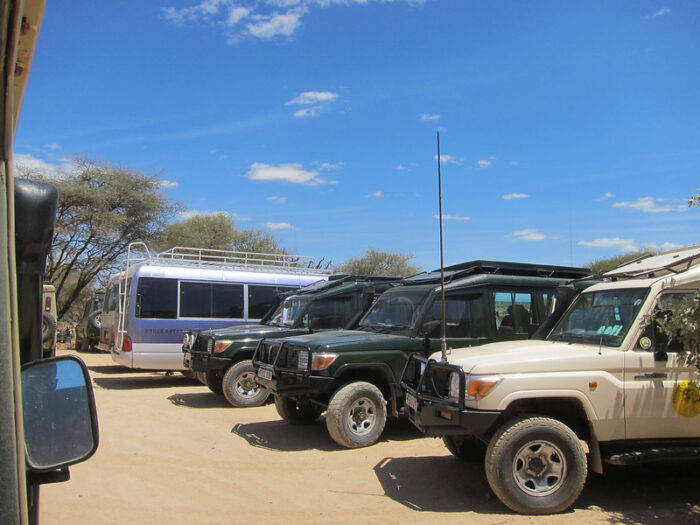
Well-kept vehicles and named guides. The workhorse of a Tanzanian trip is a four wheel drive with high ground clearance and a pop-up roof for game viewing. Ask for photographs of the actual vehicle, not a catalogue image, and ask who your guide will be. Firms proud of their fleet and their people answer these questions quickly.
Responsible practices. The better operators pay park fees properly, follow the rules about staying on tracks and keeping distance from animals, and treat their staff and porters well. A small number of Tanzanian firms hold international sustainability credentials such as Travelife certification, which is rare and worth noting if you find it.
The best operators are the ones happy to be interrogated. If your questions are met with warmth rather than irritation, you have probably found a good one.
Questions To Ask Before You Book A Safari
Once you have a shortlist of two or three Tanzania tour companies, a short conversation tells you most of what the website cannot. Work through these before you commit.
Ask for the company’s TALA licence number and, if they claim it, their TATO membership, then check both yourself. Ask who owns the company and whether the trip is run in house or subcontracted. Ask for the name and qualifications of your guide. Ask exactly what is and is not included in the price, and get it in writing. Ask what happens if a vehicle breaks down mid-trip, because the honest answer reveals whether they have a backup plan and a second vehicle within reach. Ask how park fee increases are handled in the contract. Ask which bank the deposit goes to, since a legitimate Tanzanian operator holds an account with an established local bank such as CRDB, NMB, Exim, KCB, or Equity.
Where it is practical, pick up the phone rather than relying only on email. A five minute call surfaces hesitation, evasiveness, or genuine knowledge far faster than a written exchange. A real operator talking about the parks they work in every week sounds different from someone reading a script. If you are still comparing the shape of the trip itself, our overview of safari tours lays out how the typical routes and durations fit together.
Red Flags Of Scam Safari Operators
Safari fraud is real, and it follows a fairly predictable pattern. Scammers lift photographs and reviews from legitimate firms, build a slick website, quote a price that undercuts everyone else, and vanish the moment your deposit lands. Recognising the signs protects you.
Be suspicious of any firm that pushes for full payment upfront, especially through untraceable channels like Western Union, money transfer apps, or cryptocurrency. A legitimate operator accepts a partial deposit, often twenty to thirty percent, and is comfortable with bank transfer or a card that gives you fraud protection. Watch for poor communication: delayed replies, answers that dodge your actual question, and high-pressure sales lines urging you to pay today to hold a price. A refusal to provide a written, detailed itinerary is a serious problem. So is a brand-new website with no history, which you can check by looking up when the domain was registered.
A price far below everyone else is not a bargain, it is a warning. Park fees and vehicle costs are broadly fixed, so a quote that undercuts the market by a wide margin usually means corners are being cut or the firm never intends to deliver.
The single strongest defence is verification. Cross-check the company name against the TATO members list, look for the TALA licence, read the reviews on platforms the operator does not control, and confirm the bank account belongs to the registered business. Fraudsters rely on travellers who are excited and in a hurry. Slowing down and checking the paperwork removes almost all of the risk.
Booking Direct With A Local Operator Versus An International Agent
For most travellers planning a single-country trip, the value case for booking direct with a local ground operator is strong. Because there is no reseller in the middle, you pay for the safari rather than for the safari plus a markup. Industry pricing bears this out: local operators tend to sit meaningfully below international agents for the same route and standard, with resellers often adding a substantial premium for comparable itineraries.
The other advantage is knowledge and speed. When you book direct you are talking to specialists who work these parks week in and week out. They can tell you where the migration is likely to be during your dates, which camps suit a family with young children, and how to sequence Tarangire, Manyara, the Ngorongoro Crater, and the Serengeti without wasting a day on the road. Questions get answered in hours by the people who will actually deliver the trip, not relayed through a chain.
International agents still have their place. If your plans span several countries at once, or you specifically want a company registered in your home jurisdiction for consumer-protection reasons, the extra fee can buy real peace of mind. But if your heart is set on a focused Tanzania safari, a well-reviewed, properly licensed local operator generally gives you the best combination of price, flexibility, and on-the-ground expertise. The trick is doing the verification described above so that direct does not mean unprotected.
Making Your Final Choice Among Tanzania Tour Companies
6 Days Lake Manyara, Serengeti & Ngorongoro Crater
7-Day Arusha to Serengeti Northern Circuit Safari
3 Days Lake Manyara National Park
Pulling it together, a sound decision rests on three legs. First, confirm the licence and, ideally, the association membership, because that establishes the firm is real and legal. Second, read the reviews and the contract closely, because that tells you whether the firm is competent and fair. Third, talk to a human, because a genuine operator’s fluency about their own parks and guides is almost impossible to fake.
Take your time with the shortlist, ask the awkward questions, and treat any pressure to rush as the warning it is. Good Tanzania tour companies are used to careful travellers and welcome the scrutiny. Once you have found one that answers openly, prices honestly, and clearly loves the work, the hard part of planning is behind you and the rest of the trip becomes something to look forward to.
Frequently Asked Questions About Tanzania Tour Companies
How much does a Tanzania safari cost per day?
Pricing depends on the standard of accommodation and the operator model. Booking direct with a local ground operator, budget and mid-range trips commonly fall in the region of a few hundred US dollars per person per day, covering the vehicle, guide, park fees, and lodging. International agents and reseller packages for the same route often run considerably higher because of the added markup. Luxury camps push the figure up sharply. Always ask for a written breakdown so you can see exactly what the daily rate includes.
How do I check if a Tanzania tour company is licensed?
Ask the operator directly for its TALA licence number, then look up the company on the Tanzania Association of Tour Operators members list, which is published online. A firm on that list holds a valid licence, since membership requires one. You can also confirm the bank account is held with an established Tanzanian bank in the registered company name, and read reviews on independent platforms the operator does not control.
Is it cheaper to book direct with a local operator?
For a single-country trip, usually yes. Booking direct removes the reseller markup that international agents add, so you pay closer to the true cost of the safari. You also gain faster communication and specialist knowledge of the specific parks. The one condition is that you do the verification yourself, checking the licence, reviews, and payment details, so that going direct does not mean going unprotected.
What is the difference between TATO and TALA?
TALA is the operating licence issued by the Ministry of Natural Resources and Tourism, and it is legally required to run tours in Tanzania. TATO is the Tanzania Association of Tour Operators, an industry membership body rather than a regulator. A company can operate legally with a TALA licence and no TATO membership, but any TATO member must already hold a valid licence, which is why membership is a helpful screening signal.
What are the biggest warning signs of a safari scam?
The clearest signs are a demand for full payment upfront through untraceable methods such as Western Union or cryptocurrency, a price far below every other quote, poor or evasive communication, refusal to send a written itinerary, and a brand-new website with no track record. Cross-checking the company against the TATO list and independent reviews, and paying only a partial deposit through a traceable method, removes most of the risk.
Should I book direct if I am visiting several countries on one trip?
Multi-country trips are the situation where an international agent often earns its fee. Coordinating flights, permits, and ground operators across Tanzania and its neighbours is genuinely complex, and a single planner can smooth the joins. For a trip focused only on Tanzania, a well-reviewed local operator generally gives better value and quicker answers.